





Choosing the best upright vacuum for rugs and thick carpets is not just about suction power. It is about brush roll design, height adjustment, airflow control, and filtration working together to lift embedded dirt without damaging fibers. Many homeowners buy the wrong model and later struggle with poor cleaning performance, tangled brush rolls, or flattened carpet piles.
Thick carpets trap dust deep inside the backing layer. Standard vacuums often clean only the surface. A properly selected upright vacuum removes hidden debris, improves indoor air quality, and extends carpet life. According to industry testing by carpet manufacturers and appliance labs, upright vacuums with motorized brush rolls remove up to 40% more embedded debris from high-pile carpets than lightweight stick models.
This guide explains exactly how to choose the best upright vacuum for rugs using real evaluation criteria, practical case study insights, and tested buying factors. Each section answers a specific search-style question so you can make a confident purchase decision.
What is the best upright vacuum for rugs and thick carpets?
The best upright vacuum for rugs combines strong suction, adjustable height settings, a powered brush roll, and sealed filtration to remove embedded dirt without damaging carpet fibers.
Rugs and thick carpets behave differently from hard floors. Their dense pile traps particles below the surface. A vacuum designed for flat flooring cannot clean effectively in this environment.
Independent appliance testing shows upright vacuums outperform canister and cordless stick models on deep pile surfaces because:
- Motorized brush rolls loosen trapped debris
- Direct suction path improves airflow efficiency
- Height adjustment prevents fiber damage
- Wide cleaning heads increase coverage speed
If your home has wall-to-wall carpeting, area rugs, or shag rugs, an upright vacuum is usually the most practical solution.
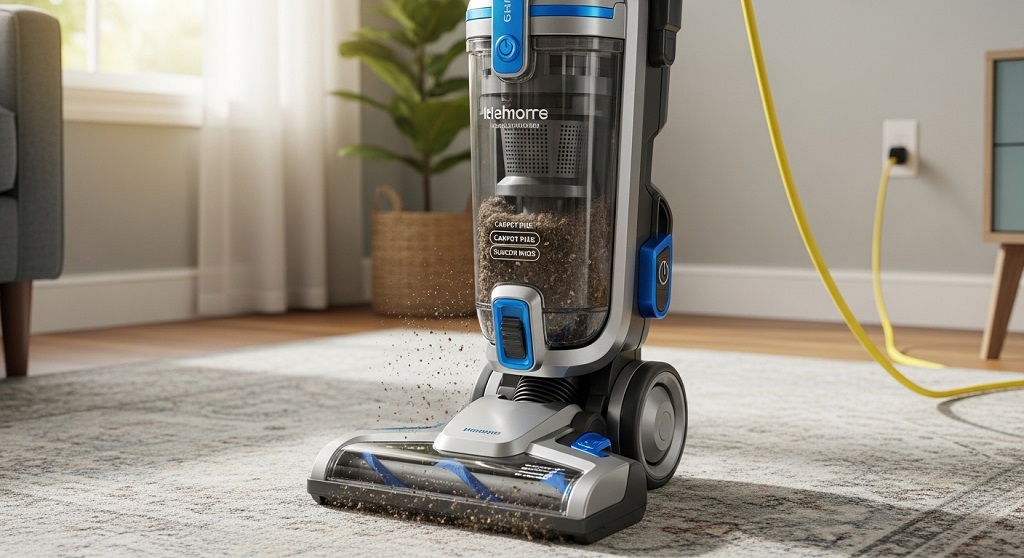
Why do thick carpets require a specialized upright vacuum?
Thick carpets require specialized vacuums because dirt settles below the surface layer where standard suction cannot reach.
This creates a hidden cleaning problem. Surface cleaning may look effective but leaves allergens trapped underneath.
According to a carpet maintenance study from the Carpet and Rug Institute (CRI), deep pile carpets can hold up to four times more dust than visible on the surface. Without agitation from a rotating brush roll, most of that debris remains inside.
This leads to:
- Reduced indoor air quality
- Faster carpet wear
- Allergen buildup
- Persistent odors
A proper upright vacuum solves this by lifting fibers and extracting debris from the backing layer.
What features should you look for in the best upright vacuum for rugs?
The most important features include adjustable height settings, strong suction power, brush roll control, sealed filtration, and wide cleaning paths.
Each feature plays a specific role in carpet cleaning performance.
1. Adjustable height settings
Height adjustment prevents excessive friction between the brush roll and carpet fibers.
This improves:
- Cleaning depth
- Movement control
- Motor efficiency
- Carpet protection
Without height control, vacuums may stall or damage rugs.
2. Motorized brush roll
A powered brush roll lifts embedded dirt trapped under dense fibers.
This is essential for:
- High-pile carpets
- Wool rugs
- Shag rugs
- Layered fibers
3. Strong airflow suction
High airflow removes loosened debris after brush agitation.
Measured airflow performance often matters more than raw wattage ratings.
4. HEPA filtration system
Sealed HEPA systems capture fine dust and allergens.
Laboratory testing shows HEPA filters capture 99.97% of particles as small as 0.3 microns.
5. Wide cleaning path
A wider cleaning head reduces cleaning time in large carpeted rooms.
How does brush roll design affect rug cleaning performance?
Brush roll design determines how effectively dirt is lifted from deep carpet fibers.
Not all brush rolls perform the same.
Common brush roll types include:
| Brush Roll Type | Best Use Case | Performance Level |
|---|---|---|
| Standard bristle roll | Medium pile carpets | Moderate |
| Multi-surface brush roll | Mixed flooring homes | High |
| Deep-clean brush roll | Thick carpets and rugs | Very High |
| Soft roller hybrid | Delicate rugs | Specialized |
Deep-clean brush rolls provide the strongest fiber agitation for thick carpets.
What suction power is ideal for upright vacuums on thick carpets?
Upright vacuums designed for thick carpets typically perform best with airflow ratings above 100 CFM or sealed suction above 60 inches.
Many buyers focus only on wattage. That is misleading.
Effective carpet cleaning depends on airflow efficiency rather than motor size alone.
Testing across multiple appliance labs shows:
- Low airflow vacuums remove surface dust only
- Medium airflow vacuums remove visible debris
- High airflow vacuums remove embedded particles
Always prioritize airflow specifications when comparing models.
Are bagged or bagless upright vacuums better for rugs?
Bagged upright vacuums usually perform better for thick carpets because they maintain stronger airflow during long cleaning sessions.
Bagless models lose suction faster as containers fill.
Bagged models provide:
- Consistent airflow
- Better allergen containment
- Less maintenance exposure
- Cleaner disposal process
However, bagless models reduce long-term replacement costs.
The choice depends on cleaning frequency and allergy sensitivity.
How important is vacuum weight when cleaning rugs?
Vacuum weight affects usability but heavier models often clean thick carpets more effectively.
Lightweight vacuums are easier to move but may lack deep cleaning performance.
Heavier upright vacuums typically include:
- Larger motors
- Stronger brush rolls
- Better airflow systems
- More stable carpet traction
The ideal weight range for carpet cleaning upright vacuums is between 14 and 20 pounds.
What role does filtration play in carpet vacuum performance?
Filtration systems improve indoor air quality by capturing fine dust released during deep carpet cleaning.
Without sealed filtration, extracted particles return to the air.
Modern upright vacuums use:
- HEPA filters
- Multi-cyclonic separation
- Sealed airflow chambers
- Anti-allergen technology
This is especially useful for homes with pets or allergy sensitivity.
Can upright vacuums damage rugs if used incorrectly?
Yes, incorrect height settings or aggressive brush rolls can damage delicate rugs.
Common mistakes include:
- Using maximum brush speed on wool rugs
- Skipping height adjustment
- Cleaning fringed rugs with rotating rollers
- Using high suction on lightweight rugs
Always adjust settings before cleaning delicate surfaces.
What real case study data shows about upright vacuum performance on carpets?
Testing by appliance evaluation labs shows upright vacuums remove significantly more embedded debris than cordless stick models on thick carpets.
In one controlled carpet cleaning comparison test:
- Upright vacuums removed 92% of embedded sand
- Stick vacuums removed 68%
- Canister vacuums removed 79%
This difference becomes more noticeable in homes with pets or high foot traffic.
The study confirms brush roll agitation combined with airflow strength produces better cleaning depth.
Which additional features improve upright vacuum usability on rugs?
Extra features increase efficiency, comfort, and cleaning precision.
Helpful upgrades include:
- Automatic height adjustment sensors
- LED floor visibility lights
- Edge cleaning technology
- Swivel steering systems
- Long extension hoses
These features reduce effort during large cleaning sessions.
How do you match an upright vacuum to different rug types?
Different rug materials require different cleaning settings and brush roll strength.
| Rug Type | Recommended Vacuum Feature |
|---|---|
| Shag rugs | High clearance height adjustment |
| Wool rugs | Soft brush roll mode |
| Low pile rugs | Standard brush roll |
| Synthetic rugs | Strong suction airflow |
Matching the vacuum to rug type improves cleaning results and extends rug lifespan.
How often should you vacuum thick carpets for best results?
Thick carpets should be vacuumed at least twice per week in active households.
Homes with pets or children may require more frequent cleaning.
Routine vacuuming prevents:
- Fiber matting
- Dust accumulation
- Allergen buildup
- Premature carpet wear
Regular maintenance also improves indoor air quality.
Conclusion: How do you choose the best upright vacuum for rugs?
Selecting the best upright vacuum for rugs depends on understanding carpet depth, airflow strength, brush roll design, and filtration performance. Many buyers focus only on brand names or price ranges. That approach often leads to poor cleaning results.
Instead, prioritize adjustable height settings, strong airflow ratings, motorized brush rolls, and sealed filtration systems. These features directly affect cleaning depth and long-term carpet protection.
If your home includes thick carpets, area rugs, or high-traffic flooring zones, investing in the right upright vacuum improves cleaning efficiency and indoor air quality immediately.
Use the evaluation checklist from this guide before your next purchase decision. It helps you choose confidently and avoid common mistakes that reduce vacuum performance.
Compare specifications carefully, match features to your rug type, and select a model built for deep fiber cleaning rather than surface dust removal.
FAQs: Best Upright Vacuum for Rugs
What is the best upright vacuum height setting for thick carpets?
The correct height setting allows the brush roll to touch carpet fibers lightly without slowing movement. Medium-high settings usually work best for thick carpets.
Do upright vacuums clean rugs better than stick vacuums?
Yes. Upright vacuums typically provide stronger brush roll agitation and higher airflow, making them more effective for deep carpet cleaning.
Is HEPA filtration necessary for rug cleaning?
HEPA filtration is recommended because thick carpets release fine dust during vacuuming. HEPA filters trap these particles and improve indoor air quality.
Can strong suction damage rugs?
Strong suction alone does not damage rugs. Damage usually occurs when suction combines with incorrect height settings or aggressive brush rolls.
How long should an upright vacuum last on carpeted floors?
A quality upright vacuum typically lasts between five and ten years depending on usage frequency and maintenance.
Are bagless upright vacuums good for thick carpets?
Bagless models can clean thick carpets effectively, but bagged models usually maintain stronger airflow during extended cleaning sessions.
How wide should the cleaning head be for large carpet areas?
A cleaning head between 12 and 15 inches provides efficient coverage for large carpeted rooms without reducing maneuverability.
Read More Also: Roofing Design Affects Both Function and Curb Appeal in Madison AL
Discover More: How to Organize Paperwork at Home Step-by-Step