



HVAC systems improve indoor air quality by filtering particles and controlling indoor moisture daily. They also remove many common pollutants before those pollutants circulate through rooms again. Therefore, a well maintained system supports cleaner breathing air throughout the whole home. A knowledgeable hvac contractor guide explains how these options fit different system designs clearly.
Filtration captures dust and pollen as air passes through the filter media. Ventilation, meanwhile, dilutes indoor pollutants by bringing filtered outdoor air inside steadily. Humidity control, additionally, discourages mold growth and keeps dry air from irritating airways. Together, these mechanisms explain the practical link between indoor air quality hvac performance.
What Common Pollutants Build Up Indoors

Everyday activities release tiny particles and gases into indoor air continuously. Cooking, cleaning, and heating, for example, add combustion byproducts and chemical vapors indoors. Pets also shed dander, and outdoor pollen drifts inside through doors and windows.
Dust collects on surfaces and becomes airborne whenever people move through rooms. Mold spores, similarly, travel through air and settle wherever moisture lingers longest. Volatile organic compounds also escape from paints, furnishings, and many household products.
People track pollen and dust easily because both leave visible residue behind. Gases, however, often build up quietly without any obvious smell or color. Open windows also admit outdoor particles, and closed windows trap indoor sources inside.
How Filtration Improves Indoor Air Quality
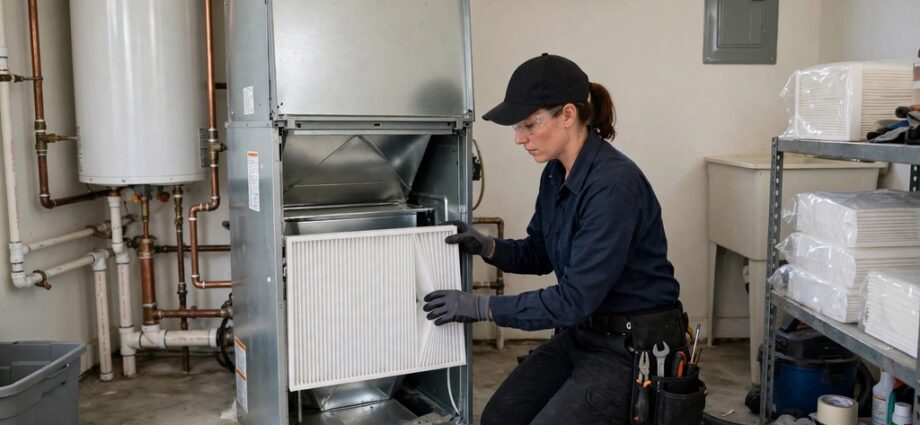
The blower pulls return air through the filter before conditioning that air. The filter media, therefore, traps particles while clean air continues toward supply vents. Higher airflow, however, only helps when the filter still allows air through freely.
What Filter Ratings Actually Mean
MERV ratings from ASHRAE Standard 52.2 describe particle capture across different particle sizes. Most homes, in practice, use filters rated between MERV 8 and MERV 13. Homeowners should also check how often to change hvac filter media before airflow drops noticeably.
Thicker media filters often capture finer particles than thin basic filters do. Their pleats, additionally, create more surface area for trapping dust and pollen. A clogged filter, however, strains airflow and lets more particles bypass edges.
How Ventilation Exchanges Stale Air
Ventilation replaces a portion of stale indoor air with outdoor air regularly. This exchange, as a result, lowers the concentration of pollutants lingering indoors. Sealed modern homes, however, often need mechanical ventilation for consistent fresh air.
How Energy Recovery Ventilators Help
An energy recovery ventilator moves stale air out and fresh air in simultaneously. It also transfers heat and some moisture between the two air streams. Therefore, the system limits the energy penalty that fresh air ventilation creates.
Balanced ventilation controls exactly how much fresh air enters each day. Exhaust only setups, in contrast, rely on leaks for incoming replacement air. Balanced systems, therefore, filter incoming air before it spreads through living spaces.
How Humidity Control Supports Air Quality
Air conditioning removes moisture as warm air passes over the cold coil. This drying effect, in practice, keeps indoor humidity within a comfortable range. A commonly recommended range, specifically, holds indoor relative humidity between 30 and 50 percent.
Excess moisture encourages mold growth and helps dust mites thrive indoors. Very dry air, in contrast, irritates skin and airways during heating seasons. Humidifiers therefore add moisture in dry months, and dehumidification removes it in summer.
Condensate drains carry removed moisture away from the coil during cooling cycles. Blocked drains, however, let water collect and encourage microbial growth nearby. Homeowners, therefore, gain cleaner air when they keep drainage paths completely clear.
Purification Options That Support Indoor Air Quality
Ultraviolet lamps near the indoor coil limit microbial growth on coil surfaces. They do not, however, filter particles directly from the moving air stream. Electronic cleaners, additionally, charge particles so collection plates can capture them afterward.
Media cleaners use deep, pleated material to trap smaller particles efficiently. Each option, still, works alongside filtration rather than replacing basic filter care.
Portable units treat single rooms, while whole house options treat circulating air centrally. Placement, similarly, shapes results because air must pass through the device regularly. Clean collection surfaces, finally, keep electronic and media cleaners working as intended.
Maintenance Habits That Protect Air Quality
Clean coils and clear drain lines prevent moisture problems inside the air handler. Regular filter changes, similarly, preserve airflow and keep particle capture working properly. Guidance on hvac duct cleaning also helps homeowners judge when ducts truly need attention.
- Filter changes: Replace filters on schedule so airflow and particle capture stay strong
- Coil cleanliness: Keep coils clean so moisture drains properly and microbial growth stays limited
- Drain care: Clear drain lines regularly so standing water never feeds mold inside
- Duct sealing: Seal obvious duct leaks so dusty air never enters the stream
- Vent checks: Keep supply and return vents open so air circulates through every room
Typical duct systems lose about 20 to 30 percent of air through leaks. Leaky return ducts, additionally, pull dust and pollutants into the air stream. The EPA, meanwhile, notes that duct dust often sticks to duct surfaces instead.
Over time, simple habits compound into noticeably cleaner and fresher indoor air. Consistent care, finally, keeps every air quality feature performing as designed originally. Neglected systems, in contrast, lose efficiency and recirculate dust through every room daily. Small inspections also catch small problems before they affect the whole system.
Frequently Asked Questions
How does an HVAC system clean the air?
It filters particles, exchanges stale air, and controls moisture throughout the home.
What MERV rating should a home use?
Most homes, in practice, use filters rated between MERV 8 and MERV 13.
Can ultraviolet lights replace air filters?
No, ultraviolet lamps limit coil growth but never filter airborne particles directly.
Why does humidity affect indoor air quality?
Excess moisture encourages mold, while very dry air irritates skin and airways.
How often should homeowners check HVAC filters?
Homeowners should inspect filters monthly and replace them whenever they look loaded.
Conclusion
HVAC systems improve air quality through filtration, ventilation, humidity control, and purification together. Each mechanism, however, performs best when homeowners maintain the system consistently over time. Readers should therefore inspect filters, vents, coils, and drain lines regularly at home.
Additionally, readers can compare purification options and learn ventilation basics before changing settings. Simple checks, finally, keep indoor air cleaner without complicated equipment or routines daily. Overall, strong indoor air quality depends on filtration, ventilation, and humidity together. In practice, indoor air quality improves fastest when filters stay clean.