









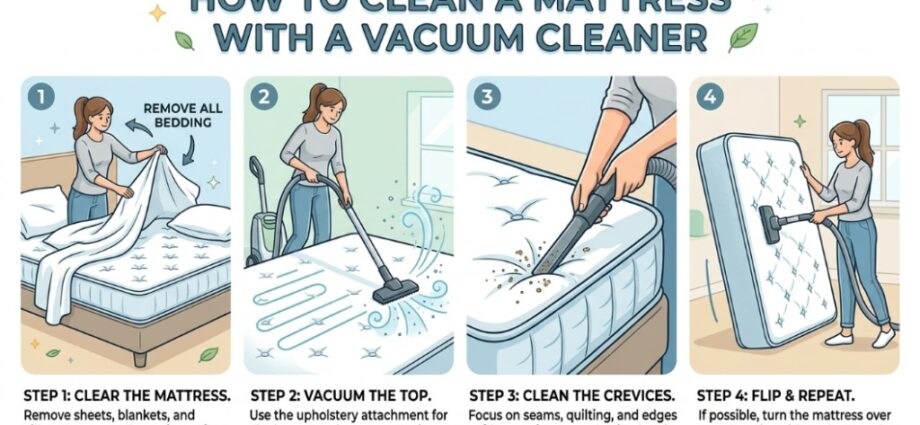
The proper way to vacuum a mattress is to strip all bedding, use an upholstery attachment on a vacuum with a HEPA filter, clean the entire surface slowly in overlapping passes, focus on seams and edges, and repeat every 1–2 months to reduce dust mites, allergens, and bacteria.
Why Learning How to Vacuum Mattress Properly Matters
You spend nearly one-third of your life on your mattress. Yet most mattresses hold dust mites, dead skin cells, allergens, and bacteria that affect breathing quality and sleep comfort. Studies estimate the average mattress can contain millions of dust mites after just a few years of use.
Learning how to vacuum mattress properly helps remove hidden contaminants, reduce allergy symptoms, improve indoor air quality, and extend mattress lifespan. It’s one of the simplest habits that creates a cleaner sleep environment without expensive cleaning services.
Vacuuming your mattress correctly means using the right tools, technique, and schedule to remove debris embedded beneath the surface fabric—not just what’s visible. Done consistently, this small routine supports healthier sleep and better hygiene.
Why Should You Vacuum Your Mattress Regularly?
Regular mattress vacuuming removes dust mites, allergens, bacteria, and dead skin buildup that accumulate over time and affect sleep quality and respiratory health.
Every night, your body sheds skin cells and releases moisture. These conditions create an ideal environment for dust mites and microbes. According to the Asthma and Allergy Foundation of America, dust mites are one of the most common indoor allergy triggers.
Vacuuming helps:
- Reduce allergen exposure
- Prevent odor buildup
- Remove pet dander
- Limit bacteria growth
- Extend mattress durability
- Improve airflow inside mattress fibers
If you wake up congested, itchy, or tired despite enough sleep hours, your mattress hygiene may be part of the problem.
How Often Should You Vacuum Your Mattress?
You should vacuum your mattress every 1–2 months, or more frequently if you have allergies, pets, or high humidity conditions.
Environmental conditions influence cleaning frequency. Homes with pets, high dust exposure, or humid climates require more frequent mattress maintenance.
| Household Type | Recommended Vacuuming Frequency |
|---|---|
| Standard household | Every 2 months |
| Allergy sufferers | Monthly |
| Pet owners | Every 3–4 weeks |
| Humid climates | Monthly |
Regular vacuuming reduces long-term accumulation and makes deep cleaning easier.
What Tools Do You Need to Vacuum a Mattress Properly?
You need a vacuum cleaner with an upholstery attachment, preferably a HEPA filter, and optionally baking soda for odor control.
Not all vacuum cleaners perform equally well on mattresses. The right attachments help lift particles embedded in fabric layers.
Recommended tools include:
- Upholstery brush attachment
- HEPA-filter vacuum cleaner
- Crevice tool for seams
- Handheld vacuum (optional)
- Baking soda (optional deodorizer)
HEPA filters trap microscopic allergens instead of redistributing them into the air.
How to Vacuum Mattress Properly Step by Step?
To vacuum a mattress properly, remove bedding, sprinkle baking soda if needed, vacuum slowly across the surface, clean seams carefully, flip the mattress, and repeat on the other side.
Step 1: Remove All Bedding
Strip sheets, mattress protectors, and pillow covers before cleaning to expose the entire mattress surface.
Wash bedding in hot water above 130°F (54°C) to kill dust mites effectively.
Step 2: Apply Baking Soda for Odor Removal
Sprinkle baking soda evenly and let it sit for 15–30 minutes before vacuuming.
Baking soda absorbs moisture and neutralizes trapped odors inside mattress fibers.
Step 3: Use Upholstery Attachment
Run the upholstery attachment slowly across the mattress using overlapping strokes.
Slow passes allow suction to remove embedded particles instead of just surface dust.
Step 4: Focus on Seams and Edges
Use a crevice tool along stitched areas where allergens accumulate most.
Seams often hold the highest concentration of dust mites.
Step 5: Flip and Repeat
Clean both sides of the mattress if it’s double-sided.
This ensures complete debris removal and balanced wear.
Should You Vacuum a Mattress Before or After Sprinkling Baking Soda?
You should vacuum after sprinkling baking soda because it absorbs moisture and odors before being removed during suction cleaning.
This simple technique improves freshness without chemical cleaners. It’s especially helpful for mattresses exposed to sweat or humidity.
Can Vacuuming Remove Dust Mites from a Mattress?
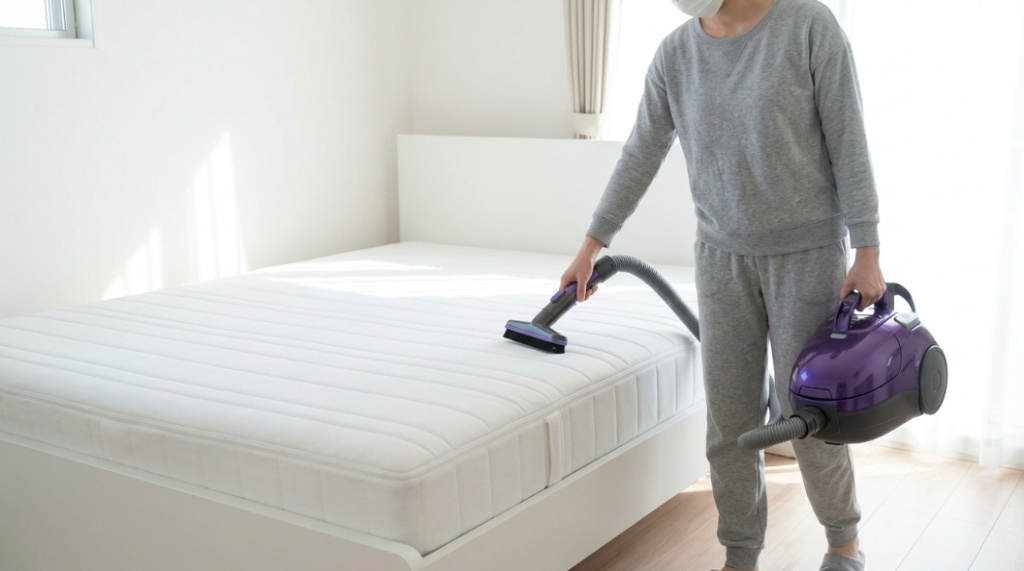
Vacuuming removes a significant portion of dust mites and their waste but works best when combined with mattress protectors and regular bedding washing.
Dust mites thrive in warm, humid environments. Vacuuming reduces their numbers but does not eliminate them completely.
For better results:
- Use allergen-proof mattress covers
- Wash bedding weekly
- Maintain indoor humidity below 50%
- Vacuum surrounding floors regularly
Combining these strategies creates stronger protection against allergens.
Is It Safe to Vacuum Memory Foam Mattresses?
Yes, memory foam mattresses can be vacuumed safely using low suction and a soft brush attachment.
Avoid aggressive suction or stiff attachments that may damage foam layers.
Safe cleaning tips include:
- Use gentle pressure
- Avoid moisture exposure
- Do not use steam cleaners unless manufacturer-approved
- Follow care label instructions
Proper technique preserves foam structure and comfort performance.
Should You Vacuum a Mattress Protector Too?
No, mattress protectors should usually be machine-washed instead of vacuumed.
Most protectors are designed for regular washing and provide the first defense against allergens and spills.
Wash protectors:
- Every 2–4 weeks normally
- Weekly for allergy sufferers
Does Vacuuming Extend Mattress Lifespan?
Yes, vacuuming reduces debris buildup that breaks down mattress fibers and shortens structural support over time.
Dust and skin particles increase friction inside mattress materials. Over years, this accelerates sagging and odor formation.
Routine maintenance helps:
- Maintain firmness longer
- Prevent premature wear
- Reduce microbial growth
- Improve sleep surface hygiene
What Mistakes Should You Avoid When Vacuuming a Mattress?
Avoid using wet cleaning methods, skipping seams, vacuuming too quickly, or using high suction on delicate mattress types.
Common mistakes reduce cleaning effectiveness.
- Vacuuming too fast
- Ignoring edges and stitching
- Using incorrect attachments
- Applying liquid cleaners unnecessarily
- Skipping regular cleaning schedules
Consistency matters more than intensity.
Is Steam Cleaning Better Than Vacuuming a Mattress?
Steam cleaning removes deeper contaminants but vacuuming is safer for routine maintenance and recommended more frequently.
| Method | Best Use | Frequency |
|---|---|---|
| Vacuuming | Routine allergen removal | Monthly |
| Steam cleaning | Deep sanitation | Every 6–12 months |
Both methods complement each other when used correctly.
Can Vacuuming Help Reduce Mattress Odors?
Yes, vacuuming combined with baking soda helps remove odor-causing particles and moisture trapped inside mattress layers.
Odors usually result from sweat, humidity, bacteria, and dust accumulation.
For best odor removal:
- Use baking soda regularly
- Improve bedroom ventilation
- Rotate mattress every 3–6 months
- Use breathable mattress protectors
Does Mattress Vacuuming Improve Sleep Quality?
Yes, reducing allergens and dust exposure improves breathing comfort, which supports deeper and more restorative sleep.
Cleaner sleep surfaces reduce nighttime irritation and congestion. Many allergy sufferers notice measurable improvements after improving mattress hygiene routines.
Conclusion: What Is the Best Routine for Mattress Vacuuming?
The best routine for learning how to vacuum mattress properly includes monthly cleaning with an upholstery attachment, baking soda deodorizing, seam-focused suction, and consistent bedding maintenance. This simple habit reduces allergens, improves indoor air quality, and protects mattress structure over time.
Mattress hygiene directly influences sleep quality. Small changes in cleaning routines produce noticeable improvements in comfort and freshness. Start with a monthly schedule and adjust based on household conditions.
If better sleep matters to you, mattress maintenance should become part of your regular home cleaning checklist.
FAQ: How to Vacuum Mattress Properly
Can I vacuum my mattress without baking soda?
Yes, baking soda is optional but helpful for odor removal and moisture absorption.
Vacuuming alone still removes dust, allergens, and debris effectively.
What vacuum attachment works best for mattresses?
An upholstery brush attachment works best because it lifts embedded debris without damaging fabric.
Crevice tools improve seam cleaning performance.
How long should I vacuum a mattress?
Vacuuming a mattress usually takes 10–15 minutes depending on size and contamination level.
Slow passes increase effectiveness.
Is vacuuming enough to clean a mattress?
Vacuuming removes surface allergens but deeper sanitation requires occasional steam cleaning or professional cleaning.
Routine vacuuming remains essential maintenance.
Can vacuuming remove bed bugs?
Vacuuming can remove some bed bugs but should be combined with professional pest treatment for full elimination.
Always dispose of vacuum contents immediately after cleaning.
Should I vacuum a new mattress?
Yes, vacuuming a new mattress removes packaging dust and manufacturing particles before first use.
This improves initial hygiene.
Read More Also: How to Keep Your Home Clean If You Have Cats
Discover More: How to Choose the Best Upright Vacuum for Rugs and Thick Carpets