











As the temperatures start to cool down and the summer season starts to wind down, pool owners often feel a sense of disappointment as they prepare to close up their pool for the year. However, there’s no need to let the fun end so soon! One solution to this problem is investing in the best solar pool heater.
These devices are designed to capture the sun’s energy and use it to heat your pool water, which can help you extend your pool season by a few months, allowing you to get more enjoyment from your backyard oasis. Not only that, solar pool heaters are an eco-friendly and cost-effective alternative to traditional heating methods, which can save you money on your energy bills in the long run. With a solar pool heater, you can say goodbye to the end-of-summer blues and enjoy your swimming pool for longer!
What is a Solar Pool Heater?
A solar pool heater is a system that harnesses the sun’s energy to heat your pool water. It consists of solar thermal collectors (panels) and a pump that work together to capture heat and transfer it directly to the pool water. The solar panels absorb UV radiation from the sun, converting it into heat energy. Then the pump pushes the heated water through the solar panels continuously, ensuring a constant comfortable temperature.
Solar heating is a green technology that relies on renewable solar energy rather than electricity or gas. Solar pool heating systems require little maintenance and can last over 10 years. They are convenient, cost-effective, and eco-friendly.
How Does a Solar Pool Heater Work?
Solar pool heating works through a simple process:
- The sun rays shine down on the solar collectors, which are made of polymer or copper and have an antireflective coating.
- The coating helps the panels absorb as much of the UV radiation as possible and convert it into heat.
- The pool pump circulates water from the pool through the solar collectors.
- As the water flows through the panels, the heat from the panels gets transferred to the water, increasing its temperature.
- The heated water then flows back down into the pool, replacing the cooler water that gets pumped back up to the solar collectors.
- This cycling of water continues whenever the solar panels are hotter than the pool water. The more solar panels your system has, the more heat can be collected and the faster your pool will heat up.
It’s a simple but effective process that relies on the sun’s renewable energy to heat your pool for free! The only electrical component needed is the pump to keep the water circulating.
Benefits of Solar Pool Heating

Installing a solar heating system for your pool comes with many great perks:
- Extend the swimming season – Solar heating can raise your pool’s temperature by up to 15°F, letting you comfortably swim for many more weeks on either side of summer.
- Save money – Once installed, heating your pool with solar energy is free. You’ll save hundreds to thousands per year on electricity or gas costs.
- Eco-friendly – Solar heating reduces your carbon footprint and reliance on fossil fuels. It’s a green, renewable energy source.
- Low maintenance – Solar systems are simple and require little upkeep. They just need occasional hose-downs and inspections.
- Increase property value – Having a solar-heated pool is a big selling point for homes. The system adds value and appeal.
- Soothing hot tub feel – Solar heating warms the water to pleasant hot tub temperatures. No more freezing dips!
- Compatible with pools & hot tubs – Solar works for all pool types and can also heat hot tubs and swim spas.
With all these excellent benefits, solar pool heating is an investment that pays for itself in just a few short seasons of enjoyment.
Factors That Affect Solar Heating Efficiency
Several key factors determine how efficiently a solar pool heating system will be able to capture and transfer heat:
- Climate – The sunnier and warmer your location, the better solar will work. Solar thrives in southern climates.
- Season – Solar is more effective in spring, summer and fall when days are long. Winter sun is weaker.
- Number of solar panels – More panels = more heat absorption and faster heating.
- Panel placement – Panels should face south and be angled to maximize direct sun exposure.
- Surface area – The larger the pool, the more solar panels needed to heat it sufficiently.
- Time of day – Solar only works when the sun is out. Systems are less efficient on cloudy days.
- Water temperature – The cooler the water, the more heat can be transferred from the solar collectors.
- Pump flow rate – Faster water flow allows for better heat transfer and circulation.
Knowing these factors help you pick the right solar heating system and placement for optimal efficiency.
Types of Solar Pool Heaters
There are a couple different designs of solar collectors to choose from when shopping for a system:
Unglazed Solar Collectors
- Made of polymer or plastic piping
- Less expensive option
- Can lose some heat through convection
- Good for warmer climates
- Examples: Uni-Solar, POLARIS
Glazed Solar Collectors
- Contain copper pipes or tubes in an insulated, glass-covered box
- Retain more heat than unglazed
- Work better in cooler climates
- More expensive but also more efficient
- Examples: ThermoDynamics, SunHeater
Glazed solar collector panels will be more expensive but heat water more effectively. Unglazed collectors are budget-friendly but lose some efficiency, especially in colder temperatures when heat retention is crucial.
Talk to solar pool heating pros in your area to determine which type will work best for your pool scenario.
How to Size Your Solar Pool Heating System
Sizing a solar heating system correctly is an important part of the design process. An undersized system won’t be able to heat your pool sufficiently while an oversized one wastes money and resources.
Follow these tips for choosing the right solar heater size:
- The general rule of thumb is 50-100 sq ft of collector area per 1000 gallons of pool water.
- To be more precise, use a solar sizing calculator tool online for your exact pool size and location.
- Factor in your local climate. Cooler regions need more panels to heat pools effectively.
- Consider your budget and how much you’ll use the pool in shoulder seasons. More panels = more heating but higher cost.
- Allow room for expansion. It’s easier to start small and add more panels than to remove some down the line.
- Aim to heat the water about 10°F over the expected air temperature for comfortable swims.
Consult with solar professionals during design and take the time to size your system correctly. Proper solar heating capacity makes all the difference in extending your pool season.
Top 5 Solar Pool Heaters

Now let’s look at some of the top solar pool heating options:
1. SmartPool S601P SunHeater
- Glazed copper solar panels
- Up to 40% more efficient than plastic panels
- Heats up to 40,000 gallons
- Comes in a kit for above-ground and in-ground pools
- 20-year warranty on collectors
The SunHeater system from SmartPool is one of the most efficient and durable solar heaters you can buy. The glazed copper panels retain heat incredibly well. With proper sizing, this system can extend your pool season by up to 4 months in many climates.
2. Thermo Dynamics Solaris
- Available in polymer or copper panels
- Comes in a complete packaged system
- Can extend season by up to 3 months
- Heats up to 32,000 gallons
- Cost-effective heating solution
As one of the leading solar collector brands, Thermo Dynamics offers excellent solar heating performance at reasonable prices. The Solaris line works for all pool types and provides over 500 square feet of collector area.
3. FAFCO Solar Bear Economy Heating System
- Unglazed polymer panels
- Budget-friendly option
- Heats above-ground and small in-ground pools
- DIY-friendly kit comes with everything needed
- Can raise pool temperature by up to 18°F
The Solar Bear system from FAFCO is an affordable way to harness solar heating. The polymer panels are easy to install yourself and provide efficient heating for their lower cost. A great option for above-ground pools.
4. Polar Covers Pool Solar Thermal
- Spiral molded PE polymer glazed panels
- Fully equipped with filtration and heating
- Efficient even in cool areas
- Can fix to roof, ground or rack mount
- 3-5 year full warranty
Polar Covers makes customized solar pool heating kits for all pool sizes and locations. Their Rotationally Molded Polyethylene panels retain heat well but are also budget-friendly. With one of their systems, enjoy a longer swimming season without high bills.
5. GAME SolarPRO Curve Solar Pool Heater
- Curved, unglazed polymer tubes
- Easy DIY installation
- Retains heat better than flat panels
- Excellent for salt water pools
- Streamlined, aesthetically pleasing design
The SolarPRO Curve system from GAME uses a curved tube design that increases sun exposure and heating efficiency. The modern shape emits a polished look around any backyard pool and provides up to 15°F temperature boosts.
How Much Does Solar Pool Heating Cost?
The cost of a solar heating system for your pool depends on a few factors:
- Pool size – Larger pools require more solar panels and higher capacity pumps, increasing costs. In-ground pools usually cost more than above-ground.
- Type of collector – Glazed copper panels are more expensive than unglazed polymer.
- Location and climate – Cooler climates need more panels to heat pools effectively. Additional panels means added cost.
- Professional installation – DIY kits can save on labor fees, but a pro install ensures proper sizing, placement and hookup.
On average, plan on spending $2000-$4000 to heat an average size in-ground pool with a well-sized solar system. Higher-end systems with greater capacity for larger pools can cost $4000-$8000.
While not cheap, solar heating pays for itself in energy savings within just 2-3 years for most pool owners. The system should last 10+ years and provide free heating the entire time.
Solar Heating ROI and Payback Period
Speaking of payback, solar pool heating provides an excellent return on investment. While upfront costs are significant, the long-term savings add up quickly.
Most solar pool heating systems will pay for themselves in under 3 years. After that, you get free pool heating for the 10+ year lifespan of the system. For the average pool owner who initially spends $3000 on solar installation, here is the simple ROI math:
- $3000 initial solar heating investment
- $1000+ saved per year on heating costs = $3000+ savings over 3 years
- $6000+ total lifetime savings over 10+ years
So for an initial $3000 spent, you’d recover costs in 3 years and ultimately save over $6000 in electricity or gas. That’s a 100% return on your solar investment over its lifespan! Plus you get to enjoy extended swimming seasons the whole time.
This simple payback period and impressive ROI makes solar heating one of the smartest investments for your home and pool. The free solar energy can make your pool comfortable for swimming up to 6-9 months per year in many climates.
5 Steps to Install Solar Pool Heating

Installing a DIY solar heating kit for your pool is totally feasible for the committed do-it-yourselfer. Here are the basic steps:
1. Determine correct solar panel size
Use 60-100 sq ft of collector area per 1000 gal of pool water. Factor in climate and heat goals.
2. Choose a solar heating kit
Select quality glazed or unglazed panels that meet your sizing needs.
3. Mount solar collectors
Place panels on the roof, ground or a rack facing south at 45 degree tilt.
4. Connect plumbing to pool
Hook the inlet and outlet plumbing to pool filtration pipes with bypass valves.
5. Turn on pump
Start circulating water through the solar collectors and enjoy the heat!
While DIY solar setup is possible, hiring a solar professional to size, place and hook up your system is highly recommended. This ensures your panels are heating the pool as efficiently as possible.
5 Tips for Maintaining a Solar Pool Heater
Solar heating systems require very little annual maintenance to continue operating smoothly. Follow these tips to keep your panels in peak condition:
- Inspect panels a few times per year and hose down to remove debris
- Check plumbing couplers and valves for leaks annually
- Replace worn or cracked collector hoses
- Check roof mounts and tighten bolts as needed
- Have a pool professional check flow rates and water chemistry 2-3 times per season
Taking an hour or two per year to inspect, clean and test the system makes a big difference in longevity. Well-maintained solar collectors can function efficiently for over a decade.
FAQs
-
How long do solar pool heaters last?
With regular maintenance, a quality solar heating system will function effectively for 10-15 years or longer. The collectors are warrantied for at least 10 years and often last beyond that.
-
Does a solar cover work just as well?
Solar covers help retain heat, but they don’t actually heat the water. For reliable temperature increases, solar collectors are needed to transfer UV heat to the pool water. Use both for best results.
-
What temperature can solar heat a pool to?
In optimal conditions, solar heating can raise your pool by 15°F over air temperature. Realistically, expect 10°F warmer water than outside during sunny days.
-
Does solar work in winter or cold climates?
Solar is less effective in winter and works best in warmer climates. But panels still provide some heat on sunny winter days. Just have realistic expectations for shoulder seasons.
-
Is DIY solar pool heater installation safe?
DIY solar setup is totally possible but has risks if not done properly. Your best bet is hiring a solar pro for safe, efficient installation and hookup.
Bring on Endless Pool Days with Solar Heating
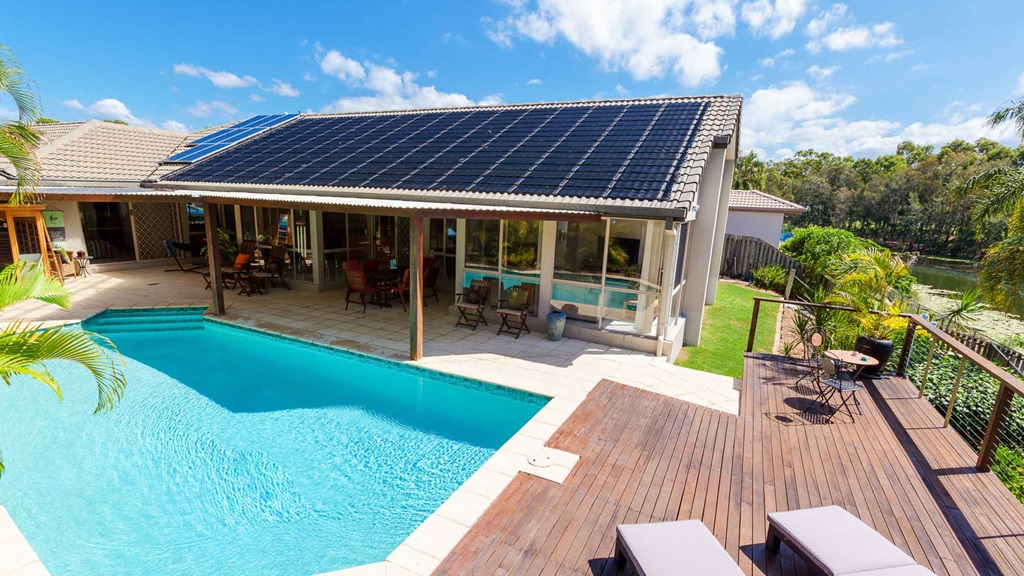
Who’s ready to take a dip? With the addition of a properly-sized solar heating system, you can look forward to ample swimming all season long and envy of your neighbors.
While upfront costs are substantial, a solar pool heater pays for itself within 3 years and provides a great return on investment. Plus you’ll be reducing energy use and harnessing free, renewable energy from the sun.
Take some time to understand how solar pool heating works and the options available. With high-quality glazed or unglazed collectors installed by professionals, you’ll be swimming comfortably beyond just the peak summer months. Extend your enjoyment of your backyard oasis with solar technology that delivers!