








A bin of vegetable peels left uncovered for two days will teach you more about fruit flies than any gardening book. The flies arrive first, then ants, then something larger that tips the lid off at night. The scraps themselves are rarely the real problem — how they are stored, buried, and balanced is. Most pest outbreaks in kitchen-scrap composting trace back to a few fixable habits: exposed food, too much soft green material, and a pile that never gets turned. If you are weighing an enclosed system against an open pile, The Village Gardener Reviews covers how a sealed dual-chamber tumbler changes pest access compared with an open heap. What follows is what genuinely keeps flies, rodents, and raccoons out of your compost.
Quick Answer
Compost kitchen scraps without pests by burying them at least 8–10 inches deep in the center of the pile, covering every addition with brown material such as leaves, shredded cardboard, or finished compost, and keeping the pile as moist as a wrung-out sponge. Exclude meat, dairy, oils, and cooked leftovers. Use a sealed tumbler or lidded bin if rodents or raccoons are a known problem in your area.
Key Takeaways
- Burying scraps deep in the pile’s hot center is the single most effective pest deterrent — surface scraps feed flies and animals.
- Every time you add greens, add roughly two to three times as much brown material by volume and mix it in.
- Meat, dairy, grease, and cooked food are the scraps most likely to draw rodents and raccoons; leave them out of a home compost pile.
- Enclosed tumblers and lidded bins reduce pest access but still need proper moisture and aeration to break material down.
- Freezing or pre-processing scraps before adding them speeds decomposition and reduces odors that attract animals.
Why Kitchen Scraps Attract Pests in the First Place
Pests are not responding to “compost” — they are responding to fresh, moist, sugar-rich plant tissue sitting near the surface. A banana peel or tomato end is essentially free food, and it releases volatile compounds as it starts to rot. Fruit flies can detect those compounds from a distance and lay eggs within a day. Ants follow the same scent trail. Rodents and raccoons are drawn by smell and by the easy calories, especially when the pile is warm and the scraps are still recognizable.
The good news is that all of these signals fade once the material is buried, mixed with carbon-rich browns, and actively decomposing. A properly managed pile smells earthy, not rotten, and that difference is what separates a pest magnet from a productive bin.
The Rules That Actually Keep Pests Out
Bury scraps in the center, never on top
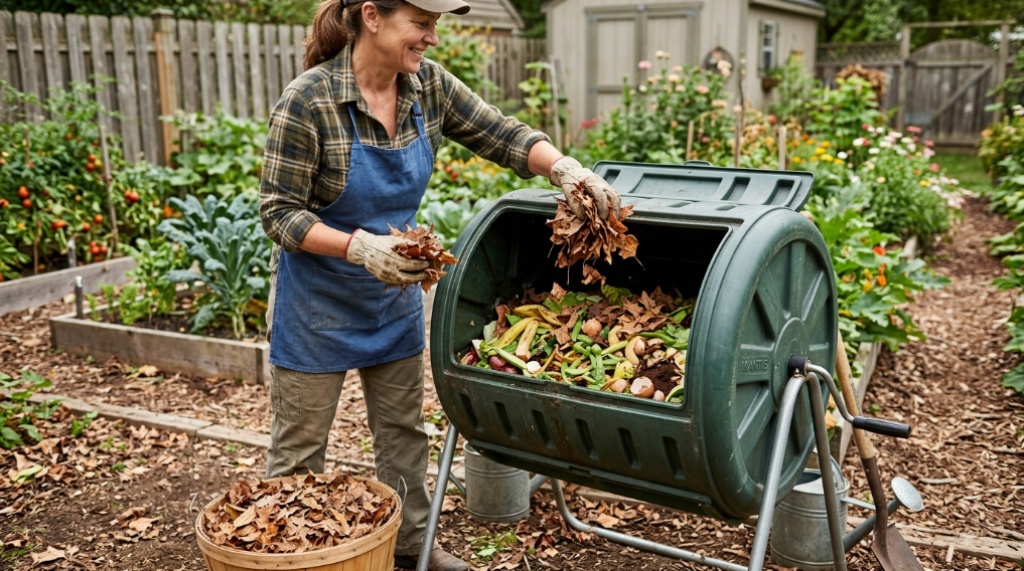
Dig a hole or push aside the top layer of the pile with a fork, drop the scraps in, and cover them completely with at least 8–10 inches of existing compost or browns. In a tumbler, add scraps and then immediately add browns and give it several rotations so the new material is coated and dispersed. Scraps sitting on the surface are the number one cause of fly problems.
Balance greens and browns
Kitchen scraps are “greens” — nitrogen-rich and wet. Browns are dry, carbon-rich materials: dead leaves, straw, shredded paper, sawdust, cardboard, or wood chips. Aim for roughly one part greens to two or three parts browns by volume. This ratio absorbs excess moisture, reduces odor, and keeps the pile in the aerobic range where it breaks down quickly instead of putrefying.
Keep the pile as moist as a wrung-out sponge
Too wet and the pile goes anaerobic, producing the sour smell that draws animals. Too dry and nothing decomposes, so scraps linger. Squeeze a handful: it should feel damp but not drip. Add browns if it is soggy, and a little water if it is dusty.
Turn regularly and add in batches
Turning introduces oxygen and keeps the pile hot, which accelerates breakdown and discourages pests. Rather than adding a small handful of scraps every day, consider collecting them in a sealed container in the kitchen and adding a larger batch once or twice a week. Fewer, larger additions create a hotter, more uniform pile, While setting up your eco-friendly kitchen, choosing the right appliances is just as important as managing food waste; check out our guide on how to pick compact microwave ovens that save space in small kitchens to optimize your cooking area.
What to Compost and What to Leave Out
| Material | Pest risk | How to handle it |
|---|---|---|
| Fruit and vegetable trimmings | Low to moderate | Bury deep; add browns immediately |
| Coffee grounds and tea leaves | Low | Mix in; they are mild greens |
| Eggshells | Low | Crush and scatter |
| Bread, pasta, rice | Moderate | Small amounts only, buried deep |
| Meat, fish, bones | High | Keep out of home piles; use bokashi or municipal pickup |
| Dairy and cheese | High | Keep out of open piles |
| Oils, grease, fatty scraps | High | Keep out; they slow decomposition and smell |
| Cooked leftovers with sauce or salt | Moderate to high | Generally avoid in home compost |
| Pet waste and cat litter | High | Never add to compost used on food crops |
Choosing a System: Open Pile vs Tumbler vs Bokashi vs Worm Bin
No single method is best for everyone. The right choice depends on how much space you have, whether rodents are already a problem nearby, and whether you want to process meat and dairy scraps.
| Method | Pest risk | Handles meat/dairy | Best for |
|---|---|---|---|
| Open pile or lidded ground bin | Moderate to high | No | Large yards with space and plenty of browns |
| Sealed tumbler | Low | No | Small yards, suburban lots, rodent-prone areas |
| Bokashi bucket | Very low (indoors) | Yes | Apartments, small kitchens, limited outdoor space |
| Worm bin (vermicomposting) | Low | No | Indoor composting of fruit and vegetable scraps |
Bokashi is worth highlighting because it ferments scraps in a sealed bucket rather than decomposing them. The fermented output is then buried in soil or added to a compost pile. Because the bucket is airtight, it produces little odor and attracts essentially no pests, and it is one of the few home methods that can handle small amounts of meat, dairy, and cooked food.
Worm bins are similarly pest-resistant when managed well, but they are sensitive to temperature and to overfeeding. Adding more scraps than the worms can process is the most common cause of fruit flies and sour smells in indoor bins.
A Step-by-Step Routine for Pest-Free Scrap Composting
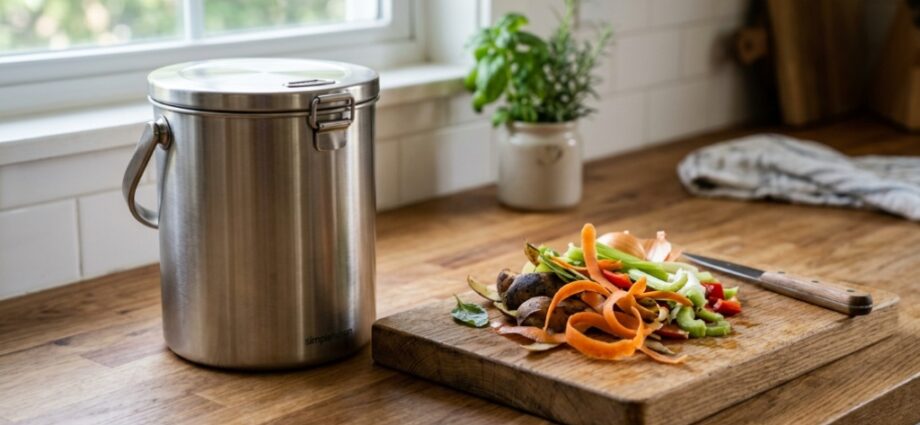
- Collect scraps in a sealed countertop container with a carbon filter or tight lid. Empty it every two to three days.
- Chop or freeze scraps before adding them. Smaller pieces decompose faster and release fewer attractant odors while waiting.
- Carry scraps out with an equal or larger volume of browns — a bucket of leaves or shredded cardboard.
- Open the pile or bin, push aside the top layer, and deposit scraps in the center.
- Cover completely with browns and existing compost so no food is visible.
- Turn or rotate the pile to mix the new material through.
- Check moisture and adjust with browns or water as needed.
- Repeat once or twice a week rather than daily.
Troubleshooting: What Each Pest Is Telling You
Fruit flies
Fruit flies mean exposed scraps or an overly wet, acidic pile. Bury new additions deeper, add a thick layer of browns on top, and consider a breathable cover such as burlap or a fitted lid. A shallow dish of apple cider vinegar with a drop of dish soap nearby can reduce adults while you fix the source.
Ants
Ants usually indicate a pile that is too dry. Moisture them by watering and turning, and keep the pile’s base slightly damp. If ants are nesting in the pile itself, turn it thoroughly to disrupt the colony.
Rodents
Rodents signal accessible food — often meat, dairy, or greasy scraps, or scraps that were never buried. Switch to a sealed tumbler or a bin with a tight-fitting lid and a hardware-cloth base, remove problematic materials entirely, and avoid leaving the lid off. If rodents persist, a bokashi system indoors or a municipal food-scrap program may be the more realistic option.
Raccoons, opossums, and dogs
These animals are strong and persistent. A lidded bin with a locking latch or a weighted lid helps. Burying scraps deep in a hot pile reduces the scent signature, but if animals are regularly tipping your bin, an enclosed tumbler with a secure latch is usually the more reliable fix.
Frequently Asked Questions
Can I compost kitchen scraps without a backyard?
Yes. Bokashi fermentation works in a sealed bucket indoors and can process meat and dairy as well as vegetable scraps. Worm bins also work indoors for fruit and vegetable scraps, provided you do not overfeed them and keep the bedding balanced.
How deep should I bury kitchen scraps?
At least 8–10 inches deep, in the center of the pile rather than at the edges. The goal is to put enough material between the food and the open air that odors do not escape and animals cannot easily dig it out.
Do coffee grounds attract pests?
Not significantly. Coffee grounds are a mild green material with a fairly low pest risk. Mix them into the pile rather than leaving them in a layer on top, and they break down quickly.
Why does my compost smell rotten?
A rotten or sour smell almost always means the pile has gone anaerobic — too wet, too compacted, or too many greens relative to browns. Turn the pile to add oxygen and mix in dry browns such as leaves or shredded cardboard.
Is it safe to compost citrus peels and onion scraps?
Yes, in moderate amounts. Citrus and onions break down fine in a balanced pile. Some gardeners avoid large quantities of citrus in worm bins because it can make the bedding more acidic, so add those sparingly if you are vermicomposting.
How long does it take for kitchen scraps to break down?
In an actively managed, warm pile, most kitchen scraps break down within a few weeks to a couple of months. Tumblers can be faster because the material is regularly aerated. Cool weather, large unchopped pieces, and an unbalanced ratio all slow the process.
Conclusion
Pests in a compost pile are almost always a symptom of exposed food, excess moisture, or an unbalanced ratio of greens to browns. Fix those three things and most problems disappear on their own. Bury scraps deep, cover every addition with browns, keep the pile damp but not soggy, and leave meat, dairy, and grease out of open systems. If rodents or raccoons are already active nearby, an enclosed tumbler or an indoor bokashi bucket removes the access point entirely rather than relying on management alone.