










The best pool vacuum under $200 is a lightweight, easy-to-maintain cleaner that matches your pool type (above-ground or inground) and uses either manual suction or simple automatic operation for consistent debris removal.
Why Choosing the Right Budget Pool Vacuum Matters
A dirty pool isn’t just unpleasant—it becomes unsafe fast. Within days, debris buildup can clog filters, encourage algae growth, and increase chemical costs. Many pool owners assume they need a $500+ robotic cleaner to solve this. That’s not true.
A pool vacuum under $200 can effectively clean your pool if you choose the right type and features. The problem is most buyers pick based on price alone, ending up with weak suction, poor durability, or a model incompatible with their pool setup.
This guide breaks down exactly how to choose the best affordable pool vacuum, what features actually matter, and how to avoid wasting money. By the end, you’ll know how to get reliable cleaning performance without overspending.
What types of pool vacuums are available under $200?
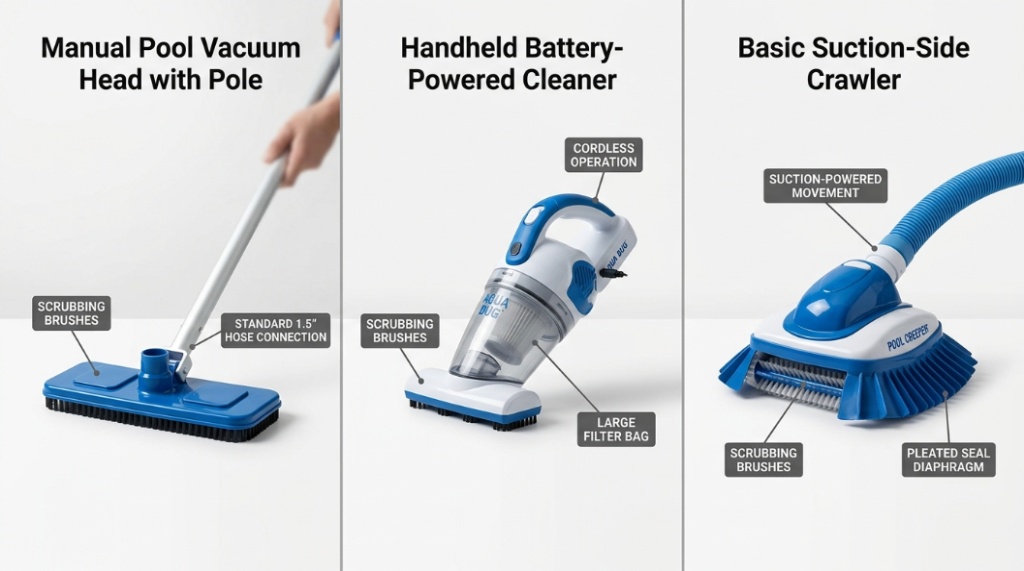
Most pool vacuums under $200 fall into three categories: manual vacuums, suction-side cleaners, and handheld battery-powered models.
Manual Pool Vacuums
Manual vacuums connect to your pool’s filtration system and require you to guide them across the surface. They are the most affordable and offer strong suction when used correctly.
- Best for: Small to medium pools
- Pros: Low cost, strong cleaning control
- Cons: Time-consuming
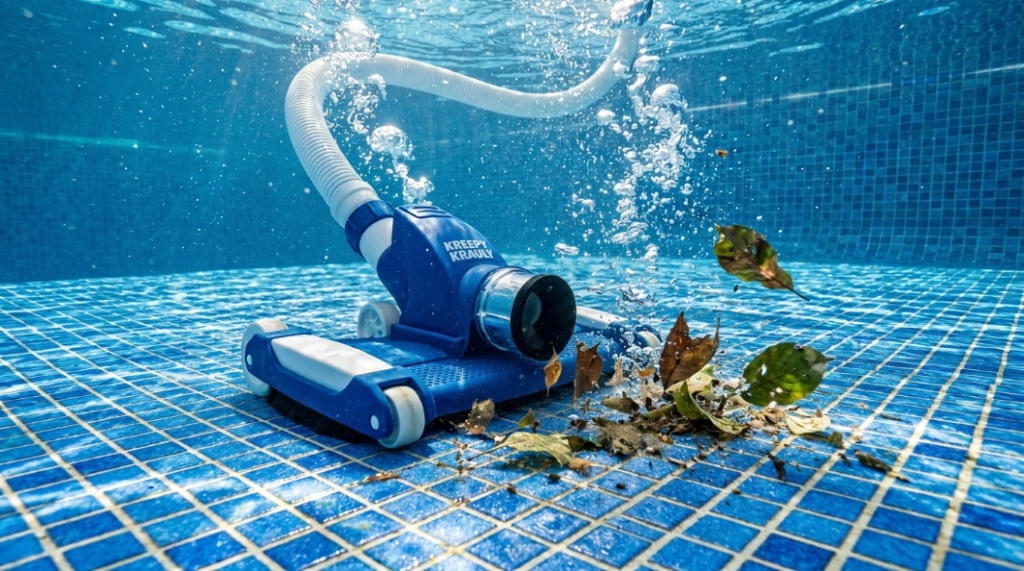
Suction-Side Automatic Vacuums
These attach to your skimmer or suction port and move automatically using your pool pump.
- Best for: Budget automation
- Pros: Hands-free operation
- Cons: Depends on pump power
Handheld Pool Vacuums
Battery-powered units designed for spot cleaning and quick maintenance.
- Best for: Quick cleanups
- Pros: Portable, easy to use
- Cons: Limited coverage
Which type of pool vacuum under $200 is best for your pool?
The best type depends on your pool size, debris level, and how much effort you want to invest.
| Pool Type | Recommended Vacuum Type | Reason |
|---|---|---|
| Above-ground pools | Manual or handheld | Simple setup and lower debris load |
| Small inground pools | Suction-side cleaner | Automated cleaning at low cost |
| Large pools | Manual vacuum | Better control and coverage |
| Heavy debris pools | Manual vacuum | Stronger suction and precision |
What features should you look for in a pool vacuum under $200?
The most important features are suction power, compatibility, hose length, and filtration efficiency.
1. Suction Power
A good vacuum should maintain consistent suction without clogging. For suction-side models, your pool pump must provide enough pressure.
2. Pool Compatibility
Always check whether the vacuum is designed for above-ground or inground pools. Using the wrong type reduces efficiency.
3. Hose Length
The hose should reach all areas of your pool. Insufficient length leads to incomplete cleaning.
4. Filter Capability
Some vacuums rely on your pool filter, while others have built-in debris bags. Fine filtration improves water clarity.
5. Ease of Maintenance
Look for simple assembly, easy debris removal, and minimal parts that can break.
Do pool vacuums under $200 actually work well?
Yes, but performance depends on proper setup and realistic expectations.
Budget pool vacuums can remove leaves, dirt, sand, and algae effectively when used regularly. According to industry estimates, consistent vacuuming can reduce chemical usage by up to 30% because debris doesn’t break down in the water.
However, they may not match the deep cleaning efficiency of high-end robotic cleaners. The key is frequent use rather than relying on occasional deep cleaning.
What are common mistakes when buying a pool vacuum under $200?
The biggest mistakes include ignoring compatibility, overestimating automation, and choosing based on price alone.
- Buying the wrong type: Not all vacuums work for all pools
- Ignoring pump requirements: Weak suction reduces performance
- Expecting robotic-level automation: Budget models require some manual input
- Skipping reviews: Real-world feedback reveals durability issues
How do you use a pool vacuum effectively?
Proper technique improves cleaning results and extends the life of your vacuum.
Step-by-Step Process
- Remove large debris manually first
- Connect vacuum securely to the system
- Move slowly to avoid stirring dirt
- Overlap cleaning paths
- Clean filters after each session
This method ensures thorough cleaning and prevents clogging.
How long do budget pool vacuums last?
Most pool vacuums under $200 last between 2 to 5 years with proper maintenance.
Durability depends on:
- Material quality
- Frequency of use
- Water conditions
- Maintenance habits
Replacing hoses, brushes, or filters regularly can extend lifespan significantly.
Are automatic pool vacuums under $200 worth it?
Yes, if you want convenience and have a compatible pool pump.
Suction-side cleaners provide decent automation without the high cost of robotic models. They are especially useful for daily maintenance but may struggle with heavy debris.
What is the best maintenance routine for a pool vacuum?
Regular cleaning and inspection keep your vacuum working efficiently.
- Rinse after each use
- Check hoses for leaks
- Clean or replace filters
- Store in a dry place
Neglecting maintenance reduces suction and shortens lifespan.
Conclusion: How to Choose the Right Pool Vacuum Under $200
The best pool vacuum under $200 is not about finding the cheapest option—it’s about choosing the right type for your pool and using it consistently.
Manual vacuums offer control and reliability. Suction-side cleaners provide convenience. Handheld models are perfect for quick touch-ups. Each has its place depending on your needs.
If you focus on compatibility, suction power, and ease of maintenance, you can get excellent cleaning performance without overspending.
Take a few minutes to evaluate your pool setup before buying. That small step can save you time, money, and frustration for years.
FAQ: Pool Vacuum Under $200
Can a pool vacuum under $200 clean algae?
Yes, but only light to moderate algae. Heavy algae requires brushing and chemical treatment first.
Do I need a pump for a suction-side vacuum?
Yes, suction-side vacuums rely on your pool pump for operation.
Are cordless pool vacuums worth it?
They are useful for spot cleaning but not ideal for full pool cleaning.
How often should I vacuum my pool?
At least once a week, or more frequently if debris levels are high.
Can I use the same vacuum for above-ground and inground pools?
Not always. Always check compatibility before purchasing.
Why is my pool vacuum losing suction?
Common causes include clogged filters, air leaks, or weak pump pressure.
What size hose do I need?
The hose should be long enough to reach the farthest corner of your pool.
📌 Related Reads
👉 Don’t miss buy the right vacuum cleaner for home and business use
👉 Don’t miss electric heating vs gas heating: which is better for your home?