










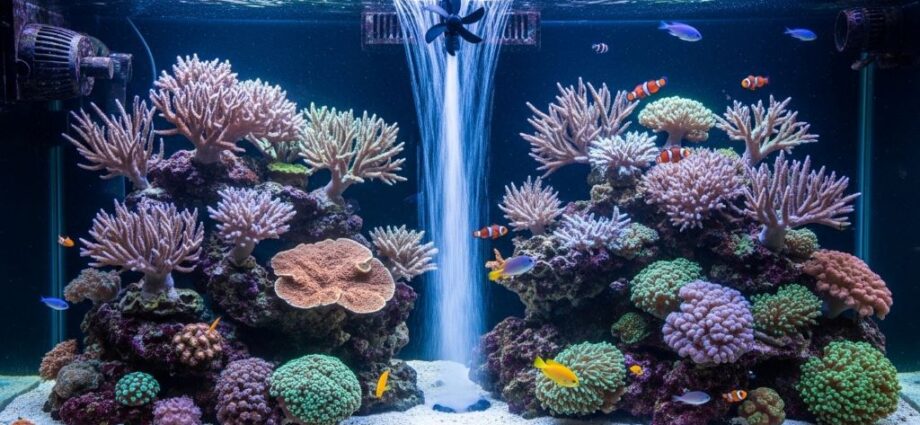
Water movement is the lifeblood of any healthy aquarium. Without proper circulation, your fish suffer, corals struggle, and water quality deteriorates rapidly. Many aquarium hobbyists underestimate how much flow their tanks actually need. Stagnant zones create breeding grounds for harmful bacteria, waste accumulates in corners, and oxygen levels drop dangerously low.
High-flow powerheads offer an effective solution to these circulation problems. These compact devices create strong currents that mimic natural water movement found in oceans and rivers. When used correctly, they transform your aquarium into a thriving ecosystem where inhabitants flourish and water parameters remain stable.
This comprehensive guide will help you understand how to use powerheads effectively, where to position them for maximum benefit, and how to avoid common mistakes that can harm your aquatic environment. Whether you maintain a reef tank, freshwater planted aquarium, or fish-only system, proper water movement makes all the difference.
Understanding Water Circulation in Aquariums
Before adding equipment, you need to understand why water movement matters. In natural environments, currents constantly move water, distributing nutrients, oxygen, and heat while removing waste products. Your aquarium needs to replicate these conditions artificially.
Dead spots are areas where water barely moves. These zones accumulate detritus, uneaten food, and other organic matter. As this material breaks down, it releases ammonia and other harmful compounds. Additionally, low-oxygen pockets develop in these areas, creating stress for fish and beneficial bacteria.
Surface agitation plays a crucial role in gas exchange. When water moves across the surface, it releases carbon dioxide and absorbs oxygen from the air. Without adequate surface movement, oxygen levels drop while carbon dioxide builds up, creating a toxic environment.
Temperature stratification occurs when warm water rises to the top while cooler water settles at the bottom. This layering creates uncomfortable temperature variations throughout your tank. Proper circulation eliminates these hot and cold zones, maintaining consistent temperatures everywhere.
Choosing the Right Powerhead for Your Tank
Not all powerheads are created equal. Selecting the appropriate model requires considering several factors specific to your aquarium’s needs.
Tank size determines the flow rate you need. Generally, you want total circulation that turns over your tank volume 10 to 20 times per hour for fish-only systems. Reef tanks often require 20 to 40 times turnover or even higher. However, these are starting points, not rigid rules.
Flow pattern matters as much as flow rate. Some powerheads create narrow, jet-like streams that travel long distances. Others produce wide, gentle currents that move larger water volumes. Your tank inhabitants and layout determine which pattern works best.
Energy efficiency becomes important for devices that run continuously. Modern DC powerheads use significantly less electricity than older AC models while providing better control. Though they cost more initially, the energy savings add up over time.
Controllability allows you to adjust flow strength throughout the day. Many fish and corals appreciate varying current patterns that mimic natural tidal changes. Programmable powerheads let you create these natural rhythms automatically.
Noise level affects your enjoyment of the aquarium. Quality powerheads run nearly silent when properly installed. Cheaper models may buzz, rattle, or hum, becoming annoying over time.
Strategic Powerhead Placement for Maximum Effect
Where you position your powerheads determines how effectively they improve tank flow. Poor placement creates new dead zones while failing to eliminate existing ones.
Start by identifying problem areas in your current setup. Drop a small piece of food or observe how debris settles. Areas where particles accumulate indicate poor circulation that needs attention.
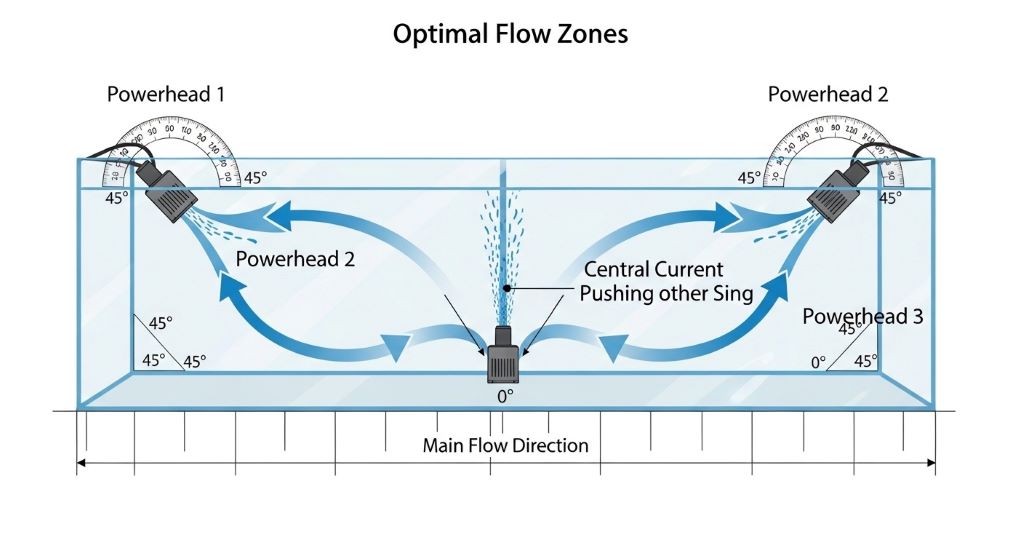
Corner placement often works well for rectangular tanks. Position one powerhead in the upper back corner, angling it across the tank toward the opposite front corner. This creates a circular current pattern that sweeps along all walls and through the center.
Opposite wall placement uses two powerheads facing each other from opposite ends of the tank. However, don’t aim them directly at each other. Instead, angle each slightly to create rotating currents. This prevents a strong central jet while maintaining flow throughout the entire volume.
Surface-oriented positioning helps with gas exchange and prevents film buildup. Angle at least one powerhead to create ripples across the water surface. This agitation dramatically improves oxygen absorption.
Behind decorations and rocks, dead zones frequently develop. Place smaller powerheads or position existing ones to push water through and around these structures. The goal is eliminating stagnant pockets while maintaining natural-looking rockwork.
Varying heights creates three-dimensional water movement. Don’t position all powerheads at the same level. Place some near the bottom, others mid-tank, and at least one higher up. This vertical variation ensures circulation reaches every depth.
Optimizing Flow Patterns for Different Tank Types
Different aquarium setups require different circulation strategies. What works for a reef tank may harm a planted aquarium.
Reef tanks need strong, chaotic flow that constantly changes direction. Corals evolved in environments with powerful waves and surge. Multiple powerheads positioned to create random, turbulent patterns keep corals healthy and prevent algae growth. Additionally, this movement helps corals capture food particles from the water column.
Fish-only tanks benefit from moderate, consistent circulation. Most fish appreciate current but don’t need the intense flow that corals require. Focus on eliminating dead zones and maintaining good surface agitation without creating exhausting conditions for your fish.
Planted aquariums need gentler circulation than many beginners expect. Strong currents damage delicate plant leaves and uproot newly planted stems. However, some flow remains necessary to distribute nutrients and carbon dioxide. Position powerheads to create gentle, broad currents rather than focused jets.
Freshwater community tanks require balanced circulation that accommodates different species. Active swimmers like barbs and danios enjoy moderate current. Meanwhile, slower fish such as angelfish and gouramis prefer calmer areas. Create zones with varying flow intensity so all inhabitants find comfortable spots.
Avoiding Common Powerhead Mistakes
Even experienced aquarists sometimes make errors that reduce powerhead effectiveness or harm their tanks.
Over-powering your tank creates exhausting conditions for inhabitants. Fish constantly fighting current become stressed and may stop eating. Corals subjected to excessive flow can suffer tissue damage. Start with moderate flow and increase gradually while observing how your animals respond.
Directing flow straight at inhabitants causes stress and injury. Never aim a powerful stream directly at fish hiding spots, coral colonies, or plant clusters. Instead, bounce flow off glass walls or rocks to diffuse the current.
Neglecting maintenance reduces powerhead performance over time. Impellers collect calcium deposits, algae, and debris that restrict flow and increase noise. Clean your powerheads monthly by disassembling them and soaking parts in vinegar to dissolve buildup.
Installing powerheads incorrectly leads to vibration noise and reduced efficiency. Ensure each unit is firmly attached to the glass with all suction cups making solid contact. Loose mounting allows the powerhead to rattle against the glass.
Ignoring intake covers on powerheads risks sucking in small fish, shrimp, or snails. Always use the provided intake guard or add aftermarket foam covers to protect your animals.
Enhancing Flow with Wavemakers and Controllers
Technology has transformed water movement in aquariums. Modern controllers add sophistication that mimics natural environments more accurately.
Wavemaker controllers alternate powerheads on and off in patterns that create surging water movement. This variation prevents animals from adapting to constant unidirectional flow. The changing currents more closely replicate ocean conditions than steady flow ever could.
Random modes create unpredictable flow patterns by varying intensity and direction. This randomness prevents algae from establishing in any particular spot and keeps corals exercising in different directions throughout the day.
Feeding modes temporarily reduce flow during mealtimes. Strong currents blow food away before fish can eat it and make it difficult for corals to capture particles. Programming reduced flow for 15 to 30 minutes during feeding improves nutrition while maintaining overall circulation.
Night modes lower flow intensity after lights go out. Many fish and corals appreciate calmer conditions during rest periods, just as ocean currents typically decrease at night. This feature reduces stress and energy expenditure during sleeping hours.
Pulse modes create short, intense bursts of flow followed by calm periods. This surging motion particularly benefits certain soft corals that naturally contract and expand with wave action.
Combining Powerheads with Other Equipment
Powerheads work best as part of an integrated circulation system rather than standalone solutions.
Return pumps from your filter or sump contribute significantly to total circulation. However, a single return typically can’t eliminate all dead zones. Therefore, powerheads supplement return flow by targeting specific problem areas.
Protein skimmers generate their own water movement as they process tank water. Position them strategically so their output contributes to overall circulation patterns rather than creating conflicting currents.
Canister filters create flow when water returns to the tank. Use spray bars or adjustable outputs to direct this return flow where it provides maximum benefit. Avoid simply dumping water straight down, which wastes circulation potential.
Air stones and bubble walls create vertical water movement as air rises. While less powerful than powerheads, they contribute to circulation and improve oxygen levels. Combine them with powerheads for comprehensive water movement.
Monitoring and Adjusting Your Circulation System
Setting up powerheads isn’t a one-time task. Regular observation and adjustment ensure your system continues working optimally.
Watch your fish behavior for circulation clues. Fish hiding constantly or struggling to swim normally indicate excessive flow. Conversely, fish hanging near powerhead outputs or gulping at the surface suggest insufficient circulation.
Test water parameters regularly to verify adequate circulation. Persistent high nitrate readings despite regular water changes often indicate dead zones where waste accumulates. Similarly, temperature variations throughout the tank reveal inadequate mixing.
Observe detritus accumulation patterns during routine maintenance. If debris consistently collects in certain spots, those areas need better flow. Adjust powerhead angles or add supplemental units to address these problem zones.
Check coral health and extension in reef tanks. Corals that remain contracted during the day may be receiving too much flow. Those growing primarily in one direction are adapting to constant unidirectional current. Healthy corals extend fully and grow in balanced, natural shapes.
Seasonal and Maintenance Adjustments
Your circulation needs may change over time as your tank matures and inhabitants grow.
Coral growth gradually blocks water flow paths as colonies expand. What worked perfectly two years ago might create dead zones now. Periodically reassess your circulation system and adjust accordingly.
Adding new decorations changes flow patterns throughout the tank. After rearranging rocks or adding new structures, observe water movement carefully and reposition powerheads if necessary.
Increasing fish population means more waste production and higher oxygen demand. As you add inhabitants, you may need additional circulation to maintain water quality.
Filter media clogging reduces return pump flow, shifting more circulation responsibility to powerheads. Clean filters regularly to maintain designed flow rates throughout your system.
Seasonal temperature changes affect metabolism and oxygen requirements. Fish and corals may need slightly different circulation in summer versus winter, particularly if room temperature varies significantly.
Troubleshooting Circulation Problems
Despite careful planning, circulation issues sometimes arise. Identifying and fixing these problems keeps your tank healthy.
Persistent algae growth in specific areas suggests inadequate flow reaching those spots. Increase circulation targeting problem zones to discourage algae establishment.
Film developing on the water surface indicates insufficient surface agitation. Angle a powerhead upward or increase its intensity to create more ripples and improve gas exchange.
Temperature differentials between top and bottom reveal inadequate vertical mixing. Add powerheads at different heights or adjust existing units to create better top-to-bottom circulation.
Coral tissue recession on the side facing a powerhead means too much direct flow. Reduce intensity or redirect the stream away from sensitive colonies.
Cloudy water that won’t clear despite filtration may result from too much flow stirring up substrate particles. Reduce flow intensity or redirect streams away from sand or gravel.
Long-Term Benefits of Proper Circulation
Investing time in optimizing your circulation system pays dividends in tank health and reduced maintenance.
Improved water quality results from better distribution of beneficial bacteria, nutrients, and oxygen. Waste products get transported to filters more efficiently, preventing toxic buildup.
Enhanced coral growth and coloration occur when flow delivers adequate food particles and removes waste products. Proper circulation helps corals develop strong skeletons and vibrant colors.
Reduced algae problems stem from eliminating the stagnant conditions algae prefer. Constantly moving water makes it difficult for nuisance algae to establish and spread.
Healthier fish show improved immune function, better coloration, and more natural behaviors when living in well-circulated water. Adequate oxygen levels and waste removal reduce stress significantly.
Lower maintenance requirements result from less debris accumulation and better water quality. You’ll spend less time cleaning and more time enjoying your aquarium.
Conclusion
Increasing water circulation with high-flow powerheads transforms your aquarium into a healthier, more natural environment. The key lies not just in adding more flow, but in strategic powerhead placement that creates comprehensive circulation patterns throughout your entire tank.
Start by understanding your specific needs based on tank type and inhabitants. Choose appropriate powerheads that provide necessary flow rates with efficient operation. Position them thoughtfully to eliminate dead zones while avoiding excessive current that stresses animals.
Remember that proper circulation involves more than just equipment. Regular maintenance, careful observation, and willingness to adjust your setup ensure long-term success. Monitor your tank’s response and make changes as needed to maintain optimal conditions.
The effort invested in optimizing water movement pays substantial dividends in animal health, water quality, and overall tank beauty. By following these guidelines and remaining attentive to your aquarium’s needs, you’ll create an environment where all inhabitants thrive for years to come.
Frequently Asked Questions
How many powerheads do I need for my aquarium?
The number depends on tank size and type rather than a fixed rule. Small tanks under 50 gallons often work well with one or two appropriately sized powerheads. Larger tanks typically need three or more to eliminate all dead zones. Reef tanks generally require more powerheads than fish-only systems. Focus on achieving proper total turnover rate and eliminating stagnant areas rather than hitting a specific powerhead count.
Can I run powerheads 24 hours a day?
Yes, powerheads are designed for continuous operation. However, many aquarists reduce flow intensity at night to give fish and corals rest periods that mimic natural conditions. Modern controllable powerheads make this easy through programmable schedules. Running powerheads constantly maintains important gas exchange and prevents dead zones from developing during any part of the day.
Will strong water flow harm my fish?
Appropriate flow won’t harm healthy fish, but excessive current can stress them. Most fish appreciate some water movement and will actively swim in moderate currents. Problems arise when flow is so strong that fish struggle to maintain position or can’t rest. Create areas with varying flow intensity so fish can choose their preferred conditions. Watch fish behavior to determine if adjustments are needed.
How do I know if my tank has enough water circulation?
Several indicators reveal adequate circulation. Water should appear clear without cloudy zones. No debris should accumulate consistently in any particular spots. The water surface should show ripples and movement rather than remaining completely still. Fish should swim naturally throughout the tank rather than avoiding certain areas. Temperature should remain consistent from top to bottom. If you notice problems in any of these areas, circulation likely needs improvement.
Should I turn off powerheads when feeding my fish?
Temporarily reducing or turning off powerheads during feeding helps ensure food reaches your fish rather than getting swept into overflow boxes or filters. Feed mode on controllable powerheads automates this process. For manual powerheads, turning them off for 15 to 30 minutes during mealtimes gives fish adequate time to eat. Just remember to turn them back on afterward to maintain proper circulation and prevent water quality problems.
Relteted Topics:
Los Angeles Pipe Party: Fun and Fast Ways to Unclog Drains
How to Add a Gable Porch Roof to Existing House: Step-by-Step Guide for Homeowners