








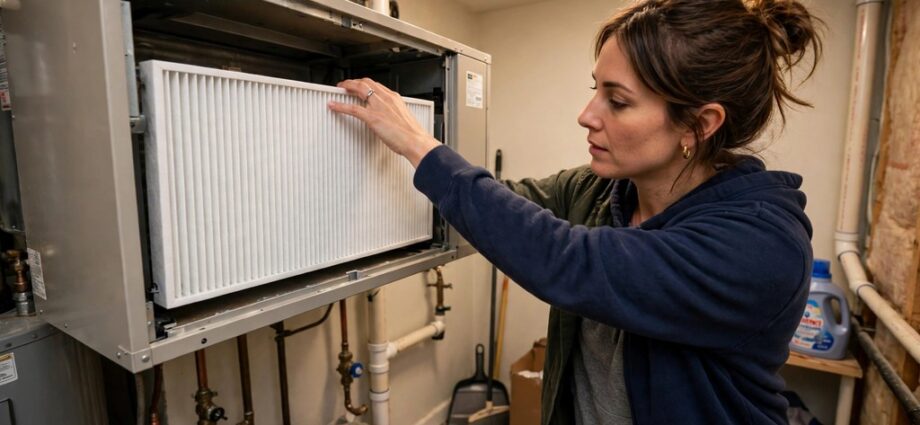
Most homes need a fresh HVAC filter change every one to three months. However, thin one-inch filters often need replacement every single month without fail. Therefore, checking your filter monthly helps you catch heavy buildup early. Additionally, thicker media filters often last six to twelve months quite safely.
An hvac contractor guide also explains airflow limits for different blower and duct designs. For example, pets and household dust shorten the useful life of filters. Meanwhile, heavy daily system use also fills filter pores much faster. Still, the size printed on the frame guides every correct replacement choice. In practice, a steady routine protects airflow, comfort, and indoor air quality.
The Baseline HVAC Filter Change Schedule
Manufacturers and energy guides suggest checking a standard filter every month. Therefore, most households replace that filter every one to three months. However, run time changes the schedule for each home quite noticeably. For example, a rarely used system loads its filter far more slowly.
Additionally, seasons with long heating or cooling cycles fill filters faster. Meanwhile, mild weather with open windows may load filters more slowly. Still, monthly checks remove guesswork from the timing decision entirely. Next, mark each check on a calendar to build a habit. Most HVAC filter change reminders belong on a monthly calendar check.
Filter Thickness and Your HVAC Filter Change Interval
Thin one-inch fiberglass or pleated filters usually need monthly replacement attention. In contrast, thicker filters hold more debris before airflow drops noticeably. Therefore, depth alone explains much of the difference between filter types. Additionally, pleats add surface area and extend useful service life.
- Thin panels: Capture debris quickly and usually need monthly replacement attention.
- Deep media: Hold more debris and often last six to twelve months.
- Maker guidance: Always overrides general schedules for your exact filter model.
However, a thicker filter only fits systems designed for deeper cabinets. Still, forcing an oversized filter creates gaps that leak unfiltered air. Next, measure the slot before you assume a deeper option fits.
Household Conditions That Shorten Filter Life
Pets shed hair and dander that fill filter pores surprisingly fast. Similarly, smoking indoors loads filters with fine particles and lingering odors. Therefore, homes with pets or smokers often need monthly filter changes. Additionally, allergies and asthma make timely changes even more important.
- Dusty regions: Push extra particles into return air every single day.
- Nearby construction: Sends fine drywall and wood dust through the system.
- Long run time: Pulls more air and debris through the filter daily.
For example, a remodeling project can clog a fresh filter quickly. Meanwhile, open doors during busy gatherings also increase airborne dust levels. As a result, checking the filter after dusty weeks makes practical sense.
Finding Your Size and Installing It Correctly
Homeowners find the exact filter size printed on the frame edge. Additionally, this hvac maintenance checklist routine helps you record sizes and change dates clearly. Therefore, writing the size down prevents wrong purchases later on. Still, faded printing means you should measure length, width, and depth.
The airflow arrow on the frame points toward the blower unit. However, many owners install filters backward without noticing the arrow. As a result, a reversed filter may capture particles less effectively overall. Next, slide the filter fully in and close the cover securely.
Understanding MERV Ratings in Plain Terms
MERV ratings come from ASHRAE Standard 52.2 and run one to sixteen. Therefore, higher numbers capture smaller particles than lower numbers do. For example, MERV 8 filters catch common dust and pollen well. Additionally, MERV 11 or 13 filters capture finer smoke particles.
Similarly, MERV 13 filters capture some bacteria along with finer debris. However, a higher rating can restrict airflow in unsuitable systems. Still, system manuals describe the ratings each blower handles safely. In practice, balance particle capture against the airflow your system needs.
Therefore, reading that guidance helps you choose ratings more confidently. Meanwhile, jumping to the highest rating rarely suits older systems.
Signs You Should Change Your HVAC Filter Now
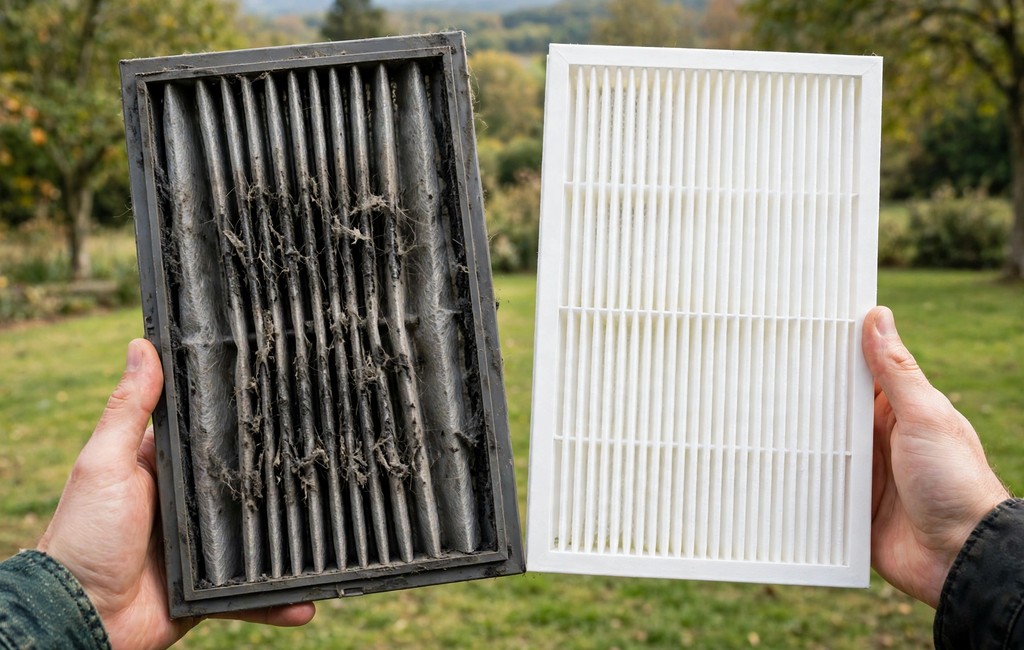
A gray, matted surface shows the filter has captured heavy debris. However, some loaded filters still look fairly clean at first glance. Therefore, holding the filter toward light reveals hidden buildup clearly. Additionally, weak airflow from vents often signals a clogged filter.
- Visible dust: Builds faster on vents when filters stay clogged longer.
- Uneven comfort: Often follows airflow losses caused by dirty clogged filters.
- Longer cycles: Also suggest restricted return airflow during heating and cooling.
What a Clogged Filter Does Over Time
A clogged filter forces the blower to work much harder daily. As a result, airflow across the coil drops below normal levels. Therefore, coils can freeze during heavy cooling demand in summer. Additionally, higher energy use follows because cycles run longer overall.
Over time, strained components wear faster and deliver less consistent comfort. Similarly, poor filtration lets dust reach coils and indoor surfaces faster. Finally, this indoor air quality hvac overview explains how filtration supports cleaner indoor air.
However, timely changes prevent most of these slow, avoidable problems. In contrast, neglected filters quietly reduce efficiency month after month. Still, the fix stays simple because replacement takes only minutes. In practice, prevention protects both comfort and system health long term.
Building a Simple HVAC Filter Change Routine
First, note the filter size and rating on your phone today. Next, set a monthly reminder to inspect the filter visually. Therefore, you replace it based on condition and schedule together. Additionally, keep one spare filter stored near the air handler.
Finally, record each change date directly on the new filter frame. Still, always follow the filter maker’s guidance for final timing decisions. Finally, note every HVAC filter change date on the filter frame.
Frequently Asked Questions
How do I know if my HVAC filter is dirty?
A gray surface, weak vent airflow, and extra household dust signal trouble.
How often should I change my filter with pets?
Additionally, most pet homes need changes every one to two months.
Can a dirty HVAC filter cause high energy use?
Therefore, clogged filters lengthen cycles and raise overall energy use noticeably.
Does a higher MERV rating always work better?
However, higher ratings only work well in systems designed for them.
Which direction should the filter arrow point?
Finally, the arrow always points toward the blower and ductwork inside.
Conclusion
Most homes stay on track with changes every one to three months. However, thickness, pets, dust, and run time shift that schedule. Therefore, inspect your filter monthly and learn its actual condition. Additionally, compare MERV options against your system manual before switching.
Next, check your current filter today and note its size carefully. Finally, maintain this simple routine to protect airflow and comfort. In practice, small monthly checks prevent bigger system problems later. Still, consistent attention keeps indoor air cleaner through every season. Overall, a scheduled HVAC filter change keeps airflow strong and steady. In practice, each HVAC filter change takes only a few minutes.