








Texas weather doesn’t mess around. Between the scorching summer heat that bakes your front porch, the sudden hailstorms in spring, and the humid Gulf Coast air that seems to corrode everything, your video doorbell faces a tougher life here than in most other states. You need a device that won’t just look sleek—it has to survive a 100-degree day in August and still send you a crisp alert when a package drops. The challenge is that Ring’s lineup has so many options that comparing them feels overwhelming. You want the best value, but you also want reliability when the power flickers during a storm.
This guide cuts through the marketing jargon to compare the most popular Ring models specifically through the lens of Texas conditions—heat, humidity, storms, and Wi-Fi interference. We will break down battery life, video quality, and smart features that actually matter, so you can make a confident choice that lasts. By the end, you’ll know exactly which model handles the Lone Star State’s climate quirks best and which one you should skip. Let’s dive into the comparison so you don’t waste money on a doorbell that gives up by mid-July.
Why Texas Climate Matters When Choosing a Ring Doorbell
Texas isn’t just one climate zone; it’s a collection of microclimates that all stress electronics differently. A doorbell that works fine in San Diego might overheat in El Paso or fog up in Houston. Choosing a model without considering these factors can lead to missed recordings, dead batteries, and device failure right when you need it most. You need a device that is built to endure high thermal loads and sudden weather swings.
Extreme Heat and Direct Sunlight Exposure
In West Texas and the Hill Country, summer temperatures routinely exceed 100°F, often hitting 110°F. The direct sun on a west-facing porch can push surface temperatures far above the air temperature. Ring doorbells have an operating range of -5°F to 120°F. While that seems adequate, the internal heat from the processor plus solar gain can cause thermal throttling, laggy video, or even shutdown. Battery models suffer more because heat accelerates lithium-ion discharge, meaning you will recharge more often.
Humidity and the Gulf Coast Effect
From Houston to Corpus Christi, humidity levels stay above 70% for much of the year. This moisture can seep into unsealed seams, causing internal corrosion over 12 to 18 months. Plus, humidity combined with heat creates condensation inside the camera lens, leading to blurry footage. If you live within 50 miles of the coast, you should prioritize models with better weatherproofing ratings (IPX5 or higher) and consider wired options to reduce battery corrosion risk.
Severe Thunderstorms and Hail Risk
Spring in North Texas brings supercell thunderstorms that drop golf-ball-sized hail. While your doorbell is protected by the canopy, wind-driven rain can still hit the device side-on. Also, power surges from lightning strikes can fry the transformer on wired doorbells. We recommend using a surge protector on the transformer circuit if you choose a wired model. This is not a feature listed on the box, but it is crucial for long-term survival in places like Dallas or Fort Worth.
Ring Video Doorbell Models Overview for Texas Buyers
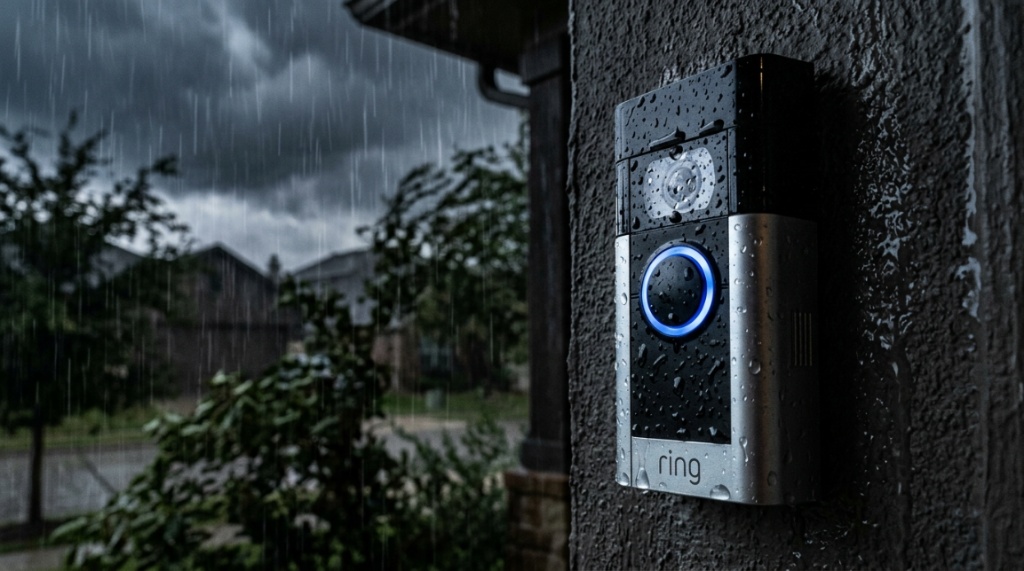
Ring has several distinct models, but for Texas, we generally narrow it down to four: the Battery Doorbell Plus, the Battery Doorbell Pro, the Wired Doorbell Pro, and the Battery Doorbell (2nd Gen). The wired Elite is overkill for most homes. Here is the core distinction: battery models are easier to install but suffer in high heat, while wired models deliver constant power but require existing wiring that might not be up to snuff in older Texas homes.
Ring Battery Doorbell Plus (Formerly Video Doorbell 3 Plus)
This model is the best balance of price and features for most renters. It has 1080p HD video, a built-in battery, and pre-roll functionality. It supports both 2.4GHz and 5GHz Wi-Fi. The battery is removable for easy charging, which is a plus. However, in Texas heat, expect to charge it every 4 to 6 weeks during summer if you have heavy traffic. It has a field of view of 150 degrees horizontally, which is excellent for seeing packages left on a wide porch.
Ring Battery Doorbell Pro
This is the newer top-tier battery model. It has a 1536p vertical video resolution, which is taller than wide. For Texas, the advantage is a better head-to-toe view of packages. It also has 3D motion detection with a bird’s-eye view, which maps the area around your home. The downside is the battery drains faster because the video processor is more powerful. In high traffic, expect recharging every 2 to 3 weeks. It also features dual-band Wi-Fi for more stable connections.
Ring Wired Doorbell Pro
This is the model we recommend for homeowners in Texas, especially in hot zones. The Wired Pro uses your existing doorbell transformer (16-24VAC) for constant power. No battery to swap, no cold shutdown. It also has the best video quality at 1536p with HDR. The latest generation (2023/2024) has improved motion detection and a faster processor that handles heat better because it doesn’t rely on battery chemistry. Installation is trickier, but it is a one-time job.
Ring Wired Pro vs. Elite
The Elite uses Power over Ethernet (PoE) and has a separate wedge mount. It is the most reliable but costs over $350 and requires network cabling. For 90% of Texas homes, the Wired Pro is the better value because it uses existing doorbell wires. The Elite also offers dynamic range, but it is rarely worth the extra price and installation hassle unless you have a very large estate. Before upgrading your security setup to Transform Your Home, check out our comprehensive guide on how different Ring doorbell versions handle extreme Texas heat.
How to Compare Battery Life and Charging in Texas Heat
Battery capacity is rated in mAh, but the real-world lifespan depends on thermal load and Wi-Fi signal strength. In Texas, you should cut advertised numbers by 30–40% in July. Ring claims 3 to 6 months for the standard battery, but that is at 70°F. At 95°F, your battery will discharge faster. The most important feature to look for is a removable battery pack—that lets you buy a spare and swap it instantly.
Understanding Solar Compatibility
Ring has solar panels, but they are not efficient in partial shade. For a Texas porch that gets full sun, a solar panel can keep the battery topped up. However, a solar panel adds bulk. If you can’t install a wired doorbell, consider the Battery Plus with the official Ring Solar Charger. It reduces charging frequency to near zero in sunny months. But remember, during long cloudy stretches in January, you will still need to manually charge.
Charging Cycles and Temperature Effects
Use the “Snapshot Update” feature temporarily, which takes a photo every 5 seconds, instead of constant live video, to extend battery. Also, set the motion zones to only cover the sidewalk, not the entire street. Every degree above 90°F reduces battery cycle life. If you must use a battery model, keep the doorbell out of direct sun by installing it recessed under an eave. A standard angle mount can help tilt it downward to avoid the afternoon sun.
Video Quality and Night Vision for Dark Porches
The biggest complaint from Texas users is poor night vision on older models. The key spec is not just “HD” but the pixel density and field of view. For a standard suburban porch, the Battery Plus’s 1080p is fine. But if you have a long driveway or want to read a license plate, you need the 1536p on the Pro models.
Standard vs. Wide View Angles
The Battery Plus offers a wider horizontal view (150°) but less vertical detail. The Pro models offer a taller vertical view (150° vertical), which lets you see packages on the ground clearly. In Texas, where package theft is as common as heat waves, the vertical view is more valuable. You can see the FedEx driver place a box and pick it up later. For this reason, the Pro is worth the extra $50 if security is a priority.
HDR and High-Contrast Scenarios
The Texas sun creates harsh shadows—a delivery person’s face might be hidden by glare while the background is dark. The latest Wired Pro has HDR (High Dynamic Range), which combines multiple exposures to make the image look natural. The Battery Plus also has HDR, but it is less effective at managing extreme contrast. If your porch faces west, you will be looking directly into the sun in the evening. The Wired Pro’s HDR is significantly better at handling this.
Which Ring Doorbell Models Work Best with Alexa in Texas?
All current Ring models work with Alexa for announcements and live viewing on Echo Show devices. However, real Texas users want the feature where you can answer the door through your Echo Show. This requires that your doorbell have two-way audio and a decent microphone. The Pro models have better noise reduction, which is crucial if you have a loud AC unit humming nearby. For voice clarity, the Pro is the winner.
Alexa Privacy Features in Smart Home Integration
You can set Alexa to drop in on the doorbell’s camera. But when it’s 100°F, the video processor may overheat inside the doorbell, causing the show to buffer. Using a wired model helps mitigate this. Also, ensure your router supports 5GHz for the Pro models; older routers on 2.4GHz will cause intermittent drops, especially with thermal throttling. A mesh Wi-Fi system is highly recommended for Texas homes with stucco walls that block signals.
Using the Ring Home App for Climate Alerts
The Ring app can send alerts if the device loses connection. In Texas, heat can cause the device to reboot. Set the motion alerts to “People Only” to reduce false triggers from heat waves reflecting off the street. Also, update the firmware continuously—Ring frequently releases patches to improve high-temperature fan control and video encoder efficiency. This is a tip many do not know.
Installation Differences: Wired vs. Battery for Texas Homes
Your house’s age in Texas makes a difference. Homes built before 1980 often have a doorbell transformer that delivers only 10 VA, which is not enough for the Wired Pro (recommended 30 VA). If you buy the Wired Pro, you might need to upgrade the transformer—an extra cost of $30 and an hour of electrician time. Battery models bypass this entirely, installing with two screws.
Step-by-Step: Upgrading Your Transformer
First, locate the transformer in the attic or behind the chime box. Second, check the voltage with a multimeter. Third, if it reads under 16V, find the breaker and turn power off. Fourth, replace the old transformer (use a 16V/30VA model). Fifth, reconnect the wires and test. Ignore this step and your Pro will constantly reboot during high heat because it draws too much power.
Retrofit Costs for Renters vs. Homeowners
If you rent in Austin or Houston, you probably can’t rewire anything. The battery model is your best bet. Use the existing mounting holes and don’t touch the chime. However, you will be charging the battery monthly in the summer. The Ring Stick Up Cam is an alternative, but it’s not a doorbell. Buy a spare battery pack and a second charger to keep rotation seamless.
Smart Alerts and Motion Detection: False Alarm Management
Texas has bugs—huge moths, June bugs, and even fireflies at dusk. Extreme heat can cause shimmering on the driveway, triggering motion alerts. All Ring models have adjustable motion zones and sensitivity. But the Pro models have “Advanced Motion Detection” with a 3D zone map. This helps ignore the heat plume from a car engine or a waving tree branch, reducing nuisance alerts by 30%.
Setting Up Custom Motion Schedules
During the summer, the bugs come out at dusk. If you don’t turn off motion alerts, your phone will blow up. Go to Motion Settings > Motion Schedules. Set a schedule to disable alerts from 8PM to 11PM and rely on recorded clips instead. This preserves battery on wired models and reduces notification fatigue. This is a simple but effective tactic used by many smart home users in humid climates.
Cost and Value: The Real Price of Each Model
Here is the truth: the Battery Doorbell Plus costs $99, the Battery Pro costs $229, and the Wired Pro costs $169. But your total cost includes the Ring Protection Plan at $40/year for cloud recording. Without it, you only get live views and alerts. Plan costs are the same for all models. The value question is simple: how much is your time worth? If you don’t want to climb a ladder to charge a battery, the Wired Pro wins.
Pros and Cons of the Battery Doorbell Plus
Pros: Low upfront cost, easy setup, no extra transformer. Cons: Battery drains in Texas heat, only 1080p, no HDR. It is perfect for a renter on a lease who needs a security device without invasive installation. Expect to swap the battery every 4-5 weeks during summer if you have moderate traffic.
Pros and Cons of the Wired Pro
Pros: Constant power, best video, better HDR, no battery anxiety. Cons: Higher upfront cost plus possible transformer upgrade, more complex install. It is the long-term solution for a homeowner who plans to stay for 5 years. The surge protection is a must.
If you want a deeper dive into specific models and user reviews, I’ve compiled a comparative analysis of the top Ring doorbell models for Texas that includes real-world temperature stress tests and installation tips that pros use. Check that resource before making your final purchase decision.
Security and Privacy Data in the Cloud
Ring video doorbells upload video to Amazon Web Services. In Texas, where privacy is a concern, ensure your videos are encrypted in transit. All models support TLS 1.2 encryption. However, if you worry about a breach, you can disable cloud uploads and store locally. No, Ring doesn’t support local storage. So your data resides in the cloud. You may wish to purchase the Ring plan for longer retention.
Two-Factor Authentication Setup
To protect your camera feeds from hackers, enable two-factor authentication in the Ring app. This is a requirement for anyone, not just Texas users. Use a strong password. Since your doorbell connects to your home network, a compromised camera could be a gateway to other devices. This advice is often overlooked but highly critical.
When to Buy and What to Avoid
Timing your purchase is as important as the model. Ring often discounts models on Prime Day and Black Friday. But also, new models drop in the fall. If you can wait until October, you will often see the previous gen discounted by 30%. Also, avoid buying from third-party sellers who might sell a refurbished model without warranty in Texas heat.
Recognizing a Fake or Refurbished Unit
Be wary of deals that are too good to be true. Check the serial number on Ring’s website. A refurbished unit might not have the latest heat-dissipation updates. Buy directly from Ring or a big-box retailer to ensure the warranty and that the battery is genuine. For a critical security device, it’s worth the extra $10.
Frequently Asked Questions
Does the Ring battery doorbell work in 110-degree Texas heat?
Yes, it will function but will not last long. Expect battery life to drop by half. You will need to recharge more frequently. Installing under an eave and using a solar panel helps.
Which Ring Doorbell has the best video quality for seeing parcel details?
The Ring Wired Pro and Battery Doorbell Pro have the highest resolution (1536p) and a taller field of view to see packages on the ground. The Wired Pro’s HDR is better for contrast in harsh sun.
Can a Ring doorbell survive a hurricane storm?
Most Ring doorbells have an IPX5 rating for rain. However, a direct hit from flying debris can break it. For hurricane zones, ensure it is mounted solidly and also keep the chime adapter indoors. After a storm, check for moisture in the lens.
Is the Ring solar charger worth the extra money in Texas?
Yes, but only if your porch gets at least 6 hours of direct sun. In West Texas, it works great. In East Texas with overcast skies, it may only provide a trickle charge. It also requires a relatively clean panel in dusty conditions.
Do I need the Ring Protect plan for each doorbell?
No, the $40/year plan covers unlimited cameras at one address. It’s worth the money for cloud storage and sharing features. Without it, you cannot review recorded footage.
Final Verdict: Which Ring Doorbell Should a Texan Buy?
If you are a homeowner with standard wiring and a modest budget, buy the Ring Wired Pro. It offers the durability and constant power needed for our extreme summers. If you rent or your house lacks power wiring, buy the Battery Doorbell Plus and grab a spare battery.
We hope this detailed comparison has helped you narrow down the choice. Think about your porch’s sun exposure, your wiring situation, and how much you value uninterrupted video. Your door is the front line of your home’s security, and spending a few extra minutes choosing now pays off later.
Ultimately, consider your specific Texas microclimate. What works in Amarillo might not be ideal in Beaumont. Use the specs and guidelines here, and you’ll avoid the common pitfalls of overheating and corrosion. Pick your favorite model and finally get that upgraded smart home experience you’ve been wanting.