








Washing leafy greens and vegetables sounds simple until you actually do it. Soaking them in a bowl leaves grit behind, and shaking them dry in a colander splashes water across the counter. A salad spinner solves both problems by combining washing and drying in one container. The OXO Good Grips salad spinner is one of the most widely recommended options for this job, and it earns that reputation through a few practical design choices that matter more than they might first appear. This article explains how it works, what to look for in the best salad spinner for washing vegetables, and where a spinner genuinely helps versus where a simpler method works just as well.
Key Takeaways
- A salad spinner cleans and dries vegetables in one step, which matters most for leafy greens that hold water and grit.
- The OXO Good Grips model is known for a pump-and-press mechanism and a non-slip base, features that make it easier to operate one-handed.
- Spinners work best for leafy greens, herbs, and small vegetables; they add little value for vegetables you will peel or cook immediately.
- Drying matters as much as washing because wet vegetables dilute dressings and steam instead of searing.
- Matching spinner size to your typical serving amount prevents both overcrowding and wasted storage space.
How a Salad Spinner Actually Cleans Vegetables
A salad spinner uses centrifugal force to pull water off produce after it has been rinsed. You place washed vegetables in a perforated basket inside a solid outer bowl, then spin the basket rapidly. Water flies off the leaves and collects in the outer bowl, leaving the vegetables dry enough to dress or store. The cleaning happens because you rinse the vegetables first, then the spinning removes the remaining water, grit, and debris that cling to the surface.
The key point many people miss is that a spinner does not wash vegetables by itself. It dries them. The washing step still requires running them under water or soaking them briefly. What the spinner changes is the outcome: instead of soggy leaves that need to be patted dry with towels, you get produce that is ready to use in about the same time it takes to shake a colander.
Why Drying Is the Real Benefit
Wet greens cause two common problems. First, water dilutes vinaigrette and makes dressing slide off leaves instead of coating them. Second, moisture on the surface of vegetables causes them to steam rather than brown when they hit a hot pan. For salads, the difference between wet and dry leaves is noticeable in the texture and flavor of the finished dish. For roasting or sautéing, dry vegetables brown better because the heat is not spent evaporating surface water first.
Why the OXO Good Grips Spinner Stands Out
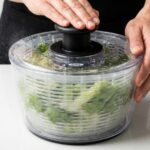
The OXO Good Grips salad spinner is frequently recommended because of its pump mechanism rather than a pull cord or crank handle. You press down on a plunger-style button to build spinning momentum, then press a separate brake to stop the basket. This design lets you operate the spinner with one hand, which is useful when your other hand is holding a colander, a knife, or a bag of produce.
Other details that matter in daily use include a non-slip base that keeps the bowl from sliding across the counter during spinning, and a locking mechanism that holds the basket and lid together for storage. The basket also doubles as a colander, so you can rinse vegetables directly in it before transferring it to the outer bowl. These are small conveniences, but they are the kind of details that determine whether you reach for the spinner regularly or leave it in a cabinet.

What the OXO Spinner Does Well
The pump mechanism is the most distinctive feature. Unlike a pull-cord spinner that can snag or wear out, the press-down design is simple and tends to hold up over time. The brake button stops the basket quickly so you are not waiting for it to slow down on its own. The bowl is also designed to be stable enough to use as a serving bowl in some setups, though most people store the spinner assembled on a shelf or in a cabinet.
Limitations to Keep in Mind
No spinner, including the OXO, is ideal for every vegetable. Large items like whole heads of cabbage or bulky root vegetables may not fit well in the basket. Delicate items like raspberries or soft herbs can bruise if spun too aggressively. The spinner also takes up more cabinet space than a colander, and it needs to be disassembled and cleaned after use, which adds a step compared to rinsing under a faucet. These are trade-offs worth weighing before buying,For easier household maintenance, check out our guide on how to remove o-cedar mop head for washing.
Who Actually Benefits From a Salad Spinner
A salad spinner is most useful for people who eat leafy greens regularly. If you make salads several times a week, wash bunches of kale, spinach, or lettuce, or grow your own herbs, the time saved on drying adds up. Home gardeners in particular deal with grit and soil on homegrown produce, and a spinner removes that more thoroughly than rinsing alone.
People who rarely eat salad, or who mostly cook vegetables that will be peeled or boiled, get less value from a spinner. For those cases, a colander and a clean kitchen towel handle the job fine. The decision usually comes down to how often you deal with wet leafy greens and how much you dislike patting them dry by hand.
Vegetables That Work Best in a Spinner
- Loose-leaf lettuce, romaine, and butterhead varieties
- Spinach, kale, arugula, and chard
- Fresh herbs like parsley, cilantro, and basil
- Cherry tomatoes and grapes, which dry quickly after rinsing
- Broccoli and cauliflower florets after soaking
Vegetables That Do Not Need a Spinner
- Potatoes, carrots, and onions that will be peeled
- Vegetables headed straight into a soup or stew
- Items you plan to roast and can pat dry with a towel
- Soft berries that bruise easily under spinning
What to Look For in the Best Salad Spinner for Washing Vegetables
The best salad spinner for washing vegetables balances four things: a mechanism you can operate comfortably, a basket that drains well, a base that stays put, and a size that fits your counter and storage space. Mechanism matters because you will use it often, and an awkward crank or a stiff pull cord makes the tool frustrating. Basket drainage matters because water needs to escape the basket and collect in the outer bowl without pooling around the greens.
Size is the factor people most often get wrong. A spinner that is too small forces you to process greens in multiple batches, which defeats the time-saving purpose. A spinner that is too large takes up cabinet space and is awkward to store. A mid-size spinner typically handles a standard bunch of greens or a family-sized salad, while larger models suit people who wash produce in bulk for meal prep.
| Feature | Why It Matters |
|---|---|
| Pump or crank mechanism | Determines how easy it is to spin one-handed and how durable the moving parts are |
| Non-slip base | Prevents the bowl from sliding during spinning, especially on smooth countertops |
| Brake button | Stops the basket quickly so you are not waiting for it to slow down |
| Basket that doubles as a colander | Lets you rinse and spin in the same container, reducing cleanup |
| Capacity | Affects how many batches you need and how much cabinet space it takes |
How to Use a Salad Spinner Properly
Using a spinner correctly takes less than a minute once you know the steps. The most common mistake is overfilling the basket, which prevents proper spinning and leaves vegetables wet.
- Fill the basket no more than two-thirds full so the greens have room to move.
- Rinse the vegetables under cool running water, or soak them briefly if they are gritty.
- Place the basket into the outer bowl and secure the lid.
- Press the pump or turn the crank until the basket spins freely and water stops flying off.
- Press the brake to stop the basket, then lift the basket out and pour off the collected water.
- Empty the outer bowl and dry it if you plan to store the spinner assembled.
Common Mistakes to Avoid
Overfilling is the most frequent error. When the basket is packed too tightly, the greens cannot spin freely and moisture stays trapped between leaves. Another mistake is spinning delicate herbs too long, which can bruise them. Finally, some people skip the rinse step and expect the spinner to clean the vegetables on its own. It will not. The rinse loosens dirt; the spin removes water. Both steps are necessary.
Cleaning and Maintaining Your Spinner
Most salad spinners, including the OXO Good Grips model, are designed to come apart for cleaning. The basket, bowl, and lid typically separate so you can wash them individually. Check the manufacturer’s instructions for whether parts are dishwasher safe, since this varies by model. In general, the basket and bowl benefit from a quick rinse after each use to prevent bits of leaf from drying onto the surface.
The lid and spinning mechanism usually need only a wipe-down, since they do not come into direct contact with food. Avoid submerging the lid if it contains a spring or pump mechanism that could trap water. Let all parts air dry fully before reassembling to prevent odors or mildew from developing in the closed container.
Frequently Asked Questions
Does a salad spinner actually wash vegetables?
No, it dries them. You still need to rinse vegetables under water to remove dirt and grit. The spinner removes the water afterward, which is what makes greens ready to dress or store without patting them dry.
Is the OXO Good Grips salad spinner worth it?
For people who eat leafy greens several times a week, it is a practical tool. The pump mechanism, non-slip base, and brake button make it comfortable to use, and the basket doubles as a colander. If you rarely eat salad, a colander works just as well.
Can I put a salad spinner in the dishwasher?
It depends on the model. Some spinner baskets and bowls are dishwasher safe, while the lid with the spinning mechanism usually is not. Check the manufacturer’s instructions for your specific spinner before washing it in a dishwasher.
What vegetables should not go in a salad spinner?
Soft berries like raspberries and blackberries can bruise under spinning. Large items like whole cabbage heads may not fit. Vegetables you plan to peel or cook immediately do not need spinning at all.
How do I stop my salad spinner from sliding on the counter?
Look for a model with a non-slip base, which grips smooth surfaces during spinning. If your current spinner slides, placing it on a damp towel or a rubber mat can help stabilize it.
Can I store washed greens in the spinner?
Some people store dry greens in the spinner bowl with the lid on, but the bowl takes up refrigerator space. A better approach is to spin the greens dry, then transfer them to a container or bag with a paper towel to absorb residual moisture.
Conclusion
A salad spinner earns its place in the kitchen when you deal with wet leafy greens often. The OXO Good Grips model stands out for its pump mechanism, stable base, and brake button, which make spinning quick and comfortable. The best salad spinner for washing vegetables is the one that matches your typical serving size and fits your storage space without becoming a hassle to use. If you eat salad regularly or grow your own greens, a spinner saves time and produces noticeably better texture than rinsing alone. If you rarely cook with leafy greens, a colander and a towel are enough.