

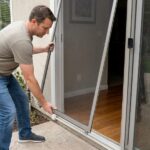






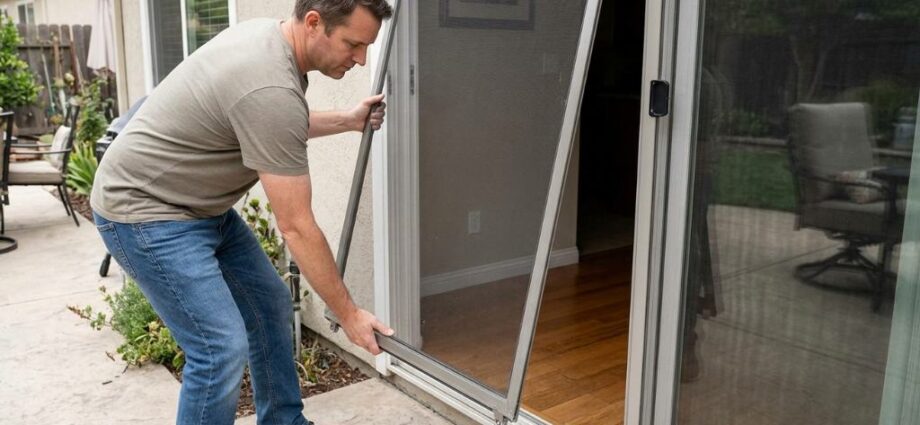
You remove a patio screen door by lifting the panel up and tilting the bottom out of the lower track. Sliding screens use this lift-and-tilt method almost universally. Hinged screens come off by pulling the hinge pins instead.
Taking off a screen door seems simple until you’re mid-attempt and something won’t budge. A little technique goes a long way toward avoiding bent frames or scraped fingers. This guide covers both sliding and hinged screen styles so you’re prepared either way.
Before You Begin
Clear the area around the door so you have room to maneuver. Having a helper makes the job noticeably easier, especially for larger panels. Wear gloves to protect your hands from sharp edges.
Check the screen for any locks or latches holding it in place. Release these before attempting to lift or pull the panel. Skipping this step often causes unnecessary resistance.
Lay down a soft blanket or towel nearby for setting the screen down. This protects both the screen mesh and the floor underneath. A little prep here prevents accidental damage later.
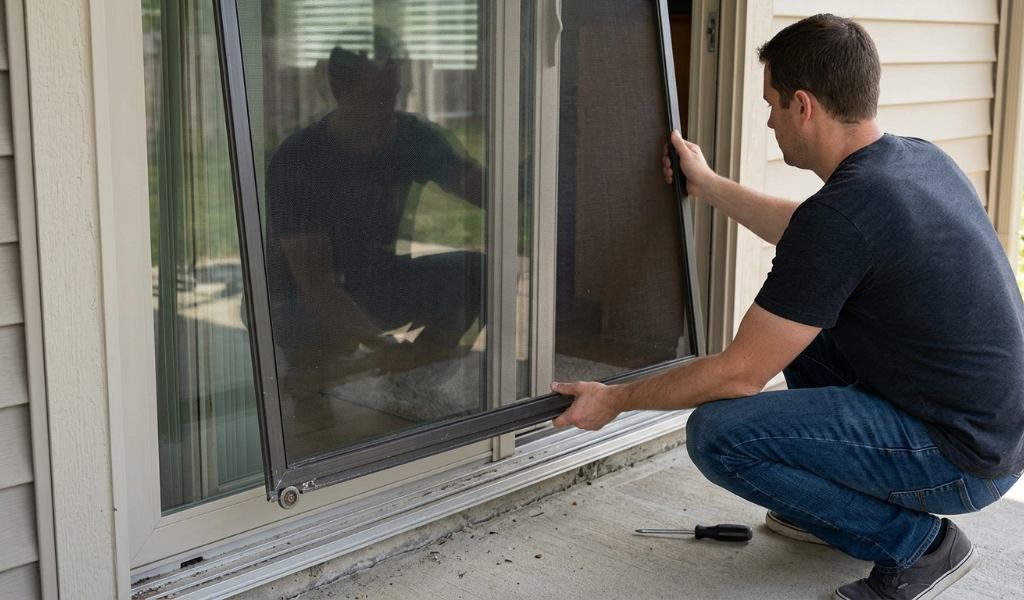
Removing A Sliding Screen Door
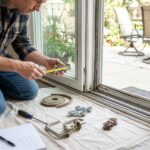
Start by locating the small tabs or screws near the top of the screen frame. These control the roller height on most sliding screens. Loosening them creates slack needed for removal.
With the tabs loosened, grip the screen firmly on both sides. Lift the entire panel upward into the top track. This action creates enough clearance to tilt the bottom outward.
Once lifted, angle the bottom of the screen away from the track. Carefully guide it out and lower it down slowly. Avoid forcing the panel if it doesn’t release easily, since this usually means more lifting is needed.
Here’s a quick reference for the lift-and-tilt process:
- Loosen roller tabs at the top of the frame
- Lift the panel firmly into the upper track
- Tilt the bottom edge outward and away
- Lower the panel slowly once it clears the track
Removing A Hinged Screen Door
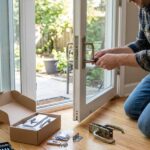
Hinged screens attach using visible hinge pins along one side. Locate these pins running vertically along the frame edge. Most have a small cap or pin head you can grip.
Using a flathead screwdriver, gently tap the pin upward from below. Once loosened, pull it out fully by hand. Repeat this for each hinge pin on the door.
With all pins removed, the screen panel should separate from the frame easily. Support the weight of the door as the last pin comes free. This prevents the panel from suddenly dropping or swinging.
Some hinged screens also include a closer arm at the top. Disconnect this separately before fully removing the panel. Forgetting this step can cause unnecessary strain on the hinge area.
Common Problems
Stuck rollers are a frequent obstacle during sliding screen removal. Years of dirt buildup can cause rollers to seize in place. A little lubricant often frees them up without much effort.
Bent frames sometimes resist the lift-and-tilt motion entirely. Forcing a bent frame risks further damage to the screen. In these cases, gentle persistent pressure works better than sudden force.
Paint or caulk sealing the edges is another common issue, especially on older homes. A utility knife can carefully score along the seal first. This breaks the bond without damaging the surrounding frame.
Storing And Reinstalling The Screen
Store the screen flat or upright in a dry, sheltered location. Avoid leaning it against sharp edges that could puncture the mesh. Cover it loosely if storing for an extended period.
Reinstallation generally reverses the removal steps you just completed. Sliding screens go back in by reversing the tilt motion. Hinged screens reconnect by sliding the pins back into place.
Test the screen’s movement immediately after reinstalling it. Confirm it glides smoothly or swings without catching. Address any resistance before considering the job finished.
Cleaning And Repairing While It’s Off
With the screen removed, it’s a great time to clean both sides thoroughly. Wipe down the frame and check the mesh for small tears. Patch kits handle minor rips quickly and affordably.
This is also a good opportunity to inspect the main replacement patio doors track underneath. Clean out any debris that’s accumulated behind the screen. A quick inspection now prevents bigger issues later.
Frequently Asked Questions
Do All Sliding Screen Doors Come Off The Same Way?
Most use the lift-and-tilt method, though roller mechanisms vary slightly by brand.
Can I Remove A Screen Door Without A Helper?
Yes for smaller panels, but larger screens are easier with a second person.
Why Won’t My Screen Door Lift Out Of The Track?
Stuck rollers or loosened tabs that still need adjustment are the usual cause.
How Do I Know If My Screen Has Hinges Or Rollers?
Check the vertical edge for visible hinge pins versus top and bottom rollers.
Is It Normal For Screens To Feel Stuck After Years Of Use?
Yes, dirt buildup commonly causes this and usually resolves with cleaning and lubrication.
Final Thoughts
Removing a patio screen door doesn’t have to be stressful once you know the right technique. Whether your door slides or swings, a careful approach prevents bent frames and damaged mesh. Taking a few extra minutes to prep makes the whole process smoother.
If your screen keeps sticking even after cleaning, check the rollers or hinges for wear. Replacing worn components now saves you frustration the next time you need it off.