





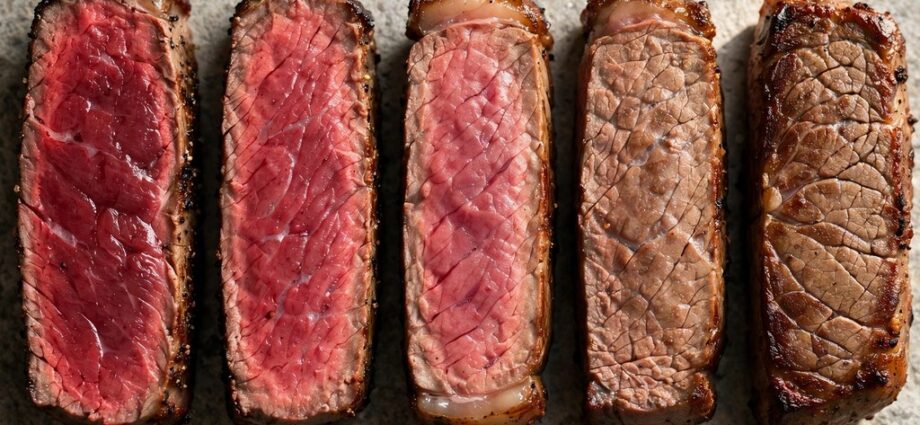
Use the steak doneness temperature chart to judge internal temperature with confidence every time. Medium-rare steak typically finishes at 130 to 135 degrees Fahrenheit after resting. This chart covers rare through well-done so you can match heat to preference.
A reliable thermometer, paired with the steak cooking chart, removes guesswork from grilling and pan searing alike. Additionally, temperature reveals doneness far better than color or touch alone. Therefore, check the thickest part of each steak before you decide readiness. Finally, rest every steak briefly so heat spreads evenly through the meat.
This guide explains each level clearly and shows how carryover heat changes results. For example, a steak pulled early can still finish perfectly during its rest.
Why the Steak Doneness Temperature Chart Beats Color and Touch
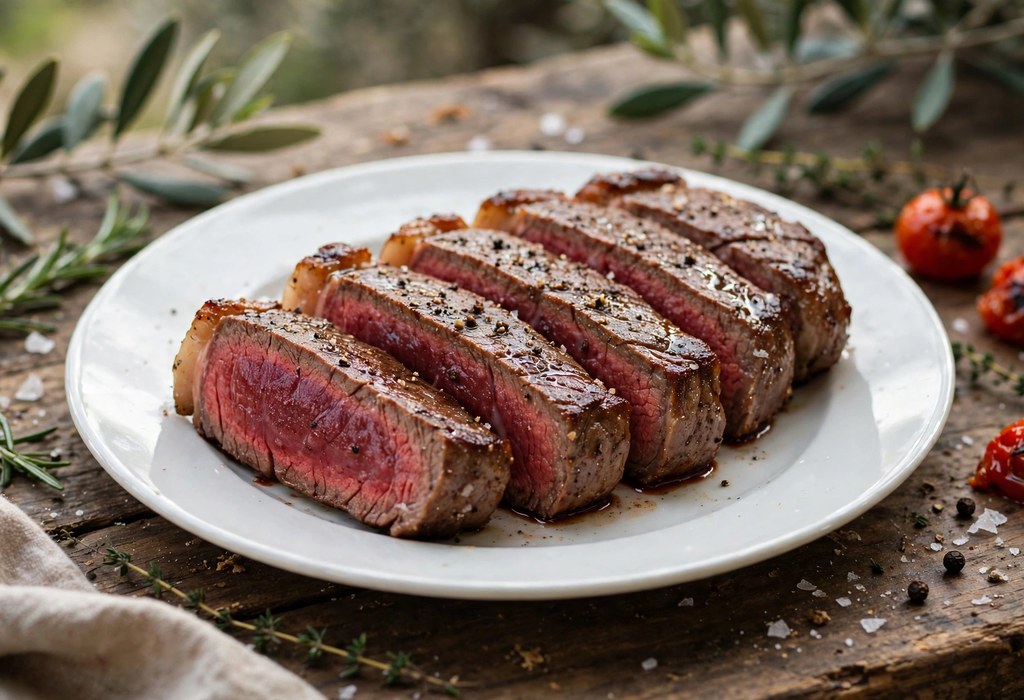
Color alone can mislead even experienced cooks during busy meals. Similarly, touch tests vary widely with cut thickness and cooking method. Meanwhile, a thermometer gives one clear number for every single steak.
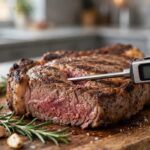
Insert the probe sideways into the thickest center for accuracy. Avoid bone and fat pockets because they distort the reading quickly. Consequently, you gain consistent results across different cuts and grills.
The Complete Steak Temperature Chart
Use the ranges below as targets after resting, not just at pull time. Remember that carryover heat typically adds three to five degrees Fahrenheit. Therefore, pull thicker steaks a few degrees below your final target.
- Rare: Pull at 120 to 125 degrees for a cool red center.
- Medium-Rare: Pull at 130 to 135 degrees for a warm red center.
- Medium: Pull at 135 to 145 degrees for a warm pink center.
- Medium-Well: Pull at 145 to 155 degrees for a slightly pink center.
- Well-Done: Pull at 155 degrees or higher for a fully brown center.
Thick cuts need extra care because heat moves slowly toward the center. Keep this steak cooking chart handy whenever you compare doneness levels at home. Additionally, write down your preferred finish so future cooks stay consistent. Here is the chart:
| Steak Doneness | Internal Temperature (°F) | Temperature (°C) | Center Color | Texture |
|---|---|---|---|---|
| Rare | 120–125°F | 49–52°C | Red | Soft and tender |
| Medium Rare | 130–135°F | 54–57°C | Warm red | Juicy and slightly springy |
| Medium | 135–145°F | 57–63°C | Pink | Firm and juicy |
| Medium Well | 145–155°F | 63–68°C | Slightly pink | Firm |
| Well Done | 155°F+ | 68°C+ | Brown or gray-brown | Very firm |
What Each Steak Doneness Level Looks Like on the Temperature Chart
Rare and Medium-Rare
Rare steak stays cool and red at the center after cooking. Its texture feels very soft when you press it gently. Moreover, rare steak suits diners who enjoy a cooler finish.
Medium-rare steak offers a warm red center with tender texture. Next, expect a juicy bite with a lightly seared outer crust. For example, many steak lovers choose this level for balanced flavor.
Medium and Medium-Well
Medium steak shows a warm pink center with firmer texture. Its juices remain present, although the bite feels more set. Similarly, this level suits guests who prefer less red meat.
Medium-well steak keeps only a slight hint of pink inside. Furthermore, the texture feels firmer while staying reasonably juicy. However, watch temperature closely because this range passes quickly.
Well-Done
Well-done steak cooks through fully with a brown center. Its texture feels firm and much less juicy than rarer levels. In addition, careful resting helps retain whatever moisture remains inside.
Some diners prefer well-done steak for a fully set texture. Therefore, cook it gently to avoid drying the outer layers. Finally, slice it thinly to improve tenderness at the table.
How Carryover Heat Changes Final Temperature on the Steak Doneness Chart
Carryover heat continues cooking steak after it leaves the grill. Thick cuts often rise three to five degrees during resting. Consequently, timing your pull matters as much as peak heat.
Thin steaks gain less carryover heat because they cool faster. Meanwhile, thick steaks hold heat longer in the center. As a result, adjust your pull temperature by cut thickness.
Different thicknesses respond differently to the same grill heat. Check steak cooking times by thickness before you plan each cooking session. Additionally, thicker steaks need lower pull targets for the same finish.
Resting lets heat spread evenly and juices settle throughout the meat. Learn how long to rest steak after cooking before you slice any steak. Moreover, a short rest improves flavor without cooling the steak too much.
USDA Minimum and Safe Handling
The USDA minimum for steak is 145 degrees Fahrenheit before resting. Rest the steak for at least three minutes after cooking. This rest period supports safer eating and better texture.
Rare and medium-rare finishes fall below that minimum temperature guidance. Therefore, consider the guidance carefully before choosing a lower finish. Furthermore, serve lower finishes only to diners who accept that choice.
How to Check Steak Temperature Correctly with the Doneness Chart
Choose a fast instant-read thermometer for the most reliable results. Calibrate it occasionally following the instructions from its maker. Next, keep it clean and dry between uses.
Insert the probe into the center from the side. Wait a few seconds until the reading stops changing. Similarly, check a second spot on very thick steaks.
- Probe Placement: Insert the probe into the thickest center sideways.
- Reading Time: Wait until the display number stops changing completely.
- Second Check: Test a second spot on unusually thick steaks.
- Clean Probe: Wash and dry the probe after each use.
Common Steak Doneness Temperature Chart Mistakes to Avoid
Many cooks cut steak open to check doneness during cooking. However, cutting releases juices and creates uneven cooking results. Instead, trust the thermometer for every steak you cook.
Another mistake involves checking temperature only at the edge. Edge readings run hotter than the true center temperature. Consequently, always measure the thickest center for accuracy.
Some cooks forget carryover heat and overshoot their target finish. Meanwhile, others pull steak too late for medium-rare results. Finally, note your pull temperature to improve next time.
Choosing a Finish on the Steak Doneness Temperature Chart
Ask guests about preferred doneness before cooking begins. Moreover, label resting steaks lightly so finishes stay clearly identified. For example, place medium steaks on one side of the tray.
Frequently Asked Questions
What Temperature Is Medium-Rare Steak?
Medium-rare steak typically finishes at 130 to 135 degrees Fahrenheit after resting.
What Temperature Is Rare Steak?
Rare steak typically finishes at 120 to 125 degrees Fahrenheit after resting.
What Is the Minimum Safe Temperature for Steak?
The USDA minimum is 145 degrees Fahrenheit, followed by a three-minute rest.
How Much Does Steak Temperature Rise While Resting?
Steak temperature typically rises three to five degrees Fahrenheit while resting.
Where Should I Place a Meat Thermometer in Steak?
Place the probe sideways into the thickest center of the steak.
Conclusion
Use this chart at your next cookout to match every steak to preference. Additionally, record your favorite finish so future meals stay consistent. Therefore, you can cook with confidence instead of guessing doneness.
Bookmark this temperature chart and share it with fellow steak cooks. Next, choose your preferred doneness and test the chart tonight. Finally, enjoy a perfectly cooked steak at your preferred finish.