

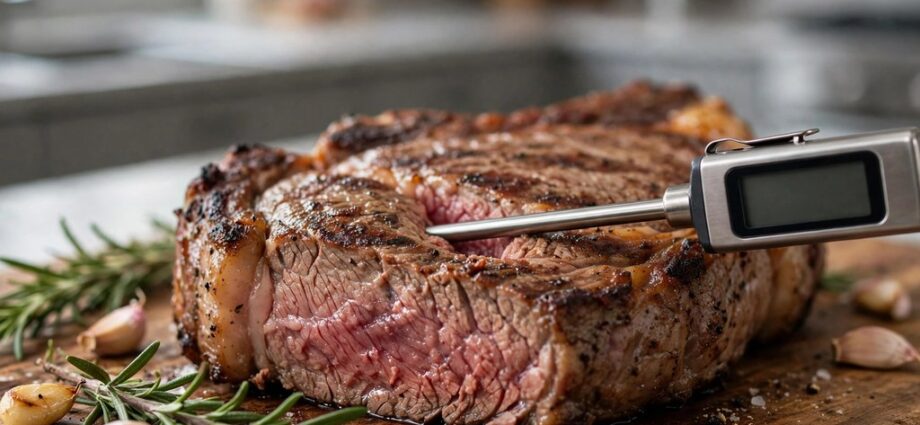
The best meat thermometers for steak include instant-read and probe models for accuracy. These models suit quick checks near the end of cooking. Probe models track temperature continuously while steak cooks undisturbed.
Steak doneness depends on internal temperature rather than color alone. Additionally, a reliable thermometer removes guesswork from every cook. Therefore, you can repeat great results with confidence each time.
This guide compares thermometer types, features, placement, and care. Moreover, you will learn simple habits for accurate readings. First, explore why precision matters for flavor and texture. Finally, you can choose the right tool for your cooking style.
Why the Best Meat Thermometers Matter for Steak
The USDA recommends a minimum internal temperature of 145°F for steak. You should rest steak for at least three minutes after cooking. Resting lets heat spread evenly through the meat. Consequently, the center finishes gently without overcooking the outside.
Color alone often misleads even experienced cooks. A steak can look done outside while the center stays undercooked. Use a steak cooking chart alongside your thermometer for steady guidance. Together, these tools help you match heat, time, and doneness.
For example, pull rare steak around 120°F to 125°F for a cool center. Pull medium-rare steak around 130°F to 135°F for warmth and tenderness. Pull medium steak around 135°F to 145°F for a firmer bite.
Similarly, pull medium-well steak around 145°F to 155°F for less pink. Pull well-done steak at 155°F or higher for full firmness.
Best Instant-Read Meat Thermometers for Steak
Moreover, instant-read thermometers measure temperature within seconds after insertion. You insert the thin probe into the thickest part of the steak. Next, you read the display and remove the probe right away. This quick check works well for grilling and pan searing.
Additionally, instant-read models shine during the final minutes of cooking. You can check several steaks quickly without losing much heat. Compare each reading with a steak doneness temperature chart to confirm your target. Then, you can adjust cooking time with confidence.
Choose a model with a clear display and a fast response time. Additionally, a slim probe causes only a tiny hole in the meat. Thin probes also protect juices and keep the crust intact. Furthermore, a folding probe stores safely between uses.
Best Probe Meat Thermometers for Steak
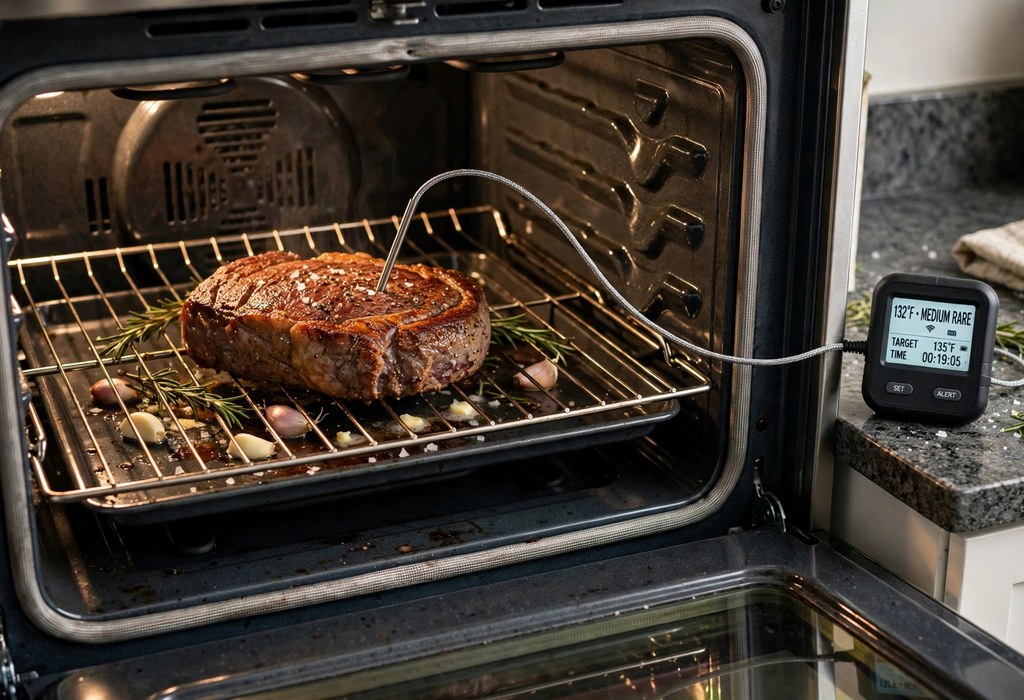
Furthermore, probe thermometers stay inside steak while it cooks. A heat-resistant cable connects the probe to an outside display unit. Meanwhile, you can monitor temperature without opening the oven door. This steady tracking suits roasts and thick steaks especially well.
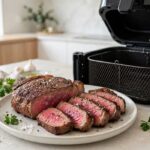
Leave-in probes also help in enclosed cooking methods. You can track progress through a closed lid or door. Check an air fryer steak time and temperature chart when you cook smaller cuts this way. Then, you can pair timed guidance with live temperature readings.
Some probe models sound an alarm at your target temperature. You set the alarm before cooking starts. As a result, you can prep side dishes without constant checking. However, you must keep cables away from direct flames and heating elements.
Key Features of the Best Meat Thermometers for Steak
First, accuracy matters more than extra features for most home cooks. Look for accuracy within one or two degrees for dependable results. Moreover, a wide temperature range covers both rare and well-done targets. Speed, display clarity, and probe length also shape daily use.
- Accuracy: Pick a thermometer with tight accuracy for consistent doneness. Tight accuracy helps you hit medium-rare without overshooting the target.
- Speed: Choose a fast model for quick checks at the grill. Fast readings limit heat loss and keep cooking steady.
- Probe length and thinness: Select a long, thin probe for thick steaks and roasts. Thin probes reach the center easily and leave small marks.
- Display readability: Favor a large, backlit display for dim kitchens and evening grilling. Clear digits reduce errors when you check temperature quickly.
- Durability and water resistance: Seek sturdy construction for frequent kitchen use. Sturdy materials survive drops, splashes, and regular cleaning.
Moreover, consider battery type and replacement cost before you buy a model. Additionally, a simple control layout helps you change targets quickly. Avoid overly complex menus during busy cooking sessions. Finally, test the grip and balance in your hand.
How to Place the Probe Correctly
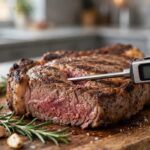
First, insert the probe into the thickest part of the steak. Aim for the geometric center for the most honest reading. Next, keep the tip away from bone, fat, and gristle. Bone and fat conduct heat differently and skew results.
Next, push the probe sideways into thin steaks when possible. This sideways path centers the sensor inside the meat. Additionally, wait a few seconds for the reading to stabilize. Remove the probe and recheck another spot for thick cuts.
Check temperature away from the pan surface and grill grates. Hot surfaces can inflate the reading near the edge. Similarly, check the center again after resting begins. Resting heat can raise the internal temperature by several degrees.
Calibration and Care for Lasting Accuracy
Additionally, test calibration with an ice water bath regularly. Stir crushed ice and water together in a tall glass. The thermometer should read close to 32°F in that mixture. Consequently, you can spot drift before it ruins a cook.
Moreover, adjust calibration on models with a calibration control. Follow the maker instructions for your specific model type. Furthermore, retest after drops, battery changes, and long storage. Regular checks keep readings trustworthy over time.
Clean the probe with warm soapy water after each use. Dry the probe fully before storage to prevent corrosion. Moreover, store the thermometer in a dry place away from heat. Proper care extends probe life and protects accuracy.
Frequently Asked Questions
Where should you insert a meat thermometer in steak?
Insert the probe into the thickest part of the steak center, away from bone and fat.
How long should you wait for an accurate steak temperature reading?
Wait a few seconds until the display stabilizes before you trust the reading.
What temperature should steak reach for safe eating?
Cook steak to at least 145°F internally, then rest it for three minutes.
Can you leave a probe thermometer in steak during cooking?
Leave only a leave-in probe in steak during cooking, since instant-read models cannot withstand sustained oven heat.
How often should you calibrate a meat thermometer?
Check calibration monthly with ice water and after any drop or battery change.
Choose the Best Meat Thermometers for Steak with Confidence
Instant-read models suit fast checks, while probe models suit hands-free tracking. Match the thermometer type to your cooking method and steak thickness. Additionally, prioritize accuracy, speed, and correct placement over extra features.
Finally, start your next cook with a calibrated thermometer and a clear target temperature. Check the center carefully, rest the steak fully, and slice with confidence. Buy the thermometer type that fits your kitchen today and enjoy consistently delicious steak.