










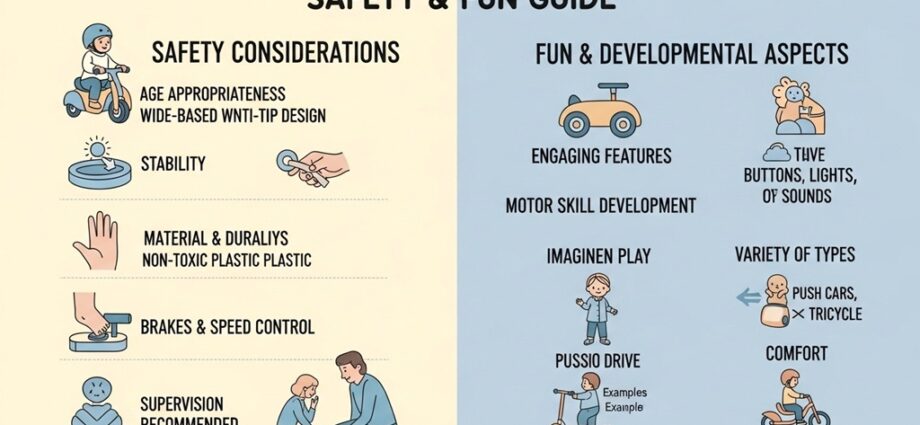
Ride-on toys for toddlers are small vehicles designed for young children to sit on and move by pushing with their feet or by being pushed by an adult. These toys include toddler ride-on cars, push ride-on toys, and other small toddler vehicles such as scooters, trucks, and balance bikes.
Parents often choose ride-on toys because they combine play with physical development. Toddlers learn balance, coordination, and spatial awareness while having fun. According to child development research from pediatric mobility studies, active play during early childhood improves motor skill development and supports healthy physical growth.
But not every ride-on toy is suitable for every child. Some models focus on pushing and walking support, while others allow toddlers to drive independently. Choosing the right one depends on age, safety features, durability, and play style.
This guide explains how to choose the best ride-on toys for toddlers, what safety factors matter most, and which features make playtime both safe and enjoyable.
Why Do Toddlers Benefit from Ride-On Toys?
Short Answer: Ride-on toys help toddlers build balance, coordination, and muscle strength while encouraging independent play.
Ride-on toys are more than simple entertainment. Pediatric development experts note that early movement-based play contributes to brain development and motor learning.
Key Development Benefits
- Motor Skill Development – Toddlers learn to push, steer, and balance.
- Muscle Strength – Leg muscles develop through pushing and scooting.
- Spatial Awareness – Children learn how to move through space safely.
- Confidence Building – Independent movement encourages self-confidence.
- Active Play – Encourages movement instead of passive screen time.
A study published in the journal Early Childhood Education found that toddlers who regularly engage in physical play show stronger coordination skills by age three compared with those who primarily engage in stationary activities.
Ride-on toys provide a simple way to encourage this type of play indoors or outdoors.
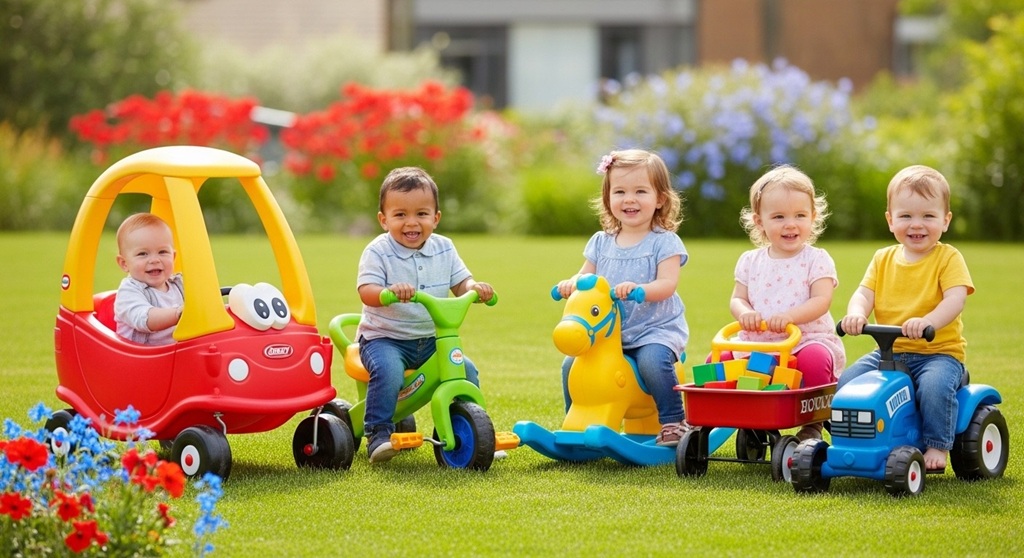
What Types of Toddler Ride-On Cars and Vehicles Are Available?
Short Answer: The most common ride-on toys include push ride-on toys, foot-to-floor ride-on cars, balance bikes, and electric toddler vehicles.
Understanding the different categories helps parents choose the right option for their child’s age and development stage.
1. Push Ride-On Toys
Push ride-on toys allow parents to guide the vehicle using a handle while the toddler sits and enjoys the ride.
- Ideal for children 10–18 months
- Often include safety rails
- Parent steering control
- Good for early walking support
These toys help toddlers feel involved in movement while still being supervised.
2. Foot-to-Floor Ride-On Cars
Foot-powered toddler ride-on cars allow children to move by pushing their feet against the ground.
- Suitable for ages 1–3
- Encourages independent movement
- Improves leg strength
- Common indoor and outdoor use
These vehicles are among the most popular because they combine safety with independence.
3. Balance Bikes
Balance bikes are small bicycles without pedals. Toddlers push with their feet and gradually learn balance.
Research from cycling development programs shows that children who start with balance bikes learn to ride pedal bikes earlier because they master balance first.
4. Electric Toddler Vehicles
Battery-powered toddler vehicles simulate real driving experiences.
- Often designed for children aged 3+
- Powered by rechargeable batteries
- Includes steering and foot pedals
- Some models offer remote parental control
While fun, these models should only be used under supervision.
How Do You Choose the Right Ride-On Toy Based on Age?
Short Answer: Always match the ride-on toy to the toddler’s age, weight limit, and motor skill level.
Manufacturers design ride-on toys for specific developmental stages. Choosing the wrong size or type can reduce safety and comfort.
| Age Range | Recommended Ride-On Toy | Key Features |
|---|---|---|
| 10–18 months | Push ride-on toys | Parent handle, safety rails |
| 1–2 years | Foot-to-floor toddler ride-on cars | Stable base, wide wheels |
| 2–3 years | Balance bikes | Lightweight frame |
| 3+ years | Electric toddler vehicles | Pedal drive, steering control |
Checking age recommendations helps ensure that the toy supports the toddler’s physical abilities.
What Safety Features Should Parents Look For?
Short Answer: The most important safety features include a stable wheelbase, secure seating, smooth steering, and non-toxic materials.
Safety is the most important factor when choosing ride-on toys for toddlers.
1. Wide Wheelbase
A wide base prevents tipping. This is especially important for younger toddlers who are still learning balance.
2. Stable Seat Design
Seats should be low and wide. A low center of gravity helps prevent falls.
3. Steering Limiters
Some ride-on cars include steering limiters that prevent sharp turns that could cause tipping.
4. Durable Materials
High-quality plastic or metal frames improve durability and safety.
5. Certified Safety Standards
Look for toys that meet recognized safety standards such as ASTM or EN71 toy safety guidelines.
What Size Ride-On Toy Is Best for a Toddler?
Short Answer: A ride-on toy should allow the toddler to sit comfortably with both feet touching the ground.
Correct sizing ensures that the child can move safely and confidently.
Signs a Ride-On Toy Fits Properly
- Feet can reach the ground easily
- Knees bend comfortably
- Hands reach the steering wheel or handle
- The child can climb on and off independently
If a toy is too large, toddlers may struggle to control it. If it is too small, they may outgrow it quickly.
Which Features Make Ride-On Toys More Fun?
Short Answer: Interactive features like music buttons, storage compartments, and themed designs make ride-on toys more engaging.
While safety comes first, engaging features help maintain a toddler’s interest.
Popular Fun Features
- Horn or music buttons
- Storage space under the seat
- Realistic car dashboards
- Character-themed designs
- Lights and sound effects
These additions encourage imaginative play while the child develops motor skills.
What Do Real Case Studies Say About Ride-On Toys?
Short Answer: Studies show that ride-on mobility toys improve independent movement and social interaction in young children.
Research from the University of Delaware’s early mobility program examined mobility devices for toddlers. The study found that early mobility toys helped young children interact more frequently with caregivers and explore their environment more confidently.
Another observational study published in pediatric therapy journals found that toddlers who used ride-on mobility toys demonstrated:
- Increased environmental exploration
- Improved social engagement
- More frequent physical activity
These findings support the idea that ride-on toys are not only entertaining but also contribute to early developmental learning.
How Can Parents Use Ride-On Toys Safely?
Short Answer: Always supervise toddlers, choose safe play areas, and follow manufacturer guidelines.
Safety Tips
- Use toys on flat surfaces.
- Avoid steep slopes.
- Supervise outdoor play.
- Keep toys away from roads.
- Check for loose parts regularly.
Following these simple steps helps reduce accidents while allowing toddlers to enjoy active play.
Conclusion: How Do You Pick the Best Ride-On Toy for Your Toddler?
Choosing the best ride-on toy for toddlers does not require complicated research. The most important factors are safety, age suitability, and developmental benefits.
Start by identifying the correct category—push ride-on toys, toddler ride-on cars, or balance-style toddler vehicles. Then evaluate the toy’s stability, materials, and size. A well-designed ride-on toy should allow the child to move comfortably while maintaining balance.
Ride-on toys support active play, motor skill development, and independent exploration. When selected carefully, they can provide both fun and learning during early childhood.
If you are planning to buy a ride-on toy, take a moment to compare models, check safety standards, and consider your child’s current stage of development. The right toy can turn everyday playtime into a meaningful learning experience.
Explore trusted toddler ride-on toys and choose one that keeps your child safe, active, and engaged.
FAQ: Common Questions About Toddler Ride-On Toys
What age is appropriate for ride-on toys?
Most ride-on toys are suitable for children between 10 months and 3 years old. Push ride-on toys work well for younger toddlers, while foot-powered toddler ride-on cars are better for children aged 1–3 years.
Are ride-on toys safe for toddlers?
Yes, ride-on toys are safe when they meet safety standards and are used under supervision. Choosing toys with stable wheels, low seats, and durable materials improves safety.
What is the difference between push ride-on toys and foot-to-floor ride-ons?
Push ride-on toys are guided by parents using a handle, while foot-to-floor ride-ons allow toddlers to move independently by pushing their feet on the ground.
Do ride-on toys help toddlers learn balance?
Yes. Many ride-on toys help develop balance and coordination because toddlers must control movement while steering and pushing.
How long do toddlers use ride-on toys?
Most toddlers use ride-on toys between ages 1 and 3. However, some larger models and electric toddler vehicles can be used up to age 5.
Are electric ride-on cars good for toddlers?
Electric ride-on cars are usually recommended for children aged 3 and older. Younger toddlers benefit more from foot-powered ride-on toys that encourage physical activity.
Related Topic: How to Pick a Hypoallergenic Pillow for Kids with Allergies
Read Next: Natural Advantages That Boost the Value of Lakefront Property in Any Market