










At 3:17 a.m., your cervical spine does not care how expensive your mattress is—it only cares whether your neck is aligned. That is why many people wake up with stiffness, headaches, and shoulder tension even after spending eight hours in bed. The fastest way to improve sleep comfort with cervical neck pain is to use a contour pillow designed for proper cervical spine support, keeping the head, neck, and shoulders in a neutral position throughout the night. This focus keyphrase—How to Sleep Comfortably With Cervical Neck Pain Using a Contour Pillow—addresses one of the most common causes of poor sleep quality and chronic neck discomfort.
Cervical neck pain affects millions of adults worldwide. Poor sleeping posture, prolonged screen time, degenerative disc changes, muscle strain, and inadequate pillow support often contribute to ongoing discomfort. When the neck remains bent or unsupported for several hours, surrounding muscles and ligaments experience additional stress. The result is morning pain, restricted mobility, and interrupted sleep.
A contour pillow, often called an orthopedic sleep pillow, is specifically engineered to maintain natural spinal alignment. Unlike traditional pillows that flatten or shift during the night, contour designs cradle the neck while supporting the head at the correct elevation.
This guide explains how contour pillows work, why they help cervical pain sufferers, how to choose the right model, and practical strategies for achieving restorative sleep while protecting long-term spinal health.
What Is the Best Way to Sleep With Cervical Neck Pain?
Direct answer: The best way to sleep with cervical neck pain is to maintain neutral spine alignment using a contour pillow that supports the natural curve of the neck while preventing excessive bending or rotation.
The cervical spine consists of seven vertebrae responsible for supporting the head and facilitating movement. During sleep, improper positioning can place excessive pressure on cervical joints, discs, muscles, and nerves.
A contour pillow helps by:
- Supporting the neck’s natural lordotic curve
- Reducing muscle tension during sleep
- Minimizing pressure points
- Promoting spinal alignment
- Reducing nighttime movement caused by discomfort
- Helping maintain a consistent posture throughout the night
People researching pillow performance often compare specialized sleep solutions much like consumers compare materials and comfort characteristics in food products. Detailed side-by-side evaluations, such as this ingredient comparison guide, illustrate why understanding structural differences can significantly improve decision-making when selecting products for specific needs.
Research published by organizations focused on musculoskeletal health consistently shows that maintaining spinal neutrality during sleep can reduce pain intensity and improve sleep quality in individuals experiencing chronic neck discomfort.
How Does a Contour Pillow Support the Cervical Spine?
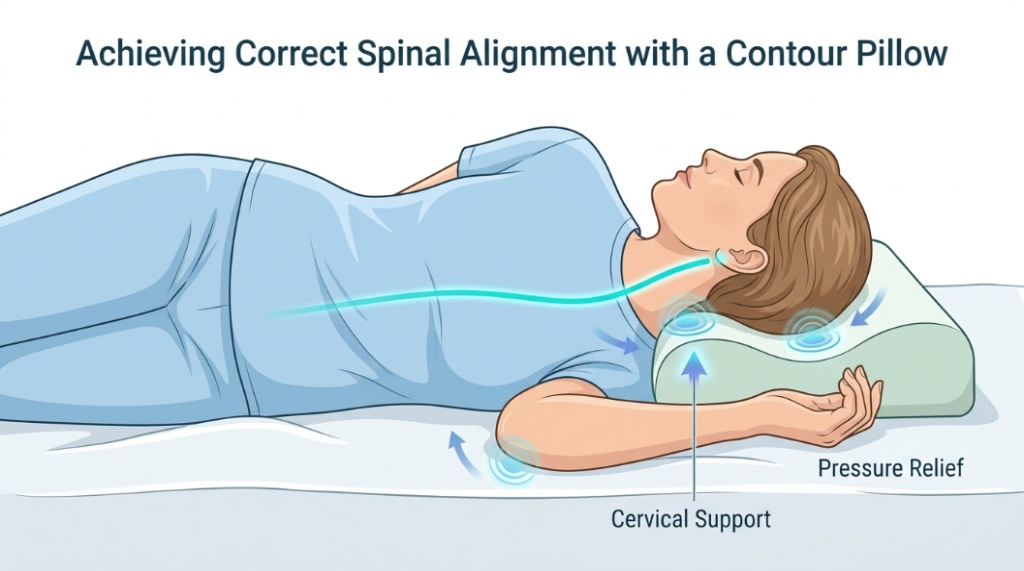
Direct answer: A contour pillow supports the cervical spine through ergonomic curves that cradle the neck while keeping the head positioned at an appropriate height.
Unlike conventional pillows with a uniform shape, contour pillows feature two raised edges and a central depression. This design mirrors natural cervical anatomy.
When lying down:
- The higher edge supports the neck curve
- The center cradles the head
- The shoulders remain properly positioned
- The spine maintains natural alignment
Key support mechanisms include:
Neck Curve Preservation
The cervical spine naturally curves inward. A contour pillow fills the gap between the neck and mattress, preventing collapse of this curve.
Pressure Redistribution
Memory foam and ergonomic materials distribute weight evenly, reducing concentrated pressure on muscles and joints.
Motion Stability
The contoured structure helps keep the head centered, reducing excessive movement that may aggravate symptoms.
Muscle Relaxation
Proper alignment allows neck muscles such as the sternocleidomastoid, upper trapezius, and levator scapulae to relax more effectively overnight.
Why Is an Orthopedic Sleep Pillow Better Than a Traditional Pillow?
Direct answer: An orthopedic sleep pillow is designed around spinal biomechanics, whereas traditional pillows primarily focus on softness and comfort.
Many standard pillows compress unevenly, flatten over time, and fail to maintain consistent support. For individuals with cervical pain, this can worsen alignment problems.
| Feature | Orthopedic Sleep Pillow | Traditional Pillow |
|---|---|---|
| Cervical Spine Support | Designed specifically for alignment | Limited support |
| Shape Retention | High | Often decreases over time |
| Pressure Relief | Targeted support zones | Variable |
| Neck Position Control | Consistent | Often unstable |
| Pain Management | Purpose-built | General comfort focus |
Many users report fewer morning headaches, reduced stiffness, and better sleep continuity after transitioning to a supportive contour design.
Which Sleeping Position Works Best With a Contour Pillow?
Direct answer: Back sleeping and side sleeping generally provide the greatest benefits when paired with a contour pillow for cervical neck pain.
Sleep position dramatically influences spinal alignment.
Just as specialized equipment improves efficiency in meal preparation—similar to how people optimize routines with resources about practical everyday cooking techniques—proper sleep positioning combined with the right support system can significantly improve comfort and performance throughout the day.
Back Sleeping
This position often provides the most balanced spinal alignment.
- Head remains centered
- Neck curve stays supported
- Pressure remains evenly distributed
- Shoulders relax naturally
Side Sleeping
Side sleepers can also experience excellent results when pillow height matches shoulder width.
- Head remains level
- Neck avoids side bending
- Shoulders stay aligned
- Spinal neutrality improves
Stomach Sleeping
Most spine specialists discourage stomach sleeping because it forces prolonged neck rotation and places stress on cervical structures.
If stomach sleeping is unavoidable, a low-profile pillow may help reduce strain.
Can a Contour Pillow Help Reduce Morning Neck Stiffness?
Direct answer: Yes. A contour pillow can reduce morning neck stiffness by minimizing overnight stress on cervical muscles, joints, and supporting tissues.
Morning stiffness often develops because muscles remain contracted for extended periods while compensating for poor alignment.
Common contributors include:
- Insufficient neck support
- Excessive head elevation
- Improper sleeping posture
- Muscle fatigue
- Disc compression
By maintaining proper positioning throughout the night, contour pillows reduce compensatory muscle activity and improve recovery.
Users frequently notice:
- Less stiffness after waking
- Improved range of motion
- Reduced headaches
- Less shoulder tension
- Better sleep satisfaction
How Do You Choose the Right Contour Pillow for Cervical Neck Pain?
Direct answer: Choose a contour pillow based on sleeping position, body size, support firmness, material quality, and cervical alignment needs.
Not every contour pillow works equally well for every sleeper.
Evaluate Pillow Height
The ideal loft depends on shoulder width and sleeping position.
- Back sleepers typically benefit from medium loft
- Side sleepers often require higher loft
- Combination sleepers may need adjustable designs
Assess Material Quality
Common materials include:
- Memory foam
- Latex foam
- High-density polyurethane foam
- Hybrid support materials
Memory foam remains one of the most popular options because it conforms closely to body contours.
Check Support Consistency
The pillow should maintain shape throughout the night without excessive compression.
Review Ergonomic Design
Look for features such as:
- Dual-height contours
- Shoulder cutouts
- Breathable covers
- Pressure-relief zones
- Adjustable inserts
For shoppers evaluating premium ergonomic models, this comprehensive guide to the best contour pillow options for better neck support provides useful comparisons and selection insights.
How Long Does It Take to Adjust to a Cervical Support Pillow?
Direct answer: Most people adapt to a cervical support pillow within one to three weeks, although adjustment time varies based on previous sleeping habits and pain severity.
Initial discomfort does not necessarily indicate poor pillow quality. The body often requires time to adapt to improved alignment.
Common adaptation experiences include:
- Mild temporary stiffness
- Different sleeping sensations
- Changes in preferred sleeping position
- Improved posture awareness
Adjustment tips:
- Use the pillow consistently
- Avoid switching between multiple pillows
- Maintain proper mattress support
- Follow recommended sleeping positions
Most users notice meaningful improvements after several consecutive nights of use.
What Other Habits Improve Sleep With Cervical Neck Pain?
Direct answer: Combining a contour pillow with healthy sleep habits creates the best environment for reducing cervical discomfort and improving recovery.
A pillow alone cannot address every contributing factor.
Optimize Sleep Ergonomics
- Use a supportive mattress
- Keep spine aligned
- Avoid excessive pillow stacking
- Maintain consistent sleep schedules
Reduce Screen Time Before Bed
Forward-head posture from smartphones and computers can increase cervical strain throughout the day.
Perform Gentle Mobility Exercises
Light stretching before bedtime may reduce muscle tightness.
Examples include:
- Chin tucks
- Neck side bends
- Shoulder rolls
- Thoracic mobility exercises
Manage Stress Levels
Stress often increases muscle tension in the neck and upper shoulders. Relaxation techniques may support better sleep quality.
Stay Physically Active
Regular movement improves circulation, posture, and musculoskeletal health.
What Mistakes Make Cervical Neck Pain Worse During Sleep?

Direct answer: Common mistakes include using the wrong pillow height, sleeping on the stomach, stacking multiple pillows, and ignoring persistent symptoms.
Avoid these frequent problems:
- Pillow too high or too low
- Sleeping with neck rotated excessively
- Using worn-out pillows
- Poor mattress support
- Reading in bed with neck flexed forward
- Falling asleep on couches or recliners regularly
Correcting these habits often produces noticeable improvements even before other interventions are introduced.
Conclusion: Is a Contour Pillow Worth Using for Cervical Neck Pain?
Direct answer: Yes. A quality contour pillow provides targeted cervical spine support, encourages healthy alignment, reduces pressure on sensitive structures, and can significantly improve sleep comfort for individuals experiencing neck pain.
Cervical discomfort frequently originates from poor sleeping posture and inadequate support. A properly selected orthopedic sleep pillow helps maintain the neck’s natural curvature while reducing muscular strain and joint stress throughout the night. Combined with healthy sleep habits, appropriate positioning, and consistent use, contour pillows can contribute to fewer pain flare-ups, improved mobility, and more restorative sleep.
If you are searching for long-term relief rather than temporary comfort, investing in ergonomic sleep support is often one of the most practical changes you can make. Exploring trusted resources and product evaluations can help identify solutions that match your sleeping style and cervical support requirements.
Start evaluating your current sleep setup tonight. Small alignment improvements can produce meaningful changes in comfort, recovery, and overall well-being.
Frequently Asked Questions About Sleeping With Cervical Neck Pain
Is a contour pillow good for cervical spondylosis?
Yes. A contour pillow may help individuals with cervical spondylosis by maintaining proper neck alignment and reducing stress on cervical joints and discs during sleep.
Can an orthopedic sleep pillow reduce headaches?
Often, yes. Tension headaches associated with neck muscle strain may improve when cervical alignment is optimized through proper pillow support.
Should side sleepers use a contour pillow?
Absolutely. Many contour pillows are designed specifically for side sleepers and help maintain a neutral relationship between the head, neck, and shoulders.
How often should a cervical support pillow be replaced?
Generally, every 18–36 months. Replacement timing depends on material quality, usage frequency, and whether the pillow maintains consistent support.
Can sleeping without a pillow help neck pain?
Usually not. Most adults benefit from some level of cervical support. Sleeping without a pillow often causes alignment issues, particularly for side sleepers.
What firmness level is best for cervical neck pain?
Medium to medium-firm support typically provides the best balance between comfort and structural support. Individual preferences and body type should also be considered.
Can a contour pillow eliminate neck pain?
Not always. While many people experience substantial improvement, persistent pain may involve underlying medical conditions requiring professional evaluation and treatment.