







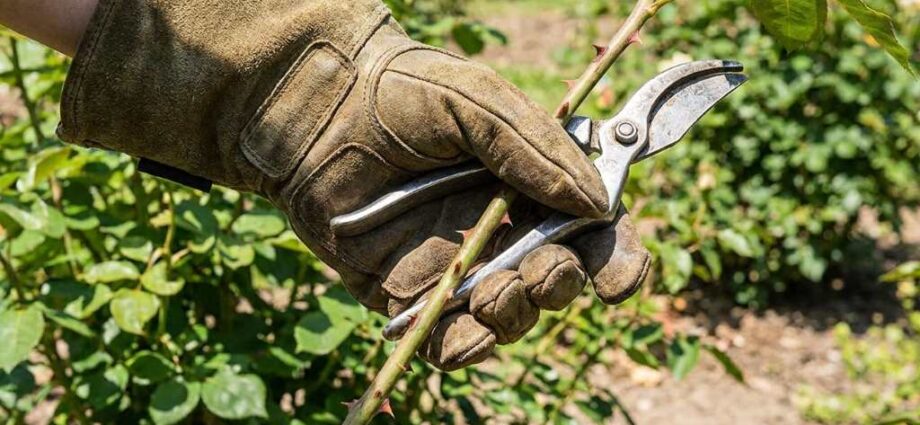
Goatskin or elk hide gauntlet gloves stop thorns better than any other option. Their extended cuffs guard your forearms while the thick leather resists punctures from rose canes and bramble thorns. Thinner materials like cotton or suede simply cannot survive repeated contact with serious thorns.
Rose growers and anyone pruning blackberry brambles know how quickly a standard glove fails. A single reach into dense canes can shred thin fabric within minutes.
This guide breaks down exactly what separates a true thorn resistant glove from a glove that only looks tough. You will also learn how to test puncture resistance before you commit to a pair.
Why Thorny Plants Need A Different Glove
Rose bushes, blackberries, and hawthorn hedges puncture fabric in ways general yard gloves were never built to handle. A thorn does not need much force to pierce thin material.
Standard cotton or light synthetic gloves tear within a single session against serious thorns. That failure usually happens exactly when your hand is deepest inside the branches, which makes the injury worse.
Choosing a glove built specifically for thorny work prevents both the puncture and the frustration of replacing torn gloves repeatedly.
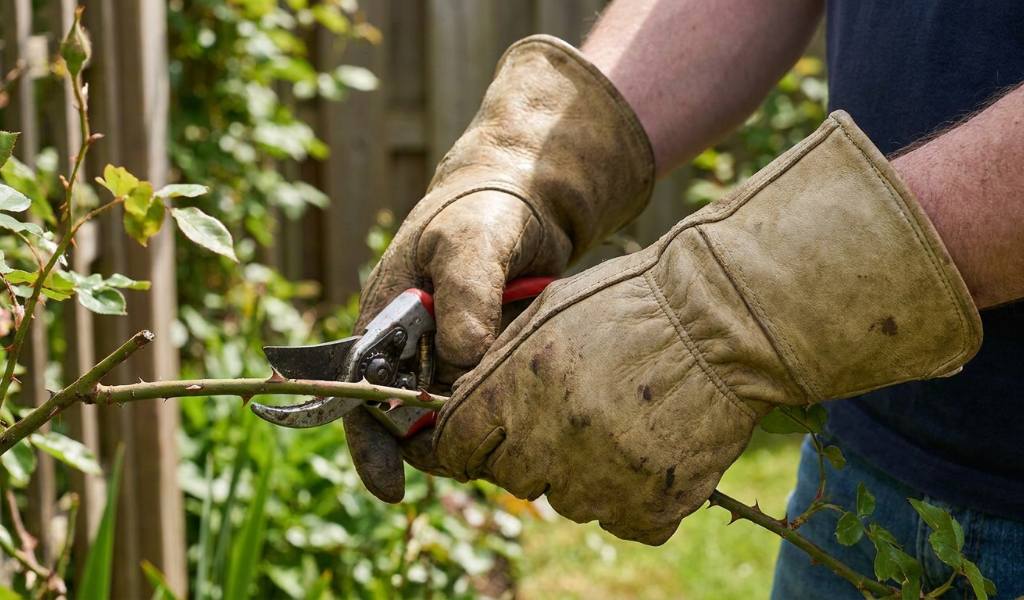
Key Features To Look For
A few specific traits separate gloves that actually survive thorns from ones that fail quickly.
Puncture Rated Leather
Full grain goatskin or elk hide offers the densest fiber structure among common glove leathers. Thinner splits or suede tear far more easily under direct thorn pressure.
Extended Gauntlet Cuffs
Cuffs reaching past the wrist, often five to seven inches, guard your forearm as you reach into dense canes. Short cuffs leave skin exposed exactly where scratches happen most often.
Reinforced Fingertips
Fingertips take the most direct contact when gripping stems near thorns. Double stitched or extra layered fingertips resist tearing longer than single layer construction.
Snug Wrist Closure
A secure closure, whether elastic or a hook and loop strap, keeps debris and small thorns from slipping inside the glove. Loose cuffs defeat the purpose of a gauntlet design entirely.
Top Pick Categories By Budget
Price ranges affect durability and features noticeably within this category.
Entry Level
Basic cowhide gloves with shorter cuffs handle occasional light pruning reasonably well. Expect less puncture resistance against thick bramble canes compared to goatskin or elk hide.
Mid Range
Goatskin gauntlet gloves with reinforced fingertips cover most home rose gardens effectively. This tier balances flexibility with real puncture protection for regular pruning sessions.
Heavy Duty
Elk hide or thick cowhide with extra long gauntlets suits serious bramble clearing and dense hedge work. These gloves sacrifice some dexterity in exchange for maximum thorn resistance.
How To Test Puncture Resistance Before Buying
A simple press test reveals a lot before you ever touch a thorn. Press a blunt pencil tip firmly against the palm and fingertips.
Material that resists easily without much give suggests solid puncture resistance. Material that dents or flexes too much under light pressure will likely fail against real thorns.
Check the gauntlet length against your forearm too, since a cuff that stops short of where thorns typically scratch offers little real benefit. Flex your fingers fully to confirm the leather allows a comfortable grip despite its thickness.
Among the most common mistakes gardeners make, choosing gardening gloves based on appearance rather than puncture testing ranks near the top.
Mistakes To Avoid
Choosing suede over full grain leather: is a common error, since suede tears much faster under thorn pressure.
Picking a short cuff for rose work: leaves your forearm exposed exactly where thorns scratch most.
Ignoring fit around the fingertips: reduces both comfort and the precision needed for careful pruning cuts.
Assuming thicker always means better: overlooks that overly stiff leather can reduce the dexterity needed for detailed cuts near buds.
Caring For Thorn Resistant Gloves
Leather gloves used for thorny work need regular conditioning to prevent cracking from repeated flexing. A light leather conditioner applied every few months keeps the material supple.
Brush off dried sap or plant debris after each session rather than letting it build up. Store the gloves somewhere dry, since trapped moisture weakens the fibers over time and shortens their working life.
Frequently Asked Questions
What Material Works Best Against Rose Thorns?
Full grain goatskin or elk hide leather resists rose thorn punctures better than any common alternative.
How Long Should The Cuff Be For Rose Pruning?
A cuff reaching five to seven inches past the wrist covers most forearm exposure during pruning.
Can Cotton Gloves Handle Light Rose Care?
No, cotton tears quickly against thorns and only suits tasks with minimal thorn contact.
Do Thorn Resistant Gloves Reduce Hand Dexterity?
Slightly, since thicker leather reduces fine movement, though quality stitching helps preserve reasonable flexibility.
How Often Should I Replace Thorn Resistant Gloves?
Replace them once punctures appear regularly or the leather stiffens beyond what conditioning can restore.
Final Thoughts
Thorny plants demand more from your gloves than general yard work ever will. Goatskin or elk hide with a long gauntlet cuff remains the safest choice for roses and brambles alike.
Before your next pruning session, check your current pair against the features covered here. A proper upgrade now saves scratched forearms for every season ahead.