







Key Takeaways
- Brush rolls beat and sweep carpets, so they lift dirt that airflow alone misses.
- Stiff bristles suit carpets, while soft ones protect hard floors from scratches.
- Motorized brush rolls clean deeper than air-driven ones on thick carpet.
- Tangle-free designs save time on long hair and pet fur.
- Belts, bearings, and bristles wear out, so inspect the brush roll regularly.
The brush roll is the spinning cylinder underneath your vacuum. It may look like a simple part, but it does most of the hard work on carpets. Without it, a vacuum would only pull loose surface dust. Carpet fibers hold dirt deep down. Airflow alone cannot pull that dirt free. Therefore, the brush roll beats the fibers, shakes the dirt loose, and sweeps it toward the suction path. This is why carpet cleaning depends so heavily on brush design.
Brush rolls have evolved far beyond a cylinder with bristles. Today you will find stiff nylon brushes, soft fluffy rollers, rubber fins, and tangle-resistant combs. Each design targets a specific floor type or mess type.
This guide explains the main brush roll designs and how each one affects cleaning results. You will learn which style suits carpets, hard floors, pet hair, and long human hair. Additionally, you will learn how to maintain brush rolls so they keep performing like new.
How a Brush Roll Actually Cleans
A brush roll spins at high speed inside the vacuum head. Most household models spin between 2,500 and 7,000 revolutions per minute. That fast motion creates two cleaning actions at once.
First, the bristles agitate the carpet. They strike the fibers and shake embedded dirt loose. Meanwhile, the suction pulls that freed dirt into the machine. This teamwork beats suction alone by a wide margin.
Second, the bristles sweep larger debris toward the suction opening. crumbs, lint, and cereal pieces get flicked into the airflow. Therefore, the brush roll acts like a mechanical broom working with the vacuum.
The Carpet and Rug Institute highlights deep soil removal as a key measure of vacuum performance. Brush agitation plays the largest role in that deep removal on cut-pile carpets. Without beating action, dirt stays trapped where the fibers hold it.
The design details also control results. Bristle stiffness sets how deep the agitation reaches. Brush height decides how far the bristles press into the carpet. Additionally, roll speed affects how much dirt gets moved per second.
Here is the basic process:
- The motor spins the brush roll through a belt or direct drive.
- Bristles strike carpet fibers and shake dirt loose.
- Sweeping action flicks debris toward the suction opening.
- Airflow carries the freed dirt into the bin or bag.
Consequently, brush condition matters as much as motor power. Worn bristles cannot reach the dirt, no matter how strong the suction is.
Stiff Bristle Brushes for Carpet Cleaning
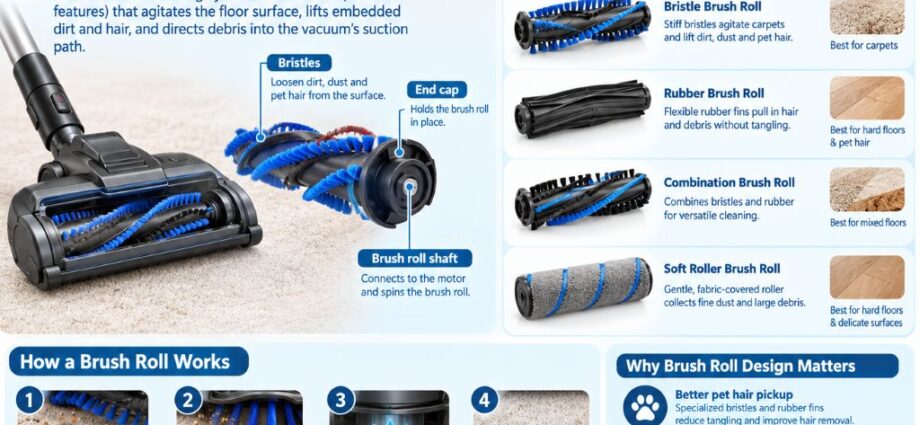
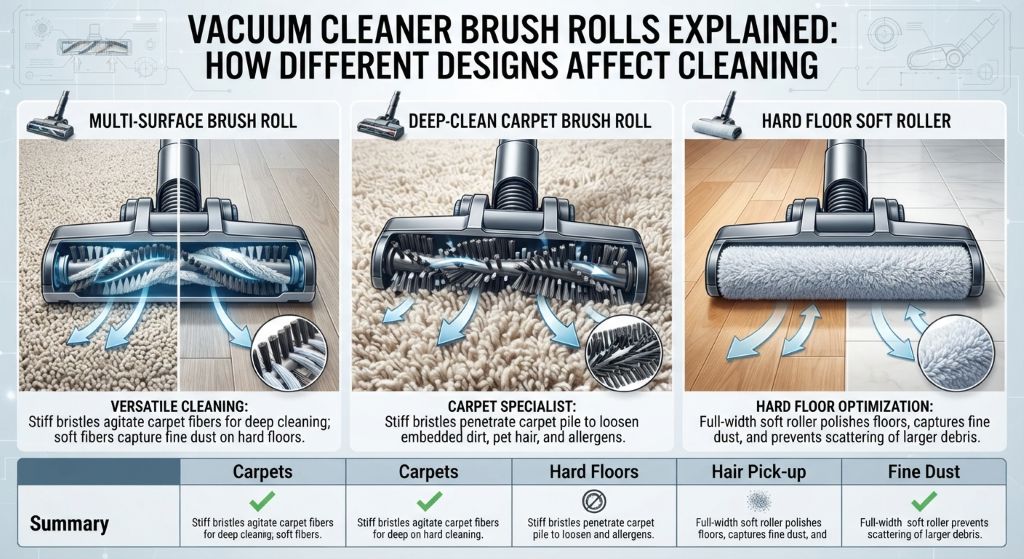
Traditional brush rolls use stiff nylon bristles. This design remains the standard for carpet cleaning, and for good reason. Stiff bristles dig into the pile and pull out deep, embedded dirt.
Carpet dirt is different from surface dust. It includes grit that sinks to the fiber base. Walking on the carpet grinds this grit against the fibers and wears them down. Therefore, deep extraction protects your carpet as much as your air.
Stiff bristles handle this job well. They reach the fiber base and loosen grit that airflow alone leaves behind. This is why upright vacuums built for carpet still rely on firm nylon brushes.
However, the same stiffness causes problems elsewhere. On hard floors, stiff bristles scratch soft woods and fling debris instead of capturing it. Grit gets kicked backward rather than pulled inside. Consequently, many vacuums include a height adjustment or a brush on-off switch.
Look for these features when buying for carpet-heavy homes:
- Firm nylon bristles for deep agitation.
- Height adjustment to match the pile depth.
- A brush on-off switch for hard floor safety.
- A wide roll to cover more carpet per pass.
According to the Carpet and Rug Institute, proper vacuum maintenance, including brush inspection, extends carpet life significantly. Worn bristles clean poorly and force the motor to work harder.
Therefore, check your bristles every few months. If they look bent, melted, or short, replace the roll. A fresh roll restores deep cleaning instantly.
Soft Roller Brushes for Hard Floors
Hard floors need the opposite approach. Stiff bristles scratch and scatter, so manufacturers designed soft roller brushes instead. These use a fluffy, velvety material that hugs flat surfaces.
Soft rollers work differently from bristle brushes. They act like a damp mop rather than a beater. The fluffy material wipes fine dust and stuck-on particles off the floor. Meanwhile, the suction pulls the debris straight into the bin.
This design shines at two jobs. First, it captures fine dust that normal suction leaves behind. Second, it picks up sticky debris, like dried spills and pet kibble crumbs. Bristle brushes often flick these items away instead.
Dyson popularized this category with its Fluffy roller for hard floors. Since then, many brands have added soft rollers to their lineups. The design works especially well on:
- Hardwood and laminate floors.
- Tile and vinyl surfaces.
- Fine dust and hair on smooth floors.
- Large debris like cereal and litter.
Additionally, soft rollers stay quieter. Stiff bristles slap the floor and create noise. Soft material glides instead, which makes early-morning cleaning easier on the whole household.
However, soft rollers have a clear limit. They cannot deep-clean carpet, because they lack beating action. Therefore, homes with mixed flooring benefit from vacuums that swap heads or rollers.
The best approach for mixed homes is simple. Use the soft roller on hard floors and the bristle roll on carpet. Many cordless vacuums now include both heads for exactly this reason.
Motorized vs. Air-Driven Brush Rolls
Not all brush rolls receive power the same way. Some connect to a motor through a belt. Others spin using suction airflow alone. This difference changes cleaning power noticeably.
Motorized brush rolls sit in a full powerhead. A small motor drives the roll directly, with no dependence on airflow. Therefore, the brush spins at a steady speed no matter how full the bin gets. Upright vacuums and premium cordless sticks use this design.
Air-driven turbo brushes work differently. Suction airflow spins a turbine, which spins the brush. Therefore, brush speed depends directly on airflow strength. As filters clog or bins fill, the brush slows down. These brushes appear mostly on smaller tools and budget machines.
Here is how they compare:
- Motorized rolls: steady speed, stronger agitation, heavier heads.
- Air-driven rolls: lighter, cheaper, but speed drops as airflow drops.
- Powerheads: best for thick carpet and pet hair.
- Turbo brushes: fine for stairs, upholstery, and light carpet.
Pet homes gain the most from motorized powerheads. Embedded fur needs strong, constant beating action to break free. Air-driven tools lose spin exactly when you need them most.
Weight is the trade-off. Motorized heads add bulk, which makes the vacuum harder to push and lift. Cordless vacuums with motorized heads also drain their batteries faster. Consequently, runtime drops when the brush motor runs.
Choose based on your heaviest cleaning task. Thick carpet and heavy shedding justify a motorized head. Light carpets and quick cleanups do fine with air-driven brushes.
Tangle-Free and Rubber Fin Designs
Hair is the enemy of every brush roll. Long strands wrap around the cylinder, tangle in the bearings, and choke the bristles. Eventually, a wrapped brush stops spinning and cleaning.
Manufacturers attacked this problem with new designs. Rubber fin brushes use smooth silicone fins instead of rows of bristles. Hair slides along the smooth fins instead of catching between them. Some machines then vacuum the hair straight into the bin.
Other designs use tapered shapes or guide combs. A tapered cylinder pushes hair toward the suction channel. Meanwhile, a built-in comb strips off any strands that try to wrap. Both methods cut maintenance dramatically.
These designs offer clear benefits:
- Less hair wrapping around the roll.
- Fewer scissors sessions cutting tangles free.
- More consistent brush speed over time.
- Less strain on the belt and motor.
According to product testing by Consumer Reports, brush rolls that resist tangling maintain cleaning performance longer between cleanings. Wrapped hair otherwise acts like a brake on the roll.
However, tangle-free designs trade some deep agitation. Rubber fins beat carpet less aggressively than stiff nylon. Therefore, some machines combine features, using both bristles and fins on one roll.
Pet owners benefit most here. Pet fur wraps bristles quickly and builds up silently. A tangle-resistant roll saves real time and keeps cleaning results steady.
Additionally, remember that no design is fully tangle-proof. Long hair can still build up at the bearings. Check the ends of the roll monthly and pull out any wrapped strands by hand.
How to Maintain Your Brush Roll
Brush rolls wear out faster than any other vacuum part. They hit carpet fibers thousands of times per minute. Therefore, a little monthly care extends both the roll and your vacuum’s life.
Start by removing tangled hair and thread. Scissors work well for cutting wraps free. Do this whenever you see buildup, or at least once a month.
Next, check the bristles themselves. Compare them to a new roll if possible. If bristles look worn short, melted, or frayed, replace the roll. Worn bristles cannot reach deep dirt.
Follow this monthly routine:
- Unplug the vacuum or remove its battery first.
- Slide out the brush roll according to your manual.
- Cut and pull away all wrapped hair and thread.
- Wipe the roll and check bearings for smooth spinning.
- Look at the belt for cracks or stretching.
- Reinstall the roll and test the vacuum.
Belt wear deserves special attention. A stretched or cracked belt slips, which slows the brush and weakens agitation. Belts are cheap, so replace them at the first sign of wear.
Additionally, watch for burning smells. That odor usually means a stuck brush or a slipping belt. Stop cleaning immediately and inspect the head. Running a jammed brush can burn out the motor.
Finally, match your brush to your floor. Use soft rollers on hard floors and bristle rolls on carpet. Swapping heads takes seconds and protects both your floors and your brushes.
Frequently Asked Questions
How often should I clean my vacuum brush roll?
Clean the brush roll monthly, or sooner if you see hair buildup. Homes with pets or long-haired residents may need cleaning every two weeks.
Can I put any brush roll in my vacuum?
- Brush rolls are designed for specific models, and a wrong fit can damage the head or motor. Always buy the roll listed for your exact vacuum model.
Why does my brush roll smell like burning?
A burning smell usually means the belt is slipping or the brush is jammed with hair. Stop the vacuum, clear the tangle, and check the belt for wear.
Do hard floors need a brush roll at all?
Stiff bristles can scratch hard floors and fling debris. Use a soft roller or turn the brush off on hard floors for safer, cleaner results.
Are tangle-free brush rolls worth the extra cost?
Yes, for homes with pets or long hair. They save maintenance time and keep cleaning power steady. However, they beat carpet slightly less than stiff bristles.
Conclusion
Brush rolls do the dirty work that suction cannot do alone. They beat carpet fibers, sweep debris, and wipe hard floors. Consequently, the right brush design often matters more than motor power. Match the design to your home. Stiff bristles belong on carpet, and soft rollers belong on hard floors. Pet owners should choose motorized heads with tangle-resistant features. Meanwhile, light-duty homes can save money with air-driven brushes. To make a more informed choice, read our guide on buy the right vacuum cleaner for home and business use and find a model that matches your cleaning needs.
Remember that brushes wear out. A frayed or tangled roll cleans poorly and strains the motor. Therefore, inspect your brush monthly, clear the hair, and replace worn parts quickly.
Take five minutes today. Flip your vacuum over and look at the brush roll. If you see hair wraps or worn bristles, clean it or order a replacement. That small check could restore your vacuum’s cleaning power before your next session.