








A good pasta strainer is one of those kitchen tools you reach for almost every day. It drains pasta, rinses vegetables, washes fruit, and handles more kitchen tasks than most people expect. Yet many home cooks either overlook it entirely or spend more than they need to.
The truth is, you do not need to spend a lot to get a strainer that performs beautifully. There are excellent options available for under $20 that hold up through years of daily use. However, knowing what separates a great strainer from a frustrating one takes a little knowledge.
This guide walks you through everything you need to know. From materials and size to design features and where to shop, you will be fully equipped to find the right strainer at the right price.
Why Your Pasta Strainer Matters More Than You Think
It is easy to dismiss a strainer as a simple, low-priority purchase. However, a poor-quality one creates real problems in the kitchen. Holes that are too large let small pasta shapes slip through. A base that is too narrow tips over when you set it in the sink. A flimsy frame warps under the heat of boiling water and becomes difficult to hold safely.
On the other hand, a well-designed strainer makes draining pasta effortless. It sits securely in your sink, handles heat without warping, and drains water quickly and completely. Additionally, it is easy to clean and stores neatly in a cabinet or drawer.
Given how often you use this tool, it is worth choosing carefully even when your budget is tight. The good news is that a budget colander priced under $20 can absolutely deliver all of these qualities when you know what to look for.
Understanding the Different Types of Pasta Strainers
Not all strainers are the same. They come in several styles, and each one suits a slightly different cooking habit. Understanding the options helps you narrow your choice quickly.
Footed Colanders
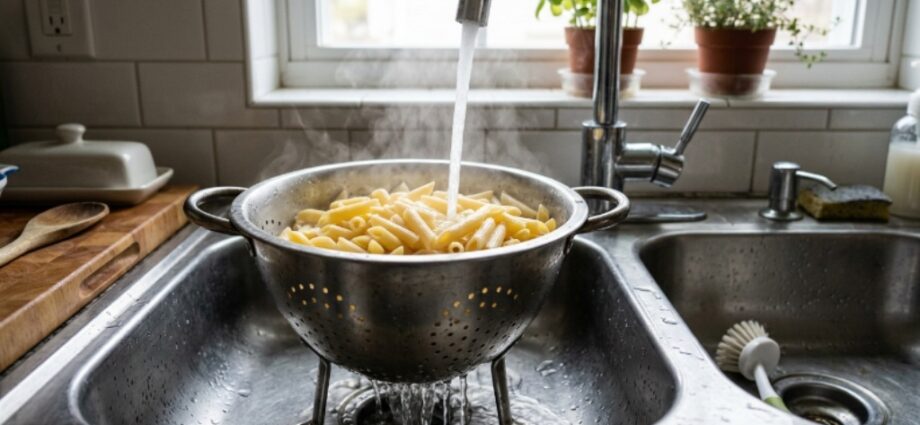
A footed colander is the classic style. It sits on small legs inside your sink, leaving both hands free to pour. This is the most stable design and works well for draining large batches of pasta. If you cook pasta regularly for a family, a footed colander is usually the most practical choice.
Over-the-Sink Colanders
These strainers are designed to rest across the top of your sink rather than inside it. They are convenient for rinsing vegetables and can handle large volumes. However, they require a specific sink width to fit properly, so always check the dimensions before buying.
Handled Strainers and Mesh Baskets
Handled strainers look like a cross between a spoon and a small basket. They are great for scooping pasta directly out of boiling water without draining the entire pot. Mesh versions are particularly useful for rinsing small grains like quinoa or washing berries without anything slipping through.
Clip-On Pot Strainers
A clip-on strainer attaches directly to the side of your pot and allows you to drain water without removing the lid entirely. This style is useful in small kitchens where counter and sink space is limited. Additionally, it eliminates the risk of pasta sliding out when you tilt the pot.
Materials That Make a Difference
The material your strainer is made from determines how long it lasts and how well it performs under heat and repeated washing.
Stainless Steel
Stainless steel is the most durable option. It resists rust, handles boiling water without any problem, and does not absorb odors or stains. A well-made stainless steel strainer can last a decade or more. Many excellent options in this material are available for under $20, making it the top choice for most home cooks.
Look for a strainer with a thick gauge of steel rather than a thin, lightweight version. Thicker steel holds its shape better and feels more solid in your hands. The handles should be firmly attached, not simply crimped on, as loose handles are a common failure point in cheaper models.
Plastic and Silicone
Plastic colanders are lightweight and often very affordable. They are a practical option for light use but tend to discolor over time and can warp if exposed to very high heat. Silicone versions are more heat-resistant than standard plastic and have a pleasant, flexible feel. However, they can be harder to store because they do not hold a rigid shape.
Enamel-Coated Steel
Some strainers feature an enamel coating over a steel base. These look attractive and resist staining well. However, the coating can chip over time if the strainer is dropped or knocked against hard surfaces. For everyday heavy use, plain stainless steel is generally the more practical choice.
Key Features to Look for When Shopping
Once you understand materials and styles, there are a few specific features that separate good strainers from mediocre ones. Keep these in mind as you browse options.
Hole Size and Pattern
The holes in your strainer need to be small enough to catch the pasta shapes you use most. For spaghetti and fettuccine, almost any strainer will do. However, for small shapes like orzo, ditalini, or small shells, you need tighter holes or a fine-mesh design. Look for a strainer that specifies the hole pattern in the product description.
Stability and Base Design
A strainer that tips over in the sink is a safety hazard and a mess. Footed colanders should have three or more feet spread wide enough to prevent tipping. Over-the-sink styles should have enough span to grip your sink securely. Check customer reviews specifically for comments about stability, as this is one of the most common complaints about budget colanders.
Handle Design and Comfort
Handles should be long enough to keep your hands clear of steam and comfortable enough to grip when wet. Rubberized or silicone grips are easier to hold than bare metal when your hands are damp. Additionally, handles that fold flat or loop into the colander body make storage in a small cabinet much easier.
Dishwasher Compatibility
Most stainless steel strainers are dishwasher safe, but always confirm before purchasing. Plastic options vary, as some are top-rack only. A dishwasher-safe strainer saves time and keeps your kitchen routine simple.

Where to Find Quality Strainers Under $20
You do not need to visit a specialty kitchen store to find a reliable strainer at a low price. Several everyday retail channels carry strong options.
Online Retailers
Websites like Amazon carry hundreds of pasta strainers with thousands of verified customer reviews. Filtering by price and sorting by customer rating makes it easy to find top-performing options within your budget. Pay close attention to reviews that mention long-term durability rather than just first impressions.
Discount Home Goods Stores
Stores like TJ Maxx, HomeGoods, and similar discount retailers often carry brand-name kitchen tools at significantly reduced prices. You may find a well-known kitchen brand’s colander for $12 to $15 that retails elsewhere for twice that amount. These stores receive new stock regularly, so it is worth checking back if you do not find what you want on a first visit.
Grocery and General Merchandise Stores
Large grocery chains and stores like Target or Walmart stock a reliable selection of low-cost kitchen tools that perform well for everyday use. The advantage here is being able to examine the product in person before purchasing. Feeling the weight, checking the handles, and inspecting the hole pattern in person removes the guesswork that online shopping sometimes involves.
Red Flags to Avoid When Buying Cheap Strainers
Not every affordable strainer is worth buying. Some are genuinely poor quality and will disappoint within a few months. Here is what to watch out for.
Strainers with handles attached only by thin rivets tend to loosen and eventually fail. Similarly, very lightweight stainless steel that flexes under light pressure will warp when exposed to boiling water over time. Avoid strainers with no user reviews or very few reviews, as there is not enough evidence to judge their real-world performance.
Additionally, be cautious of strainers that have no stated material composition in the product listing. Reputable manufacturers are transparent about what their products are made from. If that information is missing, it is usually a sign that the materials are low quality.
Getting the Most Out of Your Strainer
Once you have found the right strainer, a few simple habits will keep it performing well for years. Rinse it immediately after use to prevent starch from drying in the holes and becoming difficult to clean. If you use a stainless steel model, dry it after washing to prevent water spots from forming over time.
Store your strainer in a way that prevents it from being crushed or bent out of shape. Many footed colanders stack neatly with your mixing bowls, saving space and keeping the shape intact. Therefore, pairing your strainer with a matching bowl set can be a smart organizational choice.
Conclusion
Finding a great pasta strainer for under $20 is genuinely achievable. The key is knowing what to look for before you start shopping. Focus on durable materials like stainless steel, choose a style that suits your cooking habits, and pay attention to details like hole size, handle comfort, and stability. Shop through trusted online retailers, discount home goods stores, or general merchandise chains for the best value.
Choosing the right low-cost kitchen tools does not mean settling for poor quality. It means being informed enough to recognize quality when you find it. A well-chosen budget colander can serve you reliably for years, making every pasta night easier and every kitchen task a little more enjoyable.
Frequently Asked Questions
What size pasta strainer is best for everyday home cooking?
A five-quart colander is the most versatile size for most households. It handles a standard 500g box of pasta comfortably and is large enough for rinsing produce. Larger families may prefer a seven-quart option, while solo cooks might find a three-quart version sufficient.
Is stainless steel or plastic better for a budget strainer?
Stainless steel is generally the better choice. It is more durable, heat-resistant, and longer-lasting than plastic. Many quality stainless steel strainers are available for under $20, so you do not need to compromise. Plastic is acceptable for light, infrequent use but tends to discolor and warp more quickly.
Can I use a pasta strainer for anything besides draining pasta?
Absolutely. A colander is useful for rinsing canned beans, washing fresh vegetables and fruit, draining thawed frozen food, and even steaming vegetables when placed over a pot of boiling water. It is one of the most versatile tools in the kitchen.
How do I clean a pasta strainer properly?
Rinse it immediately after use to remove starch and food particles before they dry. Most stainless steel strainers are dishwasher safe. For hand washing, a small bottle brush helps clear any residue from the holes. Dry it thoroughly after washing to prevent water spots and maintain its appearance.
What is the difference between a colander and a mesh strainer?
A colander has larger, punched holes and is designed for draining pasta and washing larger produce. A mesh strainer has a much finer weave and is better suited for rinsing small grains, straining sauces, or sifting dry ingredients. Many kitchens benefit from having both, as they serve different purposes.