








You have finally decided to upgrade your vacuum, but you are stuck in the Shark aisle. The names blur together: Navigator, Rotator, Vertex, AZ, Stratos. It is overwhelming, and you do not want to waste your money on a vacuum that fails to pick up pet hair or leaves dust behind. The real problem is understanding which model actually solves your needs without the marketing noise. This shark stratos review comparison cuts through the clutter, pitting the Shark Stratos directly against its most popular siblings to show you exactly where it wins, where it loses, and which one you should buy.
We are going to look at suction power, brush roll design, floor type performance, and value for money. Whether you have hardwoods, thick carpets, or a household full of shedding pets, this breakdown will help you make a confident, informed decision.
What Makes the Shark Stratos Different from Other Shark Models?
The Shark Stratos is the first upright vacuum in the Shark lineup to feature a dual-motor system combined with a self-cleaning brush roll. Unlike older models, it uses Clean Sense IQ technology to automatically boost suction power when it detects dense dirt on hard floors or carpets. This real-time power adjustment is a significant leap forward.
Previous models like the Navigator or Rotator rely on a single motor and manual settings. You have to adjust the height or turn a dial. The Stratos removes the guesswork. When you push it over a rug, the sensor detects resistance and increases suction. On bare floors, it reduces power to save energy and prevent scatter. This automatic detection is the core difference.
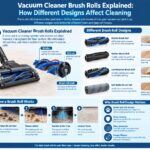
Additionally, the Stratos introduced a Triple-Clean brush roll that combines soft bristles for hard floors, stiff bristles for carpet, and a rubber fin to remove hair. This is a direct evolution from the standard brush rolls found in the Vertex and Navigator lines.
Shark Stratos vs. Shark Vertex: Which Is Better for Pet Hair?
The Shark Stratos outperforms the Vertex for pet hair due to its improved self-cleaning brush roll and stronger overall suction. While the Vertex is an excellent vacuum, the Stratos was designed specifically to handle high volumes of long hair and fur without tangles.
The Vertex uses a Powered Lift-Away canister, which is great for cleaning stairs and above-floor areas. However, its brush roll can still wrap with long human or pet hair, requiring periodic cutting with scissors. The Stratos uses a self-cleaning brush roll that actively removes hair during use, sending it directly into the dust cup. This is a game-changer for pet owners.
Here is a quick performance breakdown:
| Feature | Shark Stratos | Shark Vertex |
|---|---|---|
| Suction Technology | Clean Sense IQ (Auto-Adjusting) | Manual Power Setting (Switch) |
| Brush Roll | Self-Cleaning Triple Clean | Standard Self-Cleaning (Less Effective) |
| Hair Wrap Prevention | Excellent (Zero Wrap on Tested Hair) | Good (Occasional Tangles on Long Hair) |
| Hard Floor Scatter | Minimal (Auto-Detection) | Low (Manual Setting) |
| Best For | Long hair + High-pile carpet | Multi-floor homes + Lift-Away use |
If you have a shedding dog or cat that leaves long fur on every surface, the Stratos will save you time. The Vertex is still a solid choice if you need the lift-away feature for cleaning ceiling fans or upholstery, but the Stratos is the clear winner for raw pet hair cleaning.
How Does the Shark Stratos Perform on Hardwood Floors Compared to the Shark Navigator?
The Shark Stratos performs far better on hardwood floors than the older Navigator model because it actively reduces suction on bare surfaces and prevents debris from scattering. The Navigator, while reliable, can blow dust and crumbs around due to its constant high suction.
The Navigator is a budget-friendly workhorse, but it lacks sophistication on hard floors. It has a simple on/off brush roll switch, but it does not adjust power. When you vacuum a kitchen floor with crumbs, the Navigator can shoot pieces across the room. The Stratos mitigates this with its Clean Sense IQ technology. It detects the hard floor surface and lowers suction automatically, so dirt gets sucked in rather than pushed away.
Furthermore, the Stratos includes a soft roller on the front of the brush roll that gently sweeps the floor, picking up fine dust and pet dander without scratching wood or tile. The Navigator relies on a standard bristle brush that is fine on carpet but can be too aggressive on sealed hardwood.
Is the Shark Stratos Worth the Extra Cost Over the Shark Rotator?
Yes, the Shark Stratos is worth the extra cost if you value automatic suction adjustment and superior tangle-free performance. The Rotator is an older design that, while durable, lacks the modern features that make vacuuming less of a chore. The price difference is usually between $50 and $100.
Consider what you are getting with the Stratos:
- Automatic floor detection: The Rotator requires you to manually change settings for carpet vs. hard floor.
- Better filtration: The Stratos uses an advanced HEPA filter and a sealed system that traps 99.99% of particles. The Rotator has good filtration but is not as efficient at retaining fine dust.
- Improved maneuverability: The Stratos has a steered nozzle that makes it easier to navigate around table legs and furniture. The Rotator feels heavier and less precise.
If you are on a tight budget and have mostly low-pile carpet, the Rotator will still clean your home. However, the Stratos offers tangible daily improvements that justify the higher price, especially if you have allergies or a mix of floor types.
Can the Shark Stratos Replace a Stick Vacuum for Quick Cleaning?
Yes, the Shark Stratos can partially replace a stick vacuum because it offers a detachable pod that converts into a portable cleaning unit. However, it is heavier than a dedicated cordless stick vacuum, so it is not ideal for very quick countertop spills.
The Stratos features a Lift-Away mechanism, just like the Vertex and some Rotator models. You press a button to release the main column, and you can carry the pod to clean stairs, sofas, and car interiors. This gives you the reach of a stick vacuum without sacrificing the power of an upright.
That said, the complete unit weighs about 17 pounds. For a quick pickup of cereal on the kitchen floor, you might prefer a lightweight cordless stick like the Shark WandVac. The Stratos excels when you need deep cleaning power but also occasional portability. It is not a replacement for a 5-pound stick vacuum for daily spot cleaning.
When Should You Choose the Shark Stratos Over the Shark AZ1002?
You should choose the Shark Stratos over the Shark AZ1002 if you want the latest technology, quieter operation, and a better hair wrap system. The AZ1002, also known as the Shark Apex, is a excellent older powerhouse that many people still love, but it is being phased out by the Stratos.
The AZ1002 is loud. It is one of the louder upright vacuums on the market, measuring around 80 decibels. The Stratos is noticeably quieter due to its redesigned motor housing and airflow system. If you vacuum early in the morning or have pets that dislike loud noises, the Stratos is a more pleasant experience.
Another critical difference is the brush roll. The AZ1002 uses a standard bristle brush that can be harsh on high-pile carpets over time. The Stratos uses a mixed-media brush roll that is gentler on thick shag rugs while still extracting deep dirt. The Stratos also comes with a larger dust cup, meaning you can clean your entire home without stopping to empty it.
While the Stratos dominates on floors, its specialized handheld attachments make it an absolute powerhouse for deep-cleaning furniture. To get the most out of your machine, check out our guide on how to Vacuum a Mattress Properly for a Healthier Sleep Environment to eliminate hidden allergens and dust mites.
Which Shark Vacuum Has the Best Filtration: Stratos vs. Navigator vs. Vertex?
The Shark Stratos has the best filtration overall among the popular Shark models due to its fully sealed system and advanced HEPA media. The Vertex is a close second, while the Navigator is adequate but not top-tier for allergy sufferers.
All Shark vacuums use a washable foam filter and a HEPA filter. However, there is a difference in quality. The Stratos and Vertex both feature a complete seal system, which means no unfiltered air escapes from the vacuum. This is crucial for people with allergies or asthma. The Navigator, particularly the older NV models, are not fully sealed. Air can leak through seams and blow dust back into the room.
Here is a filtration comparison:
| Model | Sealed System? | HEPA Type | Best For |
|---|---|---|---|
| Shark Stratos | Yes (Complete Seal) | Advanced Anti-Allergen | Severe allergies / Asthma |
| Shark Vertex | Yes (Complete Seal) | Anti-Allergen Complete Seal | Moderate allergies |
| Shark Navigator | No (Standard seal) | Washable Foam + Felt | General use without allergy concerns |
If you are vacuuming pet dander, pollen, or dust mites, the Stratos is the healthiest choice. It captures particles down to 0.3 microns and retains them inside the clean bin.
How Easy Is It to Maintain the Shark Stratos Compared to Other Models?
Maintaining the Shark Stratos is easier than older models like the Navigator or Rotator because it has fewer filters and a self-cleaning brush roll. You will spend less time unclogging hair and washing parts. However, it still requires periodic cleaning of the filters and dust cup.
Let’s break it down by component:
- Brush roll: The Stratos self-cleans hair. The Navigator requires you to cut hair off with scissors every few weeks.
- Filters: The Stratos has a pre-motor foam filter and a post-motor HEPA filter. The Navigator has a foam filter, a felt filter, and a small HEPA filter that clogs faster.
- Dust cup: The Stratos dust cup has a one-touch empty button at the bottom. The Navigator requires you to twist the bottom latch, which can get sticky.
- Clogs: The Stratos has a wider hose path, so clogs are less frequent. The Vertex and Navigator can clog at the bend near the dust cup.
One tip for the Stratos: wash the foam filter every month and replace the HEPA filter every 6 to 12 months. This is standard for all Shark vacuums, but the Stratos components are more durable and easier to access.
What Are the Downsides of the Shark Stratos You Should Know?
The main downsides of the Shark Stratos are its weight, the lack of a power switch, and the higher price point. It is not a perfect vacuum, and understanding its flaws will help you decide if it is truly right for your home.
First, the weight. The Stratos weighs 17.5 pounds, which is heavier than the Navigator (about 13 pounds) and similar to the Vertex. If you need to carry it up and down stairs frequently, it can be cumbersome. The shark stratos review comparison on Best Vacuum Cleaner highlights that while the Lift-Away feature helps, the base unit alone is still heavy.
Second, there is no physical power switch. The Stratos uses a trigger and a sliding door for power. Some users find this less intuitive than a traditional rocker switch. If you hold the trigger for the entire cleaning session, your hand may get tired. You can lock the trigger, but not everyone likes the feel.
Third, the price. The Stratos is typically $100 to $150 more than a Navigator. While you get advanced features, those features are unnecessary if all you need is a basic vacuum for a small apartment with no pets.
How to Choose Between the Shark Stratos and Shark Vertex DuoClean?

Choose the Shark Stratos if you want the most advanced suction technology and the best hair wrap prevention. Choose the Shark Vertex DuoClean if you need a versatile vacuum that can be used in lift-away mode more often and you prefer a proven design.
Here is a simple decision guide:
- Choose Stratos if: You have long hair or pets, high-pile carpets, a mix of hard floors and rugs, and you want a vacuum that adjusts automatically.
- Choose Vertex DuoClean if: You have mostly low-pile carpet, you clean stairs and furniture often, and you are willing to manually adjust settings for hard floors.
The Vertex has a larger dust cup capacity (1.2 quarts vs. 1.0 quarts), but the Stratos has a more efficient design that allows for longer cleaning before emptying. Both are excellent vacuums, and you cannot go wrong with either. However, the Stratos represents the future of Shark engineering, while the Vertex is the refined present.
If you are still unsure, consider your floor type. If you have more than 30% hard floors, the Stratos auto-detection is a huge time saver. If you have 100% low-pile carpet, the extra cost of the Stratos may not be justified, and the Vertex will serve you perfectly well.
Frequently Asked Questions
Does the Shark Stratos work on thick shag carpet?
Yes, the Shark Stratos works very well on thick shag carpet. Its self-adjusting suction prevents the vacuum from getting stuck or losing suction on high-pile rugs. The soft roller brush helps glide over the fibers without causing damage.
Can you use the Shark Stratos without the hose?
No, you cannot detach the hose entirely. The hose is integrated into the upright unit for easy access. You can, however, use the Lift-Away feature to detach the pod and use the hose as a portable unit for cleaning stairs or upholstery.
Is the Shark Stratos good for allergies?
Yes, the Shark Stratos is excellent for allergies. It features a completely sealed system with an anti-allergen HEPA filter that traps 99.99% of dust, pollen, and dander. It is certified by the Asthma and Allergy Foundation of America.
How often do you need to replace the filters on the Shark Stratos?
You should wash the pre-motor foam filter every month. The HEPA filter should be replaced every 6 to 12 months, depending on usage. The vacuum has a filter indicator light that tells you when it needs washing or replacement.
Does the Shark Stratos have a warranty?
Yes, the Shark Stratos comes with a limited 5-year warranty from SharkNinja. This covers defects in materials and workmanship. The warranty does not cover normal wear and tear, such as vacuum bags, filters, or brush rolls that require replacement.
Which is quieter: Shark Stratos or Shark Vertex?
The Shark Stratos is quieter than the Shark Vertex. The Stratos measures around 75 decibels during normal operation, while the Vertex runs closer to 80 decibels. The difference is noticeable, especially in open-concept homes.
Can you buy replacement parts for the Shark Stratos?
Yes, replacement parts for the Shark Stratos are widely available. You can purchase brush rolls, filters, dust cups, and wands directly from Shark or through major retailers like Amazon and Walmart. Parts are generally easy to install without tools.
Conclusion
Choosing between the Shark Stratos and other popular Shark vacuums ultimately comes down to your specific needs and budget. The Stratos is the most technologically advanced upright from Shark, offering automatic suction adjustment, a tangle-free brush roll, and superior filtration. It is the best choice for pet owners, allergy sufferers, and those with mixed flooring. However, if you are on a budget or primarily have low-pile carpet, the Vertex or Navigator still provides excellent value.
We recommend the Shark Stratos for most modern homes. Its features genuinely save time and improve cleaning results. Do not settle for a vacuum that requires constant manual adjustments or hair cutting. Upgrade your cleaning routine and enjoy a cleaner, healthier home. Visit the link above for a deeper dive into all the best Shark models available right now.